Ways to find support as your family adjusts to disability
No family has to make sense of disability alone. For a family adjusting to a member's disability, support can take practical forms: caregiver and peer groups, thoughtful financial planning, inclusive community activities, and trusted people who can help organize information and decisions. Each family’s needs are different, and the right mix can change over time.
Adjusting to a family member’s disability can bring worry, grief, changing responsibilities, and questions about what comes next. Those feelings don’t mean a family is failing; they’re part of responding to a life that may look different from what everyone expected. Listening to the person with a disability and making room for each family member’s concerns can help turn uncertainty into shared next steps.
This article explores how support groups can offer connection and practical insight, why financial planning matters, and how social activities can strengthen belonging. It also considers how trusted advocates can help families stay organized and make informed choices, so you can identify support that respects your loved one’s needs and your family’s capacity.
Table of Contents
1. Support groups for caregivers and people with disabilities
A caregiver support group gives people a place to discuss difficult days and meaningful progress with others who understand caregiving. Parents can share concerns about appointments, changing routines, or a child’s growing independence. Groups may also offer coping tools, caregiving strategies, and information about local resources. For a family adjusting to a member’s disability, these exchanges can make unfamiliar responsibilities easier to name and organize.
To find respite care, counseling, or support groups locally, contact a physical or mental health professional or a community organization. These contacts can help identify available programs. Friends or relatives may also take on a caregiving task so the primary caregiver can rest. Ask about groups for caregivers, people with disabilities, or family members, since grandparents may need information and support too.
Caregiving can involve more than daily assistance. Parents of children with disabilities may also coordinate services, communicate with professionals, arrange training, and plan finances. A written list of appointments, questions, and assigned tasks can help keep everyone involved. When speaking with professionals, parents can share what works at home and raise concerns about recommendations or schedules.
When one family member carries most responsibilities without support, exhaustion can make coordination and communication harder. Unshared duties may also create tension, especially when siblings feel overlooked or take on caregiving-like tasks. These pressures don’t mean a caregiver lacks love or commitment. A family meeting can clarify which tasks relatives can realistically share, such as transportation, shopping, or taking appointment notes.
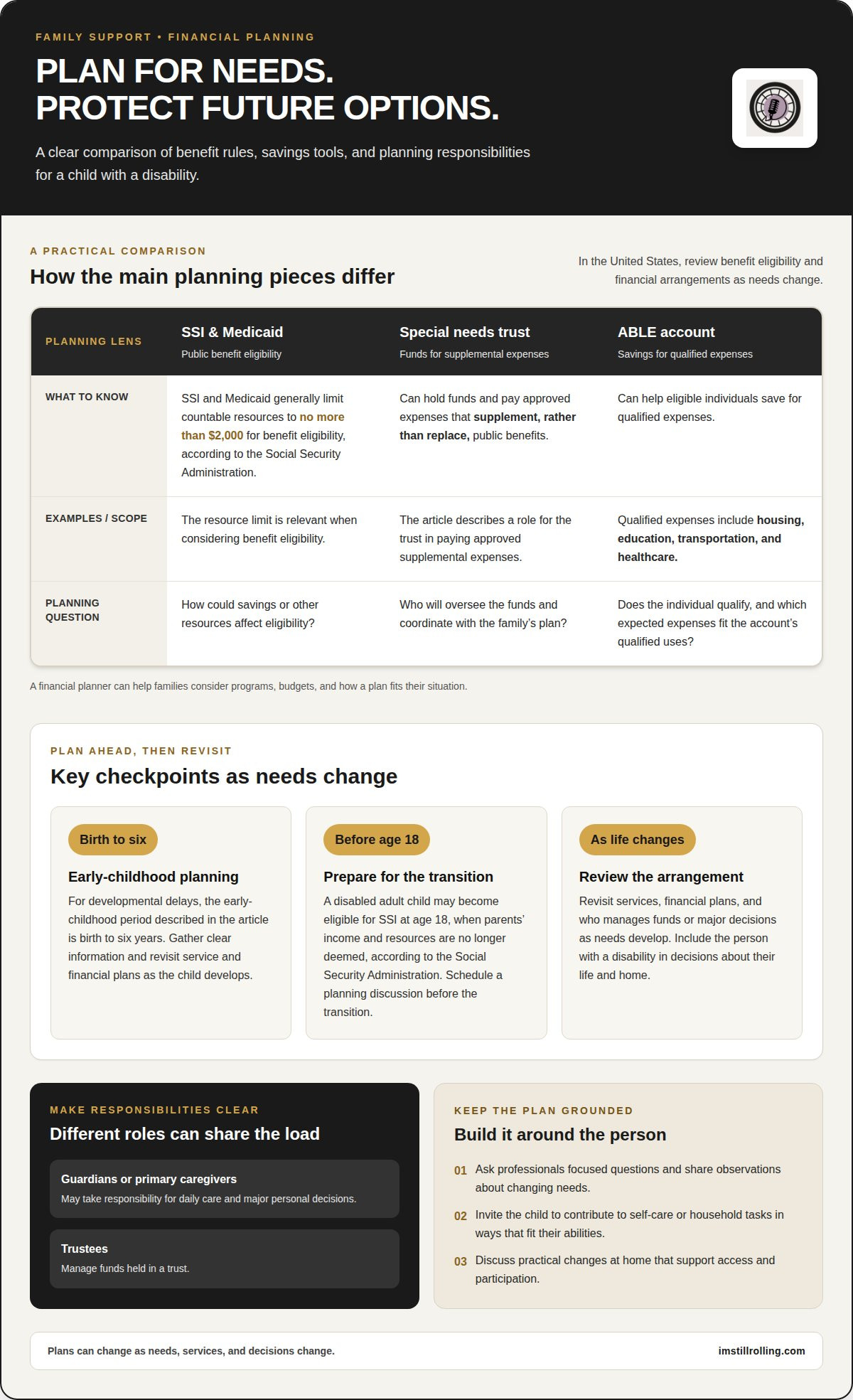
Family counseling can help relatives understand one another’s needs and work through differences. A counselor can support conversations about changing roles, boundaries, and what kind of help feels welcome. In a long-term plan, guardians or primary caregivers may take responsibility for daily care and major personal decisions, while trustees manage funds. Clearly defining responsibilities helps prevent one person from having to manage every concern alone.
2. Long-term financial planning for a disabled child
Start by gathering clear information about the child’s disability and changing needs. Parents can share observations, ask professionals focused questions, and take part as full partners in decisions. For developmental delays, the relevant early-childhood period described here is birth to six years. A diagnosis or concern can change over time, so revisit service and financial plans as the child develops.
In the United States, SSI and Medicaid generally limit an individual’s countable resources to no more than $2,000 for benefit eligibility, according to the Social Security Administration. A special needs trust can hold funds and pay approved expenses that supplement, rather than replace, public benefits. ABLE accounts can help eligible individuals save for qualified expenses, including housing, education, transportation, and healthcare. A financial planner can help families consider programs, budgets, and how a plan fits their situation.
Age brings another planning point: in the United States, a disabled adult child may become eligible for SSI at age 18, when the parents’ income and resources are no longer deemed, according to the Social Security Administration. Families can schedule a planning discussion before that transition and review who will manage funds and support major decisions. A plan may assign daily care and personal decisions to guardians or primary caregivers, while trustees oversee funds.
Financial planning should also make room for independence. Invite the child to contribute to self-care or household tasks in ways that fit their abilities, such as choosing clothes or organizing personal belongings. Explain disability to siblings in language suited to their developmental level, then make room for their questions and concerns. These conversations help children understand changes without placing adult responsibilities on them.
Make the home work for the family member, rather than expecting them to adapt to every existing arrangement. Review daily routines together, ask what creates difficulty, and identify practical changes that support access and participation. For example, reorganizing frequently used belongings may make everyday tasks easier. Include the person with a disability in decisions about the home and family activities, and revisit arrangements as needs change.
3. Social connections and community activities
Begin by asking the person with a disability what kind of social contact feels welcome. Don’t assume they still prefer an existing routine; needs and energy can change. One person may enjoy a quiet visit with a relative, while another may want to attend a community class. Listening first helps relatives offer caring support without taking control of the decision.
Make the invitation practical. A family member can offer a ride to an appointment or social activity, accompany someone to a gathering, or help arrange an online meet-up. Before making plans, discuss what would help the outing work: transportation, companionship, timing, or assistance with a task. If the person declines, respect their choice rather than treating it as a rejection of the relationship.
Community activities can include social groups, skill-building groups, or local events suited to the person’s interests. Families can explore options through community organizations and ask whether a group welcomes people with disabilities or mental health concerns. An online community can also offer connection when travel is difficult or in-person contact feels tiring. Let the person choose the setting that feels comfortable.
Clear communication helps relatives share responsibilities and avoid guessing. Use “I” statements to explain your feelings, such as, “I feel concerned when plans change without notice.” Then pause, listen, and reflect what you heard: “You’d rather decide on the day.” Active listening can help family members respect different preferences. Agree on one next step, such as confirming a ride or choosing an activity together. Afterward, revisit the plan to discuss what worked and what could change.
4. What are common stages of adjustment for families after a disability diagnosis?
There isn’t a fixed sequence of emotions after a disability diagnosis, and families won’t all experience the same feelings. One parent may feel relief at having an explanation, while another feels fear about the future. A sibling may feel protective, jealous, or unsure what to say. These responses can occur together, change over time, or return when circumstances shift.
Some families grieve the child they expected to have, including hopes about school, work, or daily routines. That grief doesn’t cancel their love for the child in front of them. Naming the loss can help relatives discuss what has changed without defining the child by a diagnosis. For example, parents might tell someone they trust, “We’re still learning what support will help, and we’re also adjusting our expectations.”
As families learn more, new hopes and plans may take shape. A child who needs support with one activity may develop strengths and preferences in another. Keep expectations flexible: revisit a school or home routine as the child’s needs change, and involve them in decisions they can make. Siblings also need age-appropriate explanations and room to raise concerns, rather than being expected to understand everything immediately.
Adjustment can resurface around a school transition, a change in care, or a new family responsibility. A brief check-in can help: ask each person what feels difficult, what has helped, and what they’d like to change. Family counseling may offer a setting to work through differences when conversations become strained. For families adjusting to a member’s disability, progress isn’t measured by reaching a final emotional stage. Explore stories about disability and resilience for thoughtful perspectives on living through change.
I'm Still Rolling Podcast
I'm Still Rolling Podcast shares honest conversations about disability, caregiving, resilience, and life after adversity. When your family needs perspectives beyond practical planning, these stories can help you hear how others make sense of change, shifting roles, and new expectations. The episodes share lived experiences, rather than providing medical, legal, or caregiving services.
Choose an episode that speaks to a question your family is facing. The newsletter offers another way to stay connected with these stories, while podcast transcripts let you read conversations at your own pace. Each format can create space to reflect, find words for difficult feelings, or begin a thoughtful conversation with relatives.
For stories that meet this moment in your family’s adjustment, contact I'm Still Rolling Podcast.
Let the next step be one your family can take together
Adjustment isn’t a single decision or a clean break between before and after. It’s an ongoing conversation about what matters now, what may need to change, and whose voice needs more room. For a family adjusting to a member’s disability, even a modest next step can make the days ahead feel more manageable: agreeing on one priority, inviting a relative into the conversation, or asking the person directly what support they want.
You don’t have to resolve every uncertainty before moving forward. Notice what is working, make room for what feels difficult, and return to the conversation as needs evolve. The way ahead may change, but your family can keep shaping it together.
If hearing lived perspectives would help you reflect on your own next steps, connect with I'm Still Rolling Podcast.
Frequently Asked Questions
How does a family adjust emotionally when a member acquires a disability?
Families adjust by making room for different reactions instead of expecting everyone to feel the same way. A spouse may focus on immediate changes, while a child may need reassurance about everyday routines. Try a regular family check-in where each person can name one concern and one thing they want to understand. For a family adjusting to a member’s disability, emotions may shift as circumstances and needs change.
How can parents explain a family member’s disability to children?
Use clear, age-appropriate language and answer the question the child actually asks. For example, a parent might explain that an injury changed how someone moves while clarifying that the person is still the same family member. Avoid making promises about recovery or future abilities. Invite children to ask again later, since a new school situation or family routine may raise new questions.
What communication strategies help families support a member with a disability?
Speak directly with the person, not only with relatives or professionals around them. Ask open questions such as, “What would make this visit easier?” Then pause and listen without finishing their answer. For decisions involving several relatives, summarize what was agreed, who will handle each task, and when to revisit it. This helps prevent good intentions from turning into conflicting instructions.
How can caregivers prevent stress and burnout while supporting a disabled family member?
Build recovery time into the routine before exhaustion becomes the only signal to stop. A caregiver might ask a trusted relative to take on a familiar task, such as preparing a meal, while they take a walk or attend their own appointment. Notice changes in sleep, patience, or concentration, and speak with a health professional if those difficulties persist or interfere with daily life.
How can families balance caregiving with work, school, and other relationships?
Make responsibilities visible instead of relying on one person to remember everything. A shared calendar can track school meetings, work commitments, and care tasks, while a family member can help with a specific errand. Caregivers can discuss work-life balance solutions or accommodations with a supervisor. Protecting time for siblings, partners, and personal commitments helps keep caregiving from taking over every family interaction.
What legal and medical planning should families consider, including advance directives and guardianship?
Start by asking the person what support they want with medical information, decisions, and everyday planning. If they welcome help, a family member can learn medication doses and timing or gather information about health insurance and workplace rights. Discuss advance directives and guardianship with qualified professionals, since appropriate documents and decision-making arrangements depend on the person’s circumstances and applicable rules. Keep records organized and accessible to those involved.



Comments