How to find a new purpose in life by building on your past
What if finding a new purpose doesn’t mean becoming someone new? Often, how to find a new purpose in life begins with looking at who you’ve already been: what you’ve endured, what still matters, and which kinds of effort feel worth carrying. If your priorities have shifted, that isn’t proof you’ve lost your way. It may be a sign that an older definition of purpose no longer fits.
It’s understandable to wonder whether therapy can help. Therapy can give you space to examine difficult experiences and recurring patterns, but purpose can also grow through reflection, relationships, meaningful work, creativity, or contributing to a cause you care about. There’s no single revelation or timetable you have to meet.
This guide will help you draw on past experience without letting it dictate your future, notice how your priorities are changing, and identify which struggles you’re willing to accept in service of what matters. Start with small, considered steps, so a new direction can take shape through what you learn, rather than pressure to reinvent your life all at once.
Table of Contents
Identifying struggles you are willing to tolerate
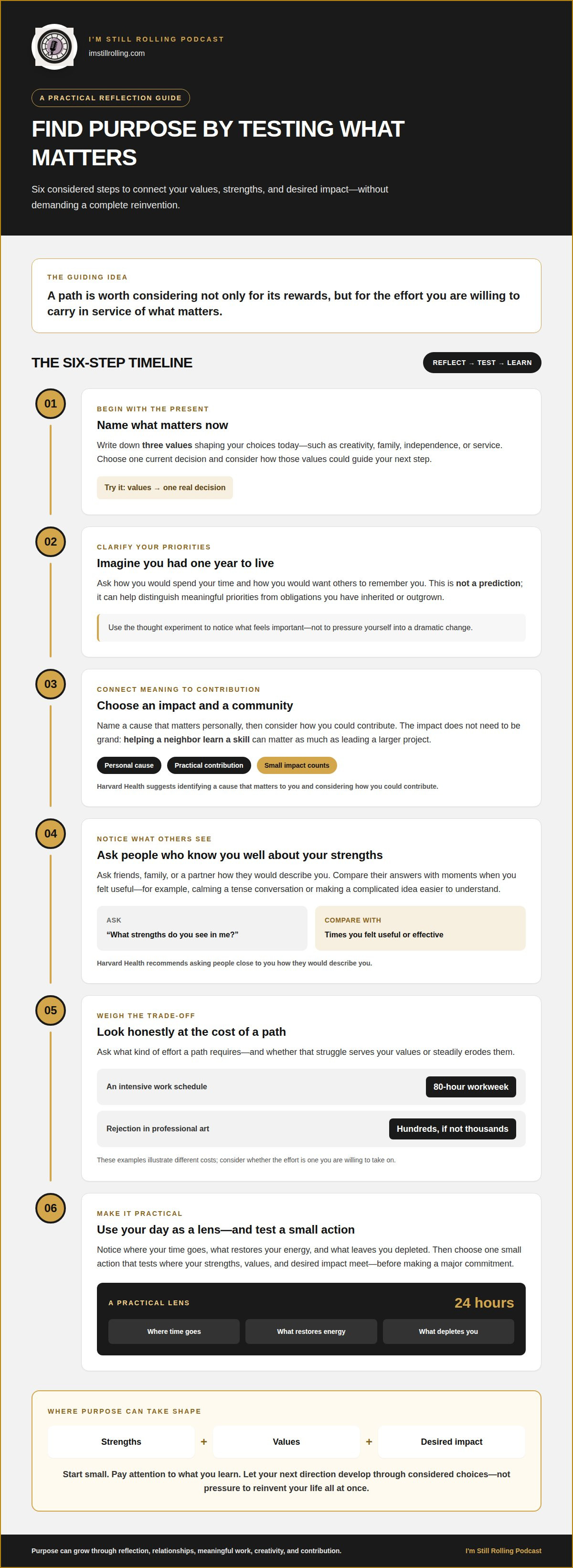
Start with what matters now, not what once impressed you. Write down three values shaping your choices today, such as creativity, family, independence, or service. Then name one current decision, perhaps a career change or a shift in a relationship, where those values could guide your next step.
Imagine you had one year to live. Ask what you would spend your time doing and how you would want others to remember you. This exercise isn’t a prediction. It can help separate meaningful priorities from obligations you’ve inherited or outgrown.
Identify the impact you want to make, then connect it to a cause or community. Harvard Health suggests naming a cause that matters personally and considering how you could contribute. The impact doesn’t need to be grand: helping a neighbor learn a skill can matter as much as leading a larger project.
Ask people who know you well to describe your strengths. Harvard Health recommends asking friends, family, or a partner how they would describe you. Compare their answers with moments when you felt useful, such as calming a tense conversation or making a complicated idea easier to understand.
Look honestly at the cost of a path. An 80-hour workweek may demand more than you want to give; professional artists may face rejection hundreds, if not thousands of times. Ask what kind of effort you’re experiencing, and whether that struggle serves your values or steadily erodes them.
Use a 24-hour day as a practical lens. Notice where your time goes, what restores your energy, and what leaves you depleted. A sense of purpose often takes shape where your strengths, values, and desired impact meet. Choose one small action that tests that overlap before making a major commitment.
Why do I feel lost even though my life is good?
A good life can feel disconnected when its routines no longer reflect what matters. Relationships and community offer belonging, shared effort, and feedback. A sense of purpose develops through choices, with no standard timeline.
Find problems larger than yourself to care aboutChoose an issue beyond your immediate concerns, such as literacy, food access, or neighborhood isolation. Find a local group addressing it and ask what practical help is needed. A meaningful cause connects personal concern with a shared outcome. Don’t choose an issue only because it sounds admirable. Sustainable involvement depends on finding a task you can keep doing, not making one dramatic gesture.
Look for patterns in work and projectsReview past work and school projects for tasks you repeatedly chose, not just completed. Perhaps colleagues sought your clear explanations, or you kept returning to planning community events. Ask a role model whose work you admire how they developed a relevant skill. Harvard Health recommends learning from people whose work you respect. Look for a thread across roles rather than forcing every success into one career identity.
Find meaning in life experiencesChoose a meaningful experience and write what changed before and after it. A 2008 study found that people who see meaning and purpose can tell stories of change and growth after overcoming obstacles. Consider the people, decisions, or unexpected help that shaped that moment. Meaning may emerge from how you responded, not from hardship itself. Name a lesson you could carry into a new contribution.
Explore purpose outside workChoose a source of satisfaction beyond work, such as mentoring, a creative practice, or volunteering. Harvard Health notes that purpose can come from hobbies or community service. In a 2025 Gallup and Stand Together survey, 23% of U.S. working adults wanted an ideal job with time and resources for purpose outside work. Try one modest commitment and notice whether it leaves you more connected. Stories of people navigating adversity can offer human examples to reflect on.
Integrating past experience rather than starting over
For anyone wondering how to find a new purpose in life, practical steps can start with reviewing past experience and testing a small change. Build on what you’ve learned instead of demanding a complete reinvention.
Recognize themes in past experiencesSet aside a morning to write three stories from different periods of your life. Note what mattered in each, what you learned, and who helped you through it. Look for recurring threads, such as explaining difficult ideas or supporting people through change. Erik Erikson described later adulthood as integrating accumulated experience into a coherent self in The Life Cycle Completed, published in 1982.
Reframe your contributions and experienceSpend 10 minutes listing what you still feel you need to prove, then name experience you could share instead. A former manager might mentor someone entering the same field; a parent might contribute practical knowledge to a school group. This reframing doesn’t dismiss achievement or disappointment. It asks how what you’ve lived can serve someone beyond your next milestone.
Use small experiments to explore purposeChoose one low-stakes experiment, such as mentoring, helping with a community project, or returning to a creative practice. Decide what you’ll try and what you’ll notice: your energy, interest, and how you feel afterward. Don’t treat one uncomfortable experience as a verdict on your future. If painful memories make reflection difficult, a therapist can help you revisit them with support.If purposelessness comes with persistent low mood, loss of interest, or difficulty managing daily life, speak with a primary care clinician or licensed mental health professional in the United States.
Set meaningful goals and build habitsTurn a discovery into one specific goal, such as contributing your teaching skills to a school activity. Attach it to a cue, like setting aside time each Monday morning, and keep the first action small enough to repeat. As you consider how to find a new purpose in life, review your goal regularly. Keep or adjust it as your circumstances and priorities change.
Life transitions and changing priorities
Revisit interests that have quietly disappeared from your routine. A passion you set aside for work or family may still matter, though it may fit differently now. Write down what you wanted from that activity then and what you want from it today. The goal isn’t to recreate an old identity, but to see whether its meaning has changed.
Keep a brief energy log during an ordinary week. Note which activities leave you engaged and which feel draining, then look for patterns. Don’t decide that nothing matters after a stretch of exhaustion. A tired mind can make temporary strain feel like a permanent verdict, so wait until you have more energy before making major life decisions.
Allow your purpose to evolve across different stages. One author describes changing career aspirations repeatedly between ages 18 and 25, then taking another four years after starting a business to define what he wanted. He rediscovered his love of writing in his mid-20s. Trying a new direction can reveal a better fit, rather than prove earlier choices were mistakes.
Consider what experience and self-knowledge make possible later in life. A richer sense of purpose can emerge in your 40s and 50s or later. In the Pew Research Center’s 2025 Religious Landscape Study, 46% of U.S. adults said they think about life’s meaning and purpose at least once a week. Reflection can help priorities become clearer.
Use a transition as a prompt to consider what you want next. Margaret, whose details were changed in the account, had left her senior role two years earlier. Rather than treating that departure as an ending, consider what the change could make room for: mentoring, creative work, relationships, or a contribution with greater personal meaning.
Give yourself permission to build a good life that differs from the one you once imagined. In the APA’s 2025 Stress in America survey, 84% of U.S. adults said they believe they can still create a good life if it looks different from past generations’ lives. Listen to stories about resilience through change as you consider your next direction.
I'm Still Rolling Podcast
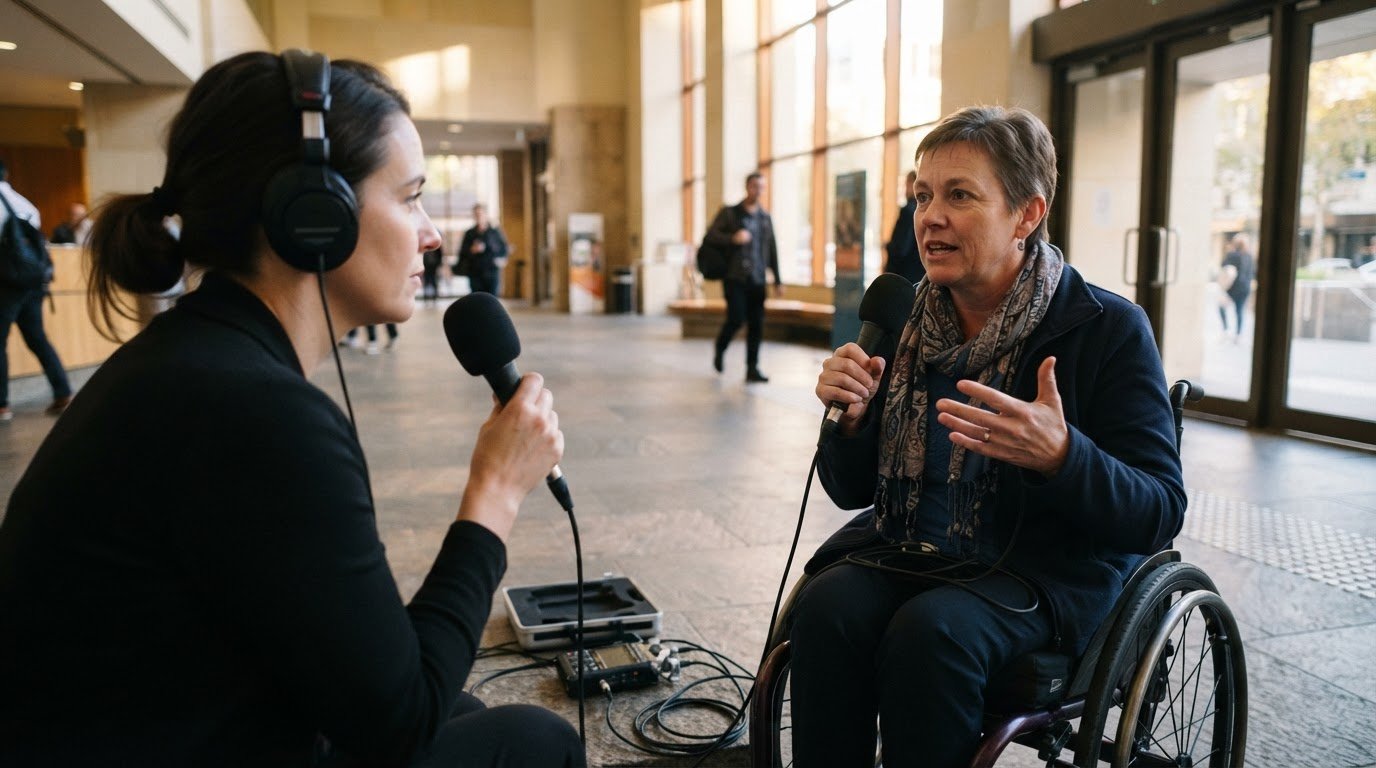
I'm Still Rolling Podcast shares honest conversations about resilience, disability, and life after adversity. Its episodes can offer perspective as you reconsider what your experiences mean and how they might shape what comes next. Hearing people describe difficult transitions may help you feel less alone and notice possibilities you hadn’t considered. The I'm Still Rolling Newsletter and Podcast Transcripts offer other ways to engage with these stories and return to ideas that stay with you.
These personal accounts aren’t a substitute for professional support or a ready-made answer. They offer a place to encounter lived experience, reflect on your own story, and consider what a meaningful next step could look like.
To explore these conversations further, get in touch with I'm Still Rolling Podcast.
Take one thoughtful step toward what matters
A new direction doesn’t have to arrive as a complete answer. It can begin with a choice that fits the life you have now: a conversation, a small commitment, or a willingness to follow an interest you set aside. Learning how to find a new purpose in life is less about proving you can start over and more about making room for what feels meaningful today.
Let curiosity guide your next move. Try something small, notice what it brings forward, and give yourself permission to revise your plans as your circumstances change. Your past can inform your path without dictating its destination.
If honest stories of resilience would help you reflect on your own next chapter, contact I'm Still Rolling Podcast.
You don’t need the whole map before you take the next step.
Frequently Asked Questions
Can therapy help me find my purpose?
Therapy can provide a structured space to examine what feels meaningful and what may be obscuring it. You might discuss a recurring conflict, such as wanting creative work while fearing others’ disappointment. A therapist can help you notice patterns, clarify your priorities, and consider next steps. Therapy doesn’t hand you a single purpose; it can support reflection as you decide what fits.
Does feeling unfulfilled mean I should change careers?
Not necessarily. First identify what feels wrong: the work itself, the workplace, your schedule, or a lack of recognition. For example, someone who enjoys teaching but dislikes constant meetings may need a different role, not an entirely new career. Before making a major move, compare the parts of your current work you want to keep with those you want to change.
How do I know what I actually want in life?
Notice what you choose when approval isn’t the main reward. For a week, record moments when you feel absorbed, curious, or quietly satisfied, along with choices you made mainly out of obligation. Then look for differences. If you keep returning to learning, making things, or spending time with close friends, those preferences offer clues. Treat them as evidence to explore, not final instructions.
Why do I feel empty after achieving my goals?
Reaching a goal can end the structure that organized your effort, leaving a gap before another direction feels clear. A promotion, completed degree, or finished creative project may bring satisfaction without answering what you want next. Ask what the achievement gave you, such as security or recognition, and whether those needs remain central. Your next aim can grow from that answer.
How can you identify your values, strengths, and interests?
Use specific examples rather than relying on abstract labels. Name a choice you felt proud of, a task others trust you to handle, and a subject you explore without being asked. For instance, organizing a difficult family event might reveal that reliability and planning matter to you. Compare examples across different settings; repeated evidence can show which qualities genuinely fit.
What questions help clarify what gives life meaning?
Ask, “Which moments felt worthwhile, even when they were difficult?” and “Who benefited from what I did?” Consider a time you helped a colleague learn a task or stayed present for a friend. Then ask what made that experience matter. These questions connect meaning to lived moments and relationships, offering more useful clues than trying to find one perfect answer.


Comments