How to Find Hope in Dark Times Through Faith and Trust
Hope doesn’t require pretending the dark isn’t there. To find hope in dark times, remember the support you’ve received, make room for honest doubt, turn toward God, and notice small signs of goodness and progress. These practices won’t erase hardship, but they can help you take the next step when the way forward feels unclear.
It’s natural to wonder whether faith can hold steady when life is painful. Carli has shared that reading the Bible each day helped her through a dark season. Her experience is a reminder that trust can grow through small, steady acts, not just sudden certainty.
Here, you’ll find practical ways to remember support, make room for doubt, loosen your grip on what you can’t control, and build hope by noticing what’s true in your life. The aim isn’t to force optimism. It’s to find a grounded place to stand, even before everything feels resolved.
Table of Contents
1. Remembering beliefs and past experiences of support
When darkness narrows your view, write down specific moments when someone supported you. Note who was there, what they did, and what helped: a friend who listened, a relative who brought dinner, or a faith community that stayed present. This record won’t erase grief, but it can remind you that hardship isn’t the whole story. Remembering support can be a place to begin when belief feels difficult.
Gratitude and mindfulness can make this practice more grounded. Write down one thing you’re grateful for, however small, then pause and notice what’s around you. It might be a warm drink, a quiet moment, or a friend’s message. If you’re facing grief, loss, or a major setback, don’t force a positive meaning onto what happened. Name the loss, then choose one next step, such as telling someone you trust how today feels.
Faith can offer language for pain without demanding certainty. Hebrews 6:19 describes hope as “an anchor for the soul,” while Romans 15:13 speaks of hope, joy, and peace. Read a passage slowly, or write one line that stays with you. Carli has said that reading the Bible each day helped her through a dark season. A short passage can become an exercise in returning to a belief, not a test of how strongly you feel it.
Meaning during hardship may begin with a small act that reflects what matters to you. If compassion matters, check on someone; if faith matters, pray honestly, even with questions. A story of endurance or a journal entry about past support can prompt reflection. Purpose doesn’t need to explain suffering. It can guide what you do next.
Don’t carry hopelessness alone. Contact someone you trust, ask a faith community about a support group, or speak with a mental health professional. If you feel hopeless and need urgent support, contact a crisis helpline. Let someone hold hope with you while you take the next step.
2. Finding faith during depression and doubt
Depression can make familiar beliefs feel distant. Doubt may come with grief, exhaustion, or fear, but it doesn’t prove your faith has failed. Begin by naming what’s true today: “I’m struggling, and I don’t understand why.” Accepting pain isn’t surrendering belief; it’s refusing to pretend everything is fine. An honest prayer can start with one sentence, even when certainty feels out of reach.
Try a simple prayer practice when your thoughts feel crowded. Pause quietly, breathe, and listen for God’s voice without demanding an immediate answer. Then say a choice aloud: “I want to keep trusting, even while I’m unsure.” The words don’t have to change your mood at once. They give your attention a direction while leaving room for the questions you still carry.
For Christians, Jesus can be a source of comfort and hope during difficult seasons. Turning toward him doesn’t require having every answer; it can mean bringing fear, anger, or numbness into prayer. Carli has shared that reading the Bible each day helped her through a dark season. Her experience points to a steady practice: read a short passage, notice one phrase, and return to it when you feel overwhelmed. Carli also advises young women to turn and follow Jesus.
Keep the practice small enough to sustain. Choose a quiet moment, read a few lines, and write one honest response, such as “I need help today.” If prayer feels impossible, sit in silence or ask someone you trust to pray with you. You don’t have to manufacture confidence. These actions let you keep approaching faith as a relationship, even when certainty is absent.
Depression deserves care beyond spiritual practice. Prayer and reading scripture can accompany support, but they don’t mean you should manage every struggle alone. If daily life feels unmanageable, tell someone you trust what has changed and seek appropriate help. Faith can include receiving care, naming limits, and taking one next step without pretending the pain has disappeared.
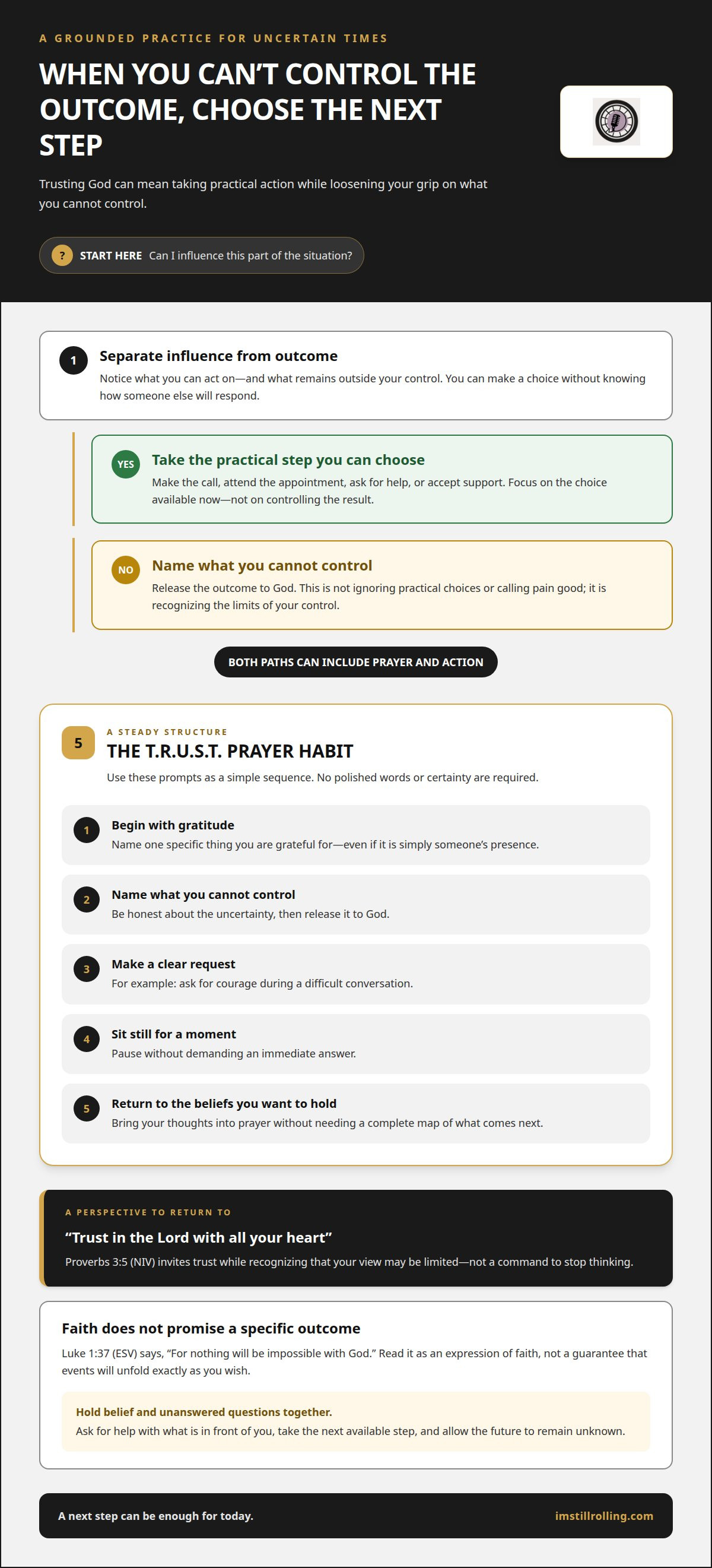
3. Letting go of control and trusting God
Trying to control every outcome can use up the strength you need for today. Trusting God doesn’t mean ignoring practical choices or calling pain good. It means recognizing what you can influence and loosening your grip on what you can’t. For example, you can ask for help during uncertainty without knowing how another person will respond. That honesty can make room for prayer and action together.
A T.R.U.S.T. prayer habit can offer a steady structure. Begin with gratitude for one specific thing, even if it’s simply someone’s presence. Name what you can’t control, then release it to God. Make a clear request, such as asking for courage during a difficult conversation. Sit still for a moment, then return to the beliefs you want to hold. You don’t need polished words or certainty.
Proverbs 3:5 in the NIV says to “trust in the Lord with all your heart” and not rely on your own understanding. That counsel doesn’t ask you to stop thinking. It invites you to admit that your view may be limited. If a decision feels overwhelming, write down what you know, what remains uncertain, and the next wise step. Bring those thoughts into prayer rather than demanding a complete map.
Luke 1:37 in the ESV states, “For nothing will be impossible with God.” Read the verse as an expression of faith, not a guarantee that events will unfold exactly as you wish. You can hold belief and unanswered questions together. Ask God for help with what’s in front of you, while allowing the future to remain unknown.
Trust becomes practical when it shapes your next action. Make the call, attend the appointment, or accept support, while releasing the outcome. When fear returns, repeat a brief prayer: “God, help me take the next step.” You don’t need certainty about every turn. Focus on the choice available now, and let faith steady your attention.
4. Building hope through evidence
Hope can feel more credible when it has something real to rest on. Instead of asking whether everything will improve, identify one claim you’re making about the future. “Nothing can change” is a prediction, not a fact. Consider what supports it, what challenges it, and whether fear or past experience may be shaping your judgment. This isn’t forced optimism. It’s a more balanced view of what you know.
Evidence can include small changes, not only dramatic breakthroughs. Record one action you took, one response you received, or one difficulty you got through. For example, note that you made an appointment despite feeling anxious or completed a task after a hard morning. These details don’t prove tomorrow will be easy. They show that your present circumstances aren’t the only possible outcome.
Research has also explored how expectations relate to outcomes. In a study at an inpatient alcohol treatment center, patients whose staff expected improvement had fewer drinking episodes, longer periods of abstinence, and higher employment rates than other patients. William Miller cited a review of placebo studies in which people experienced significant pain relief from placebos when they felt hopeful about them. These findings suggest expectations can matter, but they don’t guarantee a particular result.
Small daily habits can support mood and resilience. Choose one manageable action: take a walk, contact someone, or spend time on an activity you usually enjoy. Pleasant activities may help people experiencing depression feel hope, even when taking part feels difficult at first. Start with what feels possible, then notice how you feel afterward.
Keep your conclusions in proportion to the evidence. If one conversation goes well, let it count without assuming every problem is solved. If a plan fails, treat that as information about this attempt, not proof that no path exists. Hope can grow steadily when you notice real progress, account for bias, and take another practical step.
I'm Still Rolling Podcast
I'm Still Rolling Podcast shares honest conversations about resilience, disability, and life after adversity. When you're looking for hope that doesn't deny hardship, these lived stories can help you feel less alone and reflect on how others have faced difficult turns. The episodes bring personal experience and journalistic insight together, without suggesting that one person's path fits everyone.
Choose an episode when you want to hear a fuller story, or read a podcast transcript if that feels easier than listening. The I'm Still Rolling Newsletter offers another way to stay connected with stories of endurance and personal growth. These offerings can provide thoughtful company as you reflect on faith, uncertainty, and what a next step might look like.
If you'd like to share a question or thought about finding hope through difficult seasons, contact I'm Still Rolling Podcast.
Carry One Honest Step Forward
The question of how to find hope in dark times may not have a complete answer today. Instead, make it a practice: choose one small action that reflects the person you want to be, even while uncertainty remains. You might make space for a quiet prayer, ask for company, or take a step toward a responsibility you’ve been avoiding. You don’t need to feel certain before moving. Let care, faith, and patience shape what you do next.
Some days, hope will feel close; on others, staying open to the possibility of change may be enough. You don’t have to turn pain into a lesson or find a perfect explanation for it. Give yourself permission to keep going without having everything resolved. A steady next step can matter, even when the destination isn’t clear.
If a conversation about resilience and life after adversity would be meaningful, contact I'm Still Rolling Podcast. Keep choosing the next step you can take, and leave room for hope to meet you there.
Frequently Asked Questions
Have you (Carli) had any seasons of your life that it was especially difficult to find God?
Yes. That’s what’s known about her experience here; there’s no need to assume details she hasn’t shared. Her account offers a grounded example of faith during difficulty, rather than a claim that spiritual practice makes painful circumstances disappear or gives everyone the same experience.
How do you find hope when you feel completely hopeless?
If you’re wondering how to find hope in dark times, start by making the next few minutes manageable. Tell someone you trust, “I’m not doing well, and I need you to stay with me or listen.” If you feel at risk of harming yourself, contact a crisis helpline now. You don’t have to solve the larger problem before asking for support.
Is it normal to feel hopeless sometimes?
Feeling hopeless can happen during grief, uncertainty, or a major disappointment. The feeling is real, but it doesn’t prove that your situation can never change. Notice whether it passes or starts affecting everyday tasks, relationships, or your ability to care for yourself. Telling someone you trust what you’re experiencing can help you decide what support to seek next.
What causes feelings of hopelessness?
Hopelessness can arise alongside painful experiences such as bereavement, a serious setback, or depression. It may feel stronger when the future seems uncertain or problems pile up. There isn’t one explanation that fits everyone. Try describing what changed, when the feeling became noticeable, and what else you’re experiencing, including physical symptoms.
What are practical ways to find hope during difficult times?
Choose one action that asks little of you: step outside, drink water, or send someone you trust a brief message. If a pleasant activity feels difficult, make it smaller, such as listening to one song instead of planning a full outing. Later, note what you tried and how it felt. This record can help you notice which small actions offer support.
When should you seek professional help for hopelessness or depression?
Reach out to a mental health professional when hopelessness or depression is weighing on you and you need support beyond what friends or personal practices can offer. If you’re experiencing depression, discuss your feelings and physical symptoms with a doctor. If you feel in immediate danger or might harm yourself, contact a crisis helpline rather than facing that moment alone.

Comments