Living Independently with a Disability: Assistive Tech Stories & Guide
Imagine the quiet frustration of waiting for someone else to open your curtains or adjust the thermostat because your hands no longer follow your commands. For many, this isn't just a hypothetical; it's the daily reality that follows a life-altering diagnosis or injury. We've spent years documenting living independently with a disability stories through our work on the I'm Still Rolling Podcast, and we've seen how the right tools can turn a clinical room back into a sanctuary. It's about more than just gadgets; it's about reclaiming the small, private moments that define who you are.
You likely feel that current solutions often feel too complex or look like they belong in a hospital wing rather than your living room. It's exhausting to trade your privacy for safety. This guide promises to show you how modern assistive technology can bridge the gap between needing help and finding autonomy. We'll explore real world experiences where tech fades into the background, allowing your personality and dignity to take center stage. From smart home ecosystems that learn your needs to the human stories behind the hardware, we're diving deep into how you can build a home that finally adapts to you.
Table of Contents
The Shift: Redefining Independence Through Assistive Technology in 2026
The Toolkit: Essential Categories of Technology for Independent Living
Beyond the Gadgets: The Emotional and Cognitive Integration of Tech
Navigating the Landscape: How to Evaluate and Fund Your Tech Journey
The Human Narrative: Why Resilience and Technology Are Inseparable
The Shift: Redefining Independence Through Assistive Technology in 2026
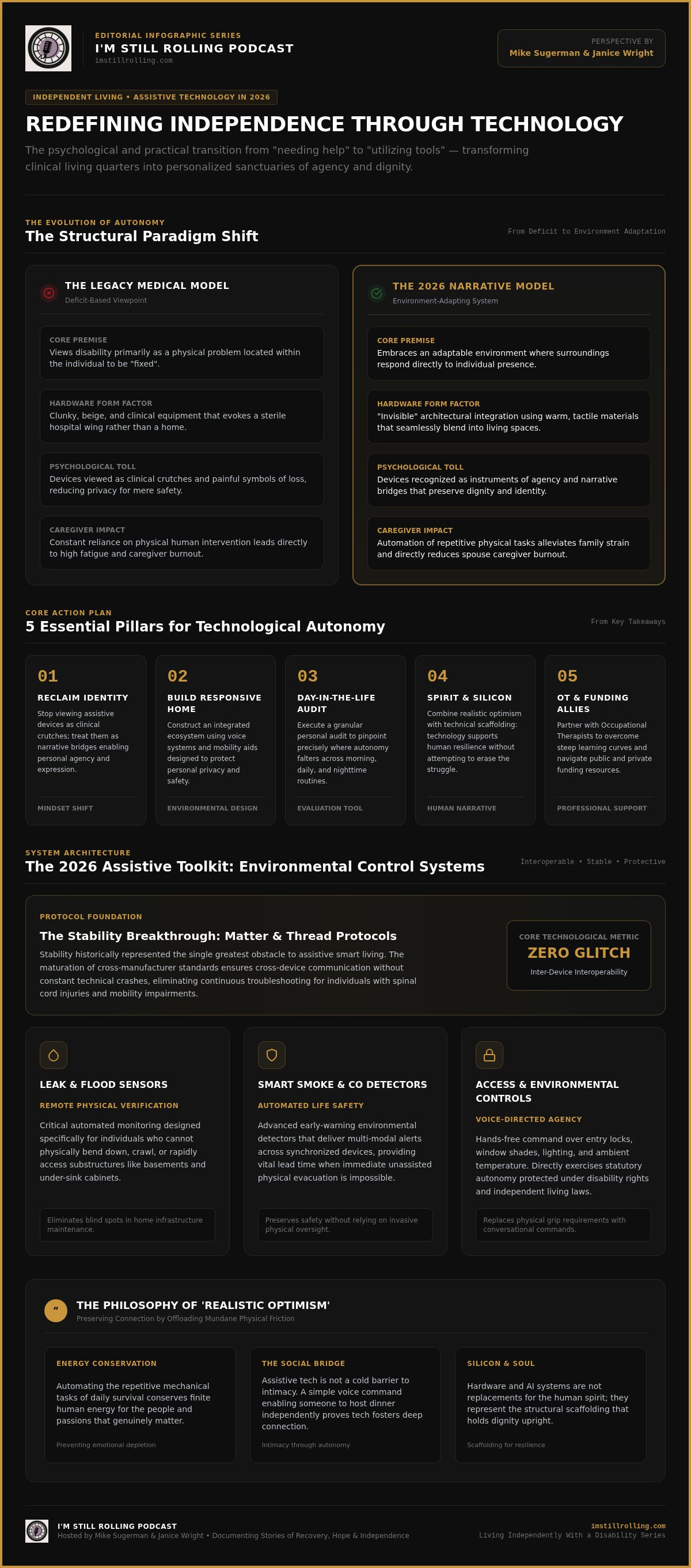
In 2026, the definition of assistive technology has moved far beyond the clunky, beige hardware of the past. It now spans a sophisticated spectrum, ranging from elegant low-tech manual aids to seamless, AI-driven systems that anticipate your needs before you even speak them. For those of us sharing living independently with a disability stories, this shift represents a fundamental change in how we view our own lives. It's the psychological transition from "needing help" to "utilizing tools." This isn't just semantics; it's a hallmark of resilience. When you stop seeing a device as a symbol of loss and start seeing it as an instrument of agency, the world opens up again.
Mike Sugerman and Janice Wright bring a reporter's eye to this evolution, viewing each new device through the lens of human interest. They don't see gadgets as clinical necessities but as the very things that allow a person to reclaim their voice and their story. In 2026, the focus has moved toward "invisible" integration. We want tech that feels like home, not like a hospital wing. This means devices that blend into the architecture, utilizing materials that feel warm to the touch rather than cold and sterile. It's about more than just function; it's about maintaining a sense of self.
The Evolution of Autonomy
The old medical model viewed disability as a problem to be fixed. Today, we embrace a social and narrative model where the environment is what adapts. When your home is responsive, the burden on those you love begins to lift. This is vital because reducing the constant need for human intervention directly combats caregiving for spouse with alzheimer's fatigue and general caregiver burnout. True independence is the ability to direct your own day, regardless of the physical effort required to execute it.
Why 'Realistic Optimism' Matters
There's often a lingering fear that inviting more technology into our lives will erode human connection. We believe the opposite is true. By automating the mundane tasks, we save our energy for the people who matter. Tech allows us to preserve the messy, authentic parts of life that make us human. Within the framework of stories of recovery and hope, these tools aren't replacements for soul; they're the scaffolding that holds the soul upright. We've heard countless living independently with a disability stories where a simple voice command allowed someone to host a dinner party again, proving that technology is a bridge to intimacy, not a barrier. It's about finding meaning in the struggle, not erasing the struggle itself.
The Toolkit: Essential Categories of Technology for Independent Living
The toolkit for autonomy isn't a single device; it's a living ecosystem. While we often share living independently with a disability stories that focus on the emotional triumphs, the physical reality requires a robust infrastructure of hardware and software. In 2026, we've moved past isolated gadgets to integrated systems that talk to each other. This connectivity ensures that your home doesn't just house you; it supports your every move. It's about building a space that responds to your presence without requiring constant, exhausting effort.
Environmental Control Systems (ECS)
Stability used to be the biggest hurdle for smart homes. With the maturation of Matter and Thread protocols, devices from different manufacturers finally work together without constant technical glitches. This reliability is a cornerstone in many spinal cord injury recovery stories, where the ability to lock a door or dim the lights via voice command isn't a luxury. It's a fundamental exercise of rights protected by disability rights and independent living laws. A stable ECS reduces the cognitive load of managing a home, letting you focus on living rather than troubleshooting.
Leak and Flood Sensors: These are crucial for those who can't quickly check under a sink or in a basement.
Smart Smoke and CO Detectors: Look for systems that can flash lights or vibrate beds to ensure safety regardless of hearing ability.
Automated Fall Detection: Modern AI-enabled cameras or floor sensors now respect privacy while providing a vital safety net.
Mobility tech has also seen a radical redesign. Modern ceiling lifts and smart wheelchairs now integrate directly with smartphone apps, allowing for precise positioning and battery monitoring. For those with limited motor or verbal output, eye-tracking and haptic feedback devices provide a bridge to the world. These tools allow for complex expression and digital participation that was once unthinkable. They turn a silent room into a hub of communication and connection.
Wearable Health and Safety
The era of stigmatized medical alerts is over. Today's wearables are sophisticated, stylish smartwatches that monitor heart rate, blood oxygen, and gait stability. The move toward design-forward tech is a recurring theme in the living independently with a disability stories we collect. These devices aren't just for emergencies; they provide objective data that empowers you during medical appointments. Instead of relying on vague memories of your symptoms, you have a digital record of your physical state. This level of truth-telling changes the power dynamic between patient and provider. If you want to hear how others have mastered these systems, listen to our I'm Still Rolling Podcast Episodes for deep dives into tech integration. For those navigating memory loss, AI-driven life-loggers act as an external hard drive for the mind, offering contextual reminders that help maintain a sense of purpose.
Beyond the Gadgets: The Emotional and Cognitive Integration of Tech
The transition from total physical autonomy to a life assisted by silicon and sensors is rarely a smooth one. It's an identity crisis that often feels like a mourning period for the person you used to be. We've found that the most resonant living independently with a disability stories are those that focus on this internal shift. You aren't just adopting a tool; you're redefining your relationship with your environment. It's vital to stop seeing a device as a "crutch" and start seeing it as an "upgrade" that allows your true self to remain present. According to disability and independent living statistics, millions of Americans navigate these waters every day, yet the emotional labor of that journey remains deeply personal and often invisible.
This integration also changes the gravity of your closest relationships. When technology takes over the heavy lifting of daily tasks, a spouse can return to being a partner rather than a full-time aide. This shift preserves the intimacy that often gets buried under the weight of physical care. However, the learning curve is steep. There will be days when the voice commands fail or the software glitches, and the frustration can feel like a personal defeat. Resilience in 2026 isn't about perfection; it's about the stubborn willingness to troubleshoot your way back to autonomy. Peer stories are the most effective way to normalize this frustration, proving that you aren't failing the tech, you're just mastering a new language.
Overcoming the Stigma of 'Clinical' Equipment
In 2026, inclusive design has finally caught up with our desire for dignity. Assistive tech no longer has to look like hospital surplus. Modern devices often mirror the sleek aesthetics of high-end consumer electronics, which has a profound impact on mental health. When your equipment looks like a choice rather than a prescription, your social confidence changes. You aren't "the person with the medical device"; you're simply a person using sophisticated technology. This aesthetic agency allows you to move through the world without the "clinical" label overshadowing your personality.
Managing the Information Overload
Researching these tools requires a certain journalistic skepticism. The market is flooded with marketing fluff that promises more than it delivers. We suggest filtering your search through the lens of "lived experience." Manufacturer specs tell you what a device can do, but peer reviews tell you how it feels to use it at 2:00 AM when you're tired. Look for testimonials that discuss the "messy" parts of integration. High-level data is useful, but the truth is usually found in the stories of those who have already integrated these systems into their recovery. This peer-to-peer truth-telling is the most reliable roadmap for your own journey.
Navigating the Landscape: How to Evaluate and Fund Your Tech Journey
Moving from the emotional integration of technology to the practicalities of procurement requires a shift in focus. It's time to act as your own investigative reporter. The first step is a "Day-in-the-Life" Audit. This involves documenting the exact moments where your autonomy breaks down. Is it the struggle to open the front door for a delivery? Is it the inability to adjust the thermostat at night? By pinpointing these frictions, you move away from generic solutions and toward tools that actually serve your unique living independently with a disability stories. These living independently with a disability stories often reveal that the most expensive gadget is the one that sits unused because it didn't solve a specific daily problem.
Next, consult with an Occupational Therapist (OT) who specializes in assistive technology. They're the essential bridge between medical need and functional reality. Once you've identified the gear, you must tackle the financial hurdle. Funding often feels like a labyrinth. You might explore Special Needs Trusts, which allow you to maintain eligibility for public benefits while paying for quality-of-life upgrades. State-specific vocational rehabilitation grants are another often overlooked resource, especially if the tech helps you return to work or education. Finally, never skip the "Trial Period." High-cost tech should be lived with before a final commitment is made. A showroom is not a home.
Financial Planning and Public Benefits
Understanding how tech purchases interact with Medicaid or Medicare is a complex task. While some equipment is covered as durable medical equipment, many of the most life-changing smart home tools are not. Staying informed on these shifting policies is a full-time job. We recommend listening to our disability rights podcast to hear experts discuss the latest trends and truths in 2026 policy. It's about being prepared for the conversation before you're in the room with a bureaucrat. We don't provide legal advice, but we do provide the journalistic context you need to ask the right questions.
The Role of Professional Evaluators
Vendors are often motivated by sales, so a journalistic "second opinion" is vital. Your Tech Support Team should be a diverse coalition. Include family members who know your routine, therapists who understand your physical limits, and IT specialists who can ensure the systems actually talk to each other. This collective wisdom prevents you from becoming tech rich but function poor. If you're ready to start building your own roadmap, sign up for our newsletter for weekly insights on the intersection of tech and resilience.
The Human Narrative: Why Resilience and Technology Are Inseparable
Technology is the silent partner in modern resilience. It's the invisible scaffolding that allows a person to continue their life story on their own terms, even when the plot takes an unexpected turn. When we share living independently with a disability stories, we aren't just talking about the mechanics of a voice command or the torque of a wheelchair motor. We're talking about the endurance of the human spirit. Independence is a journey of endurance, not a destination, and in 2026, technology is the vehicle that keeps us moving forward when the road gets steep. It's the bridge between what was lost and what's yet to be discovered.
Mike and Janice’s Perspective
Mike Sugerman’s experience with Spinal Cord Injury (SCI) could have silenced a long and storied career in journalism. Instead, he uses adaptive software and integrated digital tools to continue his work, proving that physical limitations don't have to mean professional retreat. It's a raw, honest adaptation that requires constant troubleshooting, but it works. For Janice, the impact is equally profound. Technology provides a "breather," a small but vital window of time where she doesn't have to be the primary interface between Mike and his environment. This space allows their relationship to breathe, moving it away from a clinical dynamic and back toward the partnership they've always shared. It preserves the dignity of both the caregiver and the survivor.
Your Next Step: Building Your Resilience Roadmap
The prospect of a fully automated home or a complex array of sensors can feel overwhelming. You don't have to overhaul your entire life in a single weekend. We encourage you to start small with one "win." Maybe it's a single voice-controlled light in your bedroom or a smart lock that saves you the frustration of fumbling with keys. These small victories build the confidence needed for larger integrations later. The goal isn't perfection or a home that looks like a showroom. The goal is simply "still rolling." Every device you master is a piece of your autonomy reclaimed.
If you're looking for more authentic I'm Still Rolling Podcast Episodes, we invite you to listen to our deep dives into the human context of tech integration. These aren't polished marketing scripts; they're the messy, hopeful, and deeply personal accounts of people finding their way back to themselves. These living independently with a disability stories remind us that while the hardware matters, the heart behind it matters more. To stay connected with our community and receive ongoing insights into life after adversity, subscribe to our newsletter. We're all travelers on this difficult journey, and we're better when we travel together.
Reclaiming Your Narrative Through Connection
The path to autonomy isn't built overnight; it's a series of intentional choices that prioritize your dignity over clinical convenience. By conducting a day-in-the-life audit and seeking the right professional evaluators, you ensure your home finally adapts to you, rather than the other way around. Resilience is found in the stubborn willingness to troubleshoot the glitchy moments while celebrating the quiet victories of a voice-controlled light or an automated door. As you continue to explore living independently with a disability stories, remember that each piece of technology is simply a bridge back to your true self.
We're here to help you navigate this messy, hopeful journey. I'm Still Rolling is hosted by award-winning journalists who bring a raw, honest perspective to life after spinal cord injury. We feature real conversations from survivors and caregivers, available in audio, video, and full transcripts. Listen to the latest episodes of I’m Still Rolling for more stories of resilience and discover that you don't have to travel this road alone. You aren't just surviving; you're finding new ways to roll. Keep going.
Frequently Asked Questions
What is the most important assistive technology for someone newly disabled?
The most vital technology for someone newly disabled is typically an integrated environmental control system (ECS). These systems allow you to manage lighting, climate, and security via voice or eye-tracking, reducing the immediate frustration of lost fine motor skills. While specific needs vary, establishing a safe, responsive home base is the first step in most living independently with a disability stories. It provides the foundation of autonomy needed to focus on the emotional aspects of recovery.
How do I fund assistive technology if insurance won’t cover it?
When insurance declines coverage, you should explore state vocational rehabilitation grants or private non-profit foundations dedicated to specific diagnoses. Many survivors utilize Special Needs Trusts to purchase quality-of-life technology without jeopardizing their public benefits. You might also look into low-interest assistive technology loan programs offered by many states. These alternative funding streams are essential for acquiring the "invisible" tech that traditional medical models often categorize as non-essential luxuries.
Can smart home devices like Alexa really be considered assistive technology?
Consumer smart home devices are absolutely considered assistive technology in 2026. Because they utilize voice activation and automation, they perform the same functions as expensive, specialized medical equipment at a fraction of the cost. These tools normalize disability by using the same sleek hardware found in any modern home. They bridge the gap between needing help and maintaining privacy, allowing you to control your environment without a caregiver's constant intervention.
What should I do if my elderly parent refuses to use assistive devices?
Resistance often stems from a fear of losing identity or the clinical aesthetic of traditional devices. Try introducing "invisible" technology that looks like standard consumer electronics, such as a stylish smartwatch with fall detection. Focus the conversation on what the tool enables, like staying in their own home longer, rather than what it compensates for. Sharing living independently with a disability stories from peers can also help normalize the transition and reduce the perceived stigma.
How do I find a qualified assistive technology professional?
You should look for an Occupational Therapist (OT) who holds a formal Assistive Technology Professional (ATP) certification through RESNA. These specialists have the training to evaluate your physical capabilities alongside your specific home environment. You can often find them through university-affiliated rehabilitation centers or state-run assistive technology programs. A qualified professional acts as a journalistic "second opinion," ensuring you don't invest in expensive equipment that fails to meet your daily functional needs.
Is there technology specifically for caregivers to prevent burnout?
Caregiver burnout is often mitigated by technology that provides a "digital breather." Remote monitoring systems and automated medication dispensers allow caregivers to step away from the home while ensuring their loved one remains safe. Smart home integration that handles mundane tasks like locking doors or adjusting temperatures also reduces the constant "micro-demands" on a partner. This technology preserves the relationship's emotional core by shifting the focus from physical labor back to personal connection.
What are the biggest trends in disability technology for 2026?
The biggest trends in 2026 center on AI-driven predictive environments and the universal adoption of Matter and Thread protocols. These standards ensure that devices from different brands work together with unprecedented stability. We're also seeing a massive shift toward inclusive design, where assistive tools are indistinguishable from high-end consumer electronics. This movement prioritizes the user's dignity and social confidence, moving away from the "medical model" toward a more integrated, human-centric approach to disability.
How can I stay updated on the latest resilience stories and tech?
Staying informed requires a blend of technical news and human context. You can subscribe to the I'm Still Rolling Newsletter for weekly insights into how others are navigating life after adversity. Our podcast features raw, honest conversations with survivors and caregivers who share their real-world experiences with technology. By engaging with these authentic living independently with a disability stories, you gain a roadmap for your own journey, learning which tools actually work in the messy reality of daily life.
Comments