How to Build Resilience After Trauma With Support and Care
Resilience after trauma isn’t about returning to who you were before or pretending the experience didn’t change you. It’s the process of adapting to hardship, finding ways to feel safer and more grounded, and gradually making room for life beyond what happened. If you’re wondering how to build resilience after trauma, start with this: it can develop over time, and you don’t have to do it alone.
The American Psychological Association describes psychological resilience as the process and outcome of adapting successfully to difficult or challenging life experiences. That doesn’t mean healing follows a straight line or that growth cancels out pain. People respond differently, and support should respect what feels safe and possible for each person.
This article explains what resilience after trauma can look like in everyday life, and how supportive relationships, steady routines, self-care, and trauma-informed professional care may help foster it. You’ll also find practical ways to begin, from reaching out to someone who listens without judgment to seeking guidance when you feel stuck. Progress may be quiet: a little more trust, steadiness, or choice in an ordinary day.
Table of Contents
1. Social support and strong relationships
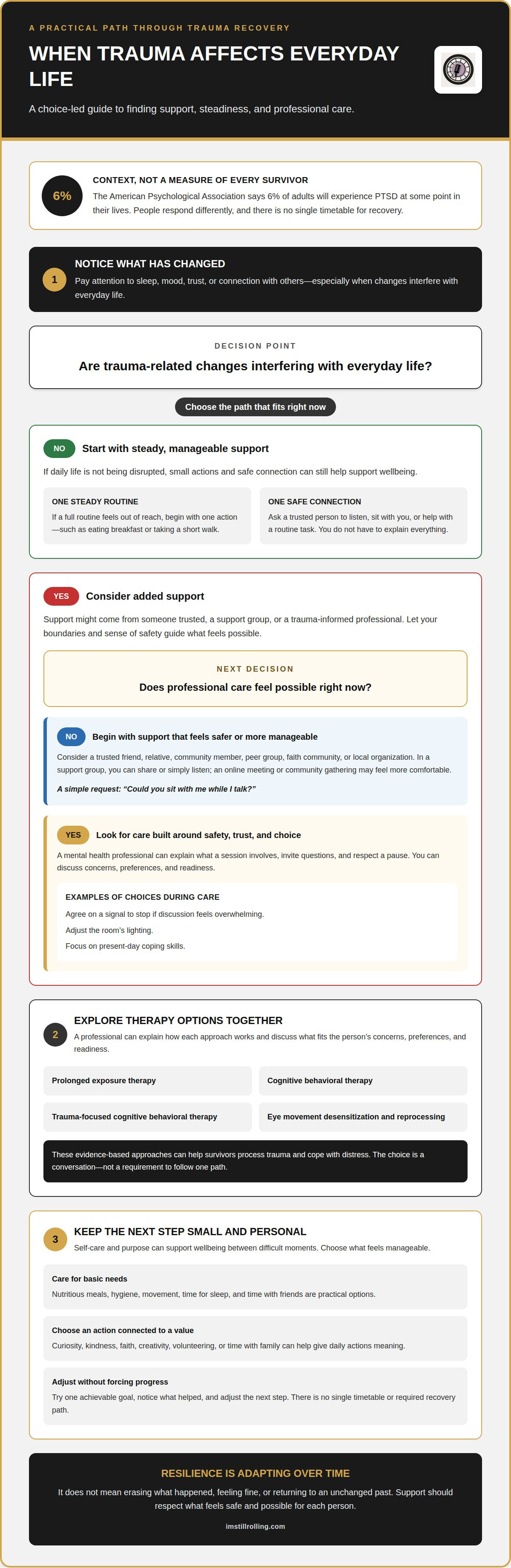
A traumatic event can unsettle trust, routines, and the feeling of being understood. Supportive relationships can help restore connection without demanding that someone explain everything. Start with one person who listens well, such as a trusted friend, relative, or community member. A simple request, “Could you sit with me while I talk?” gives that person a clear way to help.
According to the American Psychological Association, 6% of adults will experience PTSD at some point in their lives. That figure doesn't describe every survivor’s experience, but it underscores why compassionate support matters. A steady social network can include loved ones, peers, faith communities, or local organizations. Beliefs, culture, and personal boundaries shape what support feels safe, so let the survivor guide the conversation.
Support groups offer another way to connect with people who have faced similar experiences. Hearing how others cope can reduce isolation and introduce practical ideas, while each person remains free to share or simply listen. To explore a group, consider what setting feels comfortable, such as an online meeting or community gathering. Choose a space where respect and privacy are taken seriously.
Strong relationships grow through small, repeated actions. Ask what would help today, listen without interrupting, and acknowledge the person’s experience rather than minimizing it. For example, “That sounds difficult; I’m here” communicates care without forcing advice. If someone isn’t ready to talk, offer practical company, such as walking together or helping with a routine task.
How long does it take to recover from trauma? Recovery takes time, and its course differs from person to person; there is no single timetable. What are signs that trauma is affecting mental health? Notice changes in sleep, mood, trust, or connection with others, especially when they interfere with everyday life. These changes can be reasons to seek added support from someone trusted, a support group, or a trauma-informed professional.
2. Trauma-informed professional care
Trauma-informed professional care prioritizes safety, trust, and choice. A mental health professional can explain what a session involves, invite questions, and respect a pause. For example, someone who feels overwhelmed discussing a traumatic event can agree on a signal to stop, adjust the room’s lighting, or focus on present-day coping skills. These choices help make care responsive rather than coercive.
Which evidence-based trauma therapies are available in the United States? Options include prolonged exposure therapy, cognitive behavioral therapy, trauma-focused cognitive behavioral therapy, and eye movement desensitization and reprocessing. These approaches can help survivors process trauma and cope with distress. A professional can explain how each approach works and discuss the person’s concerns, preferences, and readiness.
Self-care supports psychological and physical wellbeing between difficult moments. Choose practical actions that feel manageable: eat nutritious meals, maintain hygiene, move your body, protect time for sleep, and spend time with friends. A predictable daily routine can reduce avoidable stress. If a full routine feels out of reach, begin with one steady action, such as eating breakfast or taking a short walk.
Emotional self-care also means noticing feelings without judging yourself for having them. When distress rises, pause and breathe slowly before deciding what to do next. Empathy matters in relationships, too: ask what kind of support would help, listen without rushing to fix the problem, and respect a request for space. Spiritual practices, such as prayer or meditation, can offer another source of comfort when they fit a person’s beliefs.
Care is especially worth considering when trauma-related distress disrupts daily life or self-care feels difficult to sustain. If progress feels stalled, a professional can help identify coping skills and a next step. Alongside care, firsthand stories of resilience can offer perspective on how people make meaning after adversity.
3. What is trauma resilience?
Resilience means adapting to hardship while finding ways to keep living with purpose. It isn’t a fixed strength, a return to an unchanged past, or proof that someone feels fine. After trauma, resilience might look like attending a class again, making a choice that once felt impossible, or asking what matters now. These steps don’t erase pain. They show a person responding to life beyond the traumatic event, at a pace that feels possible.
Some people also experience positive changes after trauma, a concept psychologists Richard Tedeschi and Lawrence Calhoun called post-traumatic growth in the 1990s. This can include stronger relationships, a changed outlook on life, or deepened spirituality. Growth isn’t required for recovery, and it doesn’t make the harm worthwhile. It describes one possible response, not a standard everyone must meet. Meaning can emerge alongside grief, anger, uncertainty, or other feelings.
Purpose can connect daily actions with what a person values. For one person, that may mean returning to creative work; for another, it could involve faith, volunteering, or spending time with family. Start by naming a value, such as curiosity or kindness, then choose one action that reflects it. A small act of volunteering, for example, can create connection without requiring someone to explain their history.
Goals can offer direction when the future feels difficult to picture. Make each goal clear and achievable: prepare one meal, take a walk, or set aside time for a meaningful activity. Then notice what helped and adjust the next step. The aim isn’t to force progress or measure strength against someone else’s story. It’s to create a personal path forward, with room for changing needs and renewed hope. Reaching one goal can reveal another possibility.
4. Definition of post-traumatic resilience
The American Psychological Association defines psychological resilience as adapting successfully to difficult or challenging life experiences. Its definition includes both the process and its outcome. After trauma, adaptation may mean returning to a valued routine while distress remains. Success isn’t measured by appearing unaffected or never needing support.
Two people can experience the same traumatic event and respond differently. One may return to work while still having difficult feelings; another may need more time before familiar tasks feel manageable. Neither response proves greater strength. A useful definition leaves room for personal history, culture, safety, and available support.
Resilience describes a capacity that can develop, not a permanent personality label. In research and everyday life, it can be understood through changes in how someone responds to stress. For example, a person might notice a trigger sooner, use a coping strategy, or ask for help rather than facing distress alone.
Look at several parts of daily functioning rather than judging recovery by one moment. Is it becoming easier to make choices, reconnect with someone trusted, or return to an important activity? Changes in sleep, eating, concentration, or relationships can also offer clues about how trauma is affecting everyday life. These observations aren’t a scorecard.
Post-traumatic resilience doesn’t require finding a positive lesson in what happened. Meaning may come later, or take a form unrelated to the trauma. A person might choose to protect a boundary, deepen a friendship, or pursue a goal that reflects personal values. Those choices can coexist with anger, grief, and uncertainty.
The clearest takeaway is that resilience means adapting without denying the experience. Notice one change that reflects greater choice or steadiness, even if difficult feelings remain. If daily life still feels hard to manage, that is information about what support may help, not evidence of failure. Recovery has no single outward appearance.
I'm Still Rolling Podcast
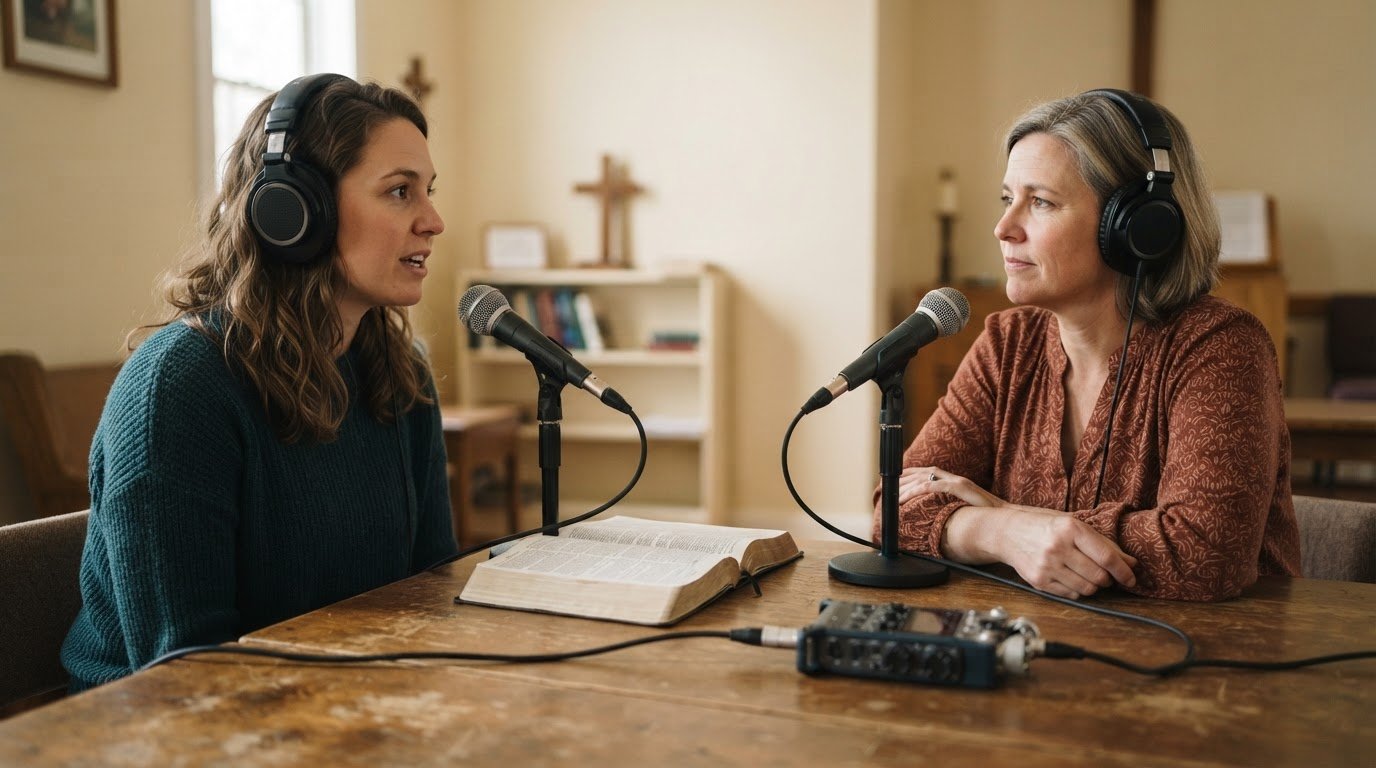
I'm Still Rolling Podcast offers candid conversations about resilience, disability, and life after adversity. If personal stories help you reflect on your own path, episodes share perspectives from people who have lived through difficult circumstances. They don’t replace professional care, but they can offer a thoughtful way to hear how others make sense of change and move through uncertain days.
Choose the format that fits your moment: listen to I'm Still Rolling Podcast Episodes, read Podcast Transcripts, or follow the I'm Still Rolling Newsletter. A transcript can help when you prefer to take in a conversation at your own pace; an episode lets you hear the voices behind the story. Each offers a different way to connect with lived experience.
If these conversations feel relevant to you, contact I'm Still Rolling Podcast.
Let your next step be your own
There is no single measure of progress, and you don’t have to turn healing into a test you pass or fail. Learning how to build resilience after trauma can mean making space for uncertainty while choosing one next step grounded in your needs. That step might be asking for support, returning to something meaningful, or simply noticing what helps you feel more present.
Let your pace be shaped by what feels safe, not by someone else’s expectations. If you want to hear more voices reflecting on adversity and the ways people move forward, you can connect with I'm Still Rolling Podcast. A story can’t decide your path for you, but it can offer a moment of recognition as you find your own.
Keep choosing what supports the life you want to build. Even a small step can be a beginning.
Frequently Asked Questions
What is trauma resilience?
Trauma resilience is the ability to adjust to the effects of a traumatic experience while continuing to make choices in daily life. It doesn’t mean feeling calm all the time or returning to an identical version of yourself. For example, setting a boundary around a difficult conversation can be a resilient response, even if sadness or fear remains present afterward.
What is post-traumatic growth?
Post-traumatic growth describes positive changes some people recognize after struggling with a major life challenge. It differs from resilience: resilience concerns adapting, while growth refers to shifts in perspective or priorities that a person experiences afterward. Someone might become more intentional about time with family, for instance. Growth isn’t a required outcome, and it doesn’t make the traumatic experience beneficial or necessary.
What steps can help build resilience after trauma?
A practical starting point for how to build resilience after trauma is to identify one situation that feels hardest right now, such as bedtime or returning to a busy place. Choose a small action that makes it more manageable, then decide who could support you. An “if-then” plan can help: if a reminder causes distress, step outside, use a grounding practice, or contact someone trusted. Review the plan and adjust it as needs change.
How can therapy help people recover from trauma?
Therapy can help someone understand confusing patterns and practice responses to distress. For example, a person who avoids a route after an accident might discuss what feels unsafe with a therapist and consider a gradual, agreed pace for addressing it. Sessions also offer space to reflect on what’s helping and what may need a different approach.
How can social support help with trauma recovery?
Support can make difficult tasks feel less isolating without requiring someone to share more than they want. A person might ask a friend to accompany them to an appointment, help with a meal, or check in after a stressful day. Support groups also let people listen before speaking. Specific requests make it easier for others to respond respectfully.
What daily habits support resilience after trauma?
Steady routines around sleep, movement, meals, and relaxation can support wellbeing. These habits can be part of how to build resilience after trauma, shaped around what feels manageable day to day. Adults need at least seven hours of sleep, while teenagers are recommended eight to 10 hours. As little as 15 minutes of daily movement can make a difference to health. Start with a habit that fits your current capacity, such as a short walk or a regular bedtime.

Comments