Children with Rare Diseases Stories: Finding Resilience in the Uncharted
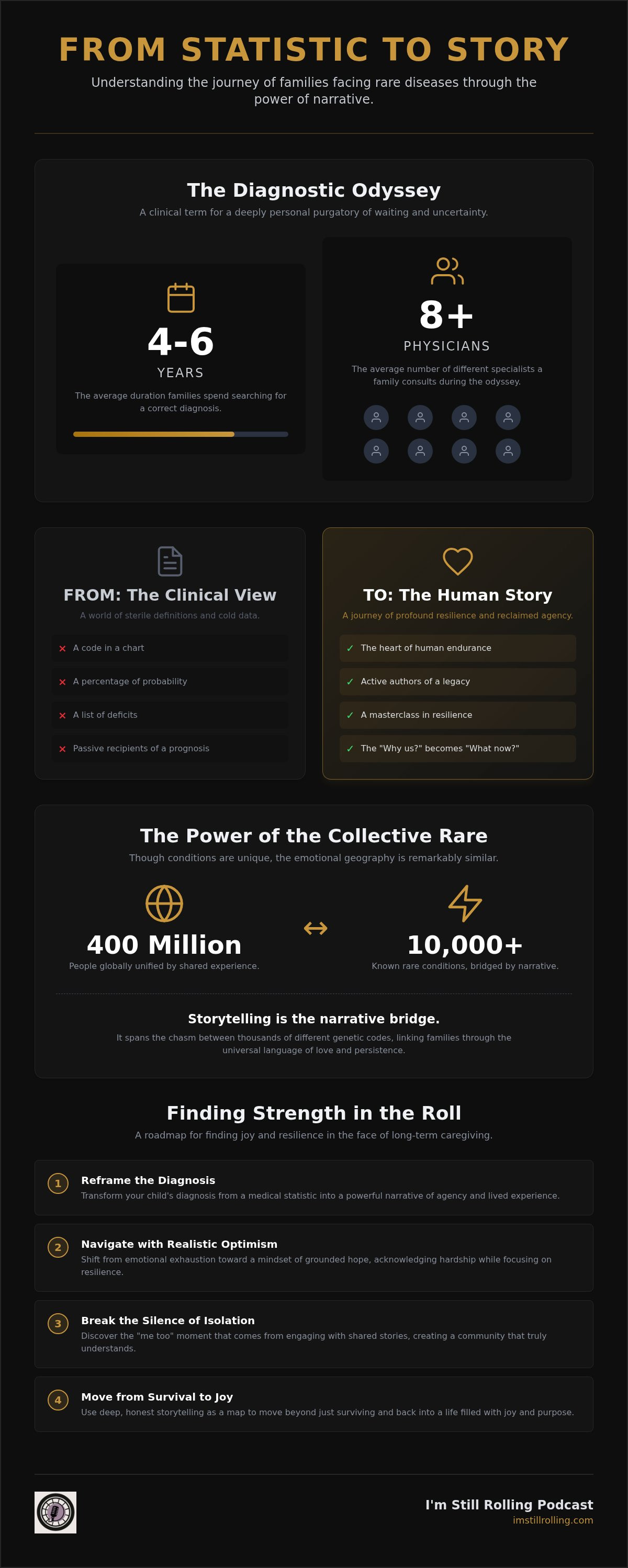
What if the most potent remedy for the isolation of a rare diagnosis isn't found in a clinical trial, but in the profound echoes of a shared story? When you seek out children with rare diseases stories, you aren't just looking for medical data; you are looking for a mirror. We understand that receiving a diagnosis no one can pronounce often feels like becoming a mere entry in a medical database. The diagnostic odyssey, which typically lasts four to six years and involves up to eight different physicians, leaves families exhausted and searching for more than just a treatment plan. You deserve to feel like more than a statistic.
We believe that while a diagnosis is a medical event, the life that follows is a masterclass in human endurance. This article will demonstrate how the power of narrative and journalistic insight transforms the crushing weight of the unknown into a journey of profound resilience. We'll examine how families find a sense of belonging in a community that understands the nuances of long-term caregiving. We will also preview the impact of the 2026 Genomic Answers for Children's Health Act and share how deep, honest storytelling provides the roadmap to move beyond survival and back into joy.
Table of Contents
Beyond the Diagnosis: Why Stories of Children with Rare Diseases Matter
Navigating the Diagnostic Odyssey: The Emotional Shift for Families
The Journalistic Perspective: Moving from Medical Data to Human Resilience
Cultivating Hope: How Sharing Rare Disease Stories Builds Community
Finding Strength in the Roll: Lessons from the I’m Still Rolling Podcast
Beyond the Diagnosis: Why Stories of Children with Rare Diseases Matter
A diagnosis is often delivered as a cold string of clinical data. It's a code in a chart, a percentage of probability, or a list of deficits. However, the lived experience of families is never found in the margins of a lab report. When we explore children with rare diseases stories, we move beyond the sterile definition of a Rare disease and into the raw, pulsating heart of human endurance. Awareness might get someone to look at a ribbon, but understanding requires looking a family in the eye.
Clinical reports are designed to solve problems, but human-interest stories are designed to honor people. While the former is essential for science, the latter is essential for survival. Narrative allows a family to reclaim their agency, transforming them from passive recipients of a grim prognosis into active authors of their own legacy. This shift is where the "Why us?" begins to transform into "What now?"
The Power of the Collective Rare
There are over 10,000 known rare conditions, each with its own set of biological hurdles. Yet, the emotional geography of these families is remarkably similar. Whether a child is one of ten in the world or one of ten thousand, the isolation is often identical. By sharing individual accounts, we build a community that doesn't just advocate for policy but offers a sanctuary for the spirit.
Bridging the gap between disparate symptoms through shared emotional truths.
Unifying 400 million people globally under a banner of mutual recognition.
Moving from "What is wrong?" to "How do we live?"
Storytelling acts as the narrative bridge that spans the chasm between thousands of different genetic codes, linking families through the universal language of love and persistence.
Storytelling as a Tool for Family Survival
For parents, the transition from a passive patient role to an active storyteller is a revolutionary act. It's a way to process medical trauma that otherwise stays locked in the body. When you document the uncharted life of your child, you aren't just recording history; you're creating a map for the person coming behind you. Professional journalists understand that the "uncharted" life is where the most profound truths reside. These children with rare diseases stories serve as a testament that life, even when it's fragile, is never a mistake.
Navigating the Diagnostic Odyssey: The Emotional Shift for Families
The "diagnostic odyssey" is a clinical term for a deeply personal purgatory. It's the years spent in waiting rooms, the repetitive blood draws, and the haunting silence of "we don't know yet." On average, this journey spans four to six years and involves eight different specialists. This period of chronic uncertainty does more than drain a family's bank account; it fundamentally alters their psychological DNA. While medical sites often highlight clinical success stories, they rarely touch on the emotional fatigue of living in limbo.
Facing the "Why us?" phase requires a delicate balance of realistic optimism. It isn't about ignoring the hardship or pretending that a life-altering diagnosis is a gift. It's about acknowledging the gravity of the situation while refusing to let it be the only thing that defines your family. You learn that joy isn't the absence of struggle, but the presence of resilience in the midst of it. These children with rare diseases stories aren't just about medicine; they're about the endurance of the human spirit.
The Grief and Growth of the "New Normal"
Recalibrating your life after a rare diagnosis involves a complex form of grieving. You aren't just mourning a child's health; you're mourning the "expected" version of parenthood you carried in your mind. This transition from medical crisis to lifestyle management is a profound evolution. By focusing on Stories of Recovery and Hope: Finding Light After Life-Altering Adversity, families can begin to see that a different life isn't a lesser life. It's a journey into the uncharted, where the milestones are different but the victories are often much sweeter.
Caregiving as an Act of Resilience
Caregiving for a child with a condition no one can name creates a unique brand of isolation. You become a self-taught expert in genetics, a logistics coordinator, and a fierce advocate, all while managing the daily emotional toll. This identity shift is similar to the experience of Caregiving for a Spouse with Alzheimer’s: Navigating the Emotional and Practical Shift, where the person you care for requires a total recalibration of your own life's rhythm. Resilience is found in these repetitive, quiet acts of devotion. These children with rare diseases stories remind us that even when the condition is invisible, your strength is not. If you find yourself needing a companion for this long-haul journey, the I'm Still Rolling podcast offers a space where these messy, honest truths are finally given a voice.
The Journalistic Perspective: Moving from Medical Data to Human Resilience
A medical chart is a map of a storm, but it never tells you what it feels like to stand in the rain. While clinical data provides the necessary framework for treatment, it often strips away the humanity of the patient. Professional journalists like Mike Sugerman and Janice Wright understand that the most vital parts of children with rare diseases stories aren't the data points, but the moments of quiet grit that happen between appointments. This journalistic approach seeks to extract a deeper truth, one that prioritizes the internal landscape over external symptoms.
Most narratives found online fall into two categories: the dry clinical report or the overly sanitized "miracle" bio. We choose to focus on the "messy middle," those long stretches of time where there is no immediate cure, only the daily discipline of living. While we value the patient success stories shared by leading institutions, we also recognize that success isn't always a medical breakthrough. Sometimes, success is simply the act of finding meaning within a struggle that has no easy resolution. This is where children with rare diseases stories become a masterclass in universal human resilience.
Rigor and Heart: The I’m Still Rolling Approach
Our method relies on the unhurried pace of long-form interviews. By giving families the space to speak without the pressure of a soundbite, we reveal the nuances that shorter blogs often miss. We avoid the hollow cheerfulness that can feel dismissive of actual pain, opting instead for a grounded, realistic optimism. You can explore these deep dives in our I’m Still Rolling Podcast Episodes: A Journalistic Guide to Resilience, where we bridge the gap between professional reporting and raw, lived intimacy.
Beyond Tropes: Portraying Disability Honestly
For too long, stories about disability have been trapped in a dichotomy of pity or heroism. Either the child is a tragic figure to be mourned or an "inspiration" whose only purpose is to make others feel better. We reject these tropes. A child with a rare disease is a person, not a plot point. Journalistic intimacy is the disciplined pursuit of a subject's internal truth, where the reporter's professional distance dissolves into a shared, vulnerable exploration of what it means to endure. By acting as a trusted guide, we help families move through the complex emotional landscape of their lives with dignity rather than drama.
Cultivating Hope: How Sharing Rare Disease Stories Builds Community
Isolation is often the heaviest symptom of a rare diagnosis. When your child's condition is shared by only a handful of people globally, the world feels impossibly large and empty. However, the moment you encounter children with rare diseases stories that mirror your own, that isolation begins to dissolve. This "Me Too" moment is a psychological lifeline. It transforms a solitary struggle into a shared experience, proving that while your child's condition may be rare, your family's journey is not alone. Finding the "other 1 in 100,000" through digital platforms is no longer a luxury; it's a vital part of the healing process.
The transition from being a consumer of these stories to a sharer of your own is a significant milestone in reclaiming your power. By contributing to the collective narrative, families move from a state of being observed by the medical community to a state of being heard by the world. These community narratives don't just provide comfort. They drive the engine of progress. In 2026, we see this clearly as personal stories have humanized the need for legislation like the Genomic Answers for Children's Health Act, turning individual hardships into a unified force for systemic change.
Finding Your Tribe in the Rare World
In the digital age, a "virtual village" can be just as effective as a physical one. Podcasts and newsletters offer a sanctuary where the "messy" parts of life are welcomed rather than edited out. It's essential to distinguish between purely clinical support groups, which focus on symptom management, and authentic communities that prioritize the human condition. In these spaces, you find "vulnerable peers" who offer a level of understanding that even the most well-meaning friends cannot reach. These connections are built on a foundation of realistic optimism, acknowledging the gravity of the situation while celebrating the small, profound victories of daily life.
Advocacy Through Narrative
Purpose-driven storytelling is the most effective tool for advancing disability rights. When families share their truth, they move the needle of public perception from pity to respect. This evolution is reflected in The Evolution of the Disability Rights Podcast: Trends and Truths in 2026, where the focus has shifted toward long-form, journalistic explorations of endurance. By documenting children with rare diseases stories, we create a historical record that demands better access to care and more inclusive policies. If you are ready to move from isolation into a community that truly understands the weight and beauty of your journey, join the conversation by subscribing to the I'm Still Rolling newsletter today.
Finding Strength in the Roll: Lessons from the I’m Still Rolling Podcast
The mission of I’m Still Rolling is built on the foundation of realistic optimism. This isn't the superficial cheerfulness often found in waiting room pamphlets; it's a sophisticated, grounded approach to life after a world-altering event. We understand that a rare diagnosis doesn't just change a child's health. It changes the entire family's trajectory. By prioritizing professional journalistic rigor alongside raw intimacy, we help families move beyond the clinical data and back into the human experience. Resilience, in this context, isn't about the absence of struggle. It's the disciplined discovery of meaning within it.
We invite you to engage with these narratives not as a spectator, but as a fellow traveler. When you listen to children with rare diseases stories on our platform, you're participating in a soulful connection that transcends the medical chart. These stories offer a mirror for your own endurance, providing a roadmap for those days when the path forward feels entirely uncharted. You don't have to navigate this diagnostic odyssey alone.
Why Resilience is a Practice, Not a Destination
One of the most profound lessons we’ve learned from our work with Spinal Cord Injury Recovery Stories: Resilience Beyond the Medical Chart is that the emotional architecture of survival is universal. Whether a family is adapting to a physical disability or a rare genetic condition, the process of "rolling forward" is the same. It is a daily practice of choosing hope over despair and agency over passivity. This philosophy defines our mission: we acknowledge the gravity of the hardship without ever descending into pity.
Move with Intent: Don't wait for a cure to start living.
Reclaim the Narrative: You are the author of your family's story, not the diagnosis.
Seek Vulnerable Peers: Authenticity is the fastest bridge to community.
Join the Conversation
We believe that your "unflinching" truth is worth sharing. If you're looking for weekly insights that honor the complexity of your journey, we invite you to subscribe to the I’m Still Rolling newsletter. For organizations that want to align with this mission of realistic optimism, we provide a detailed Human Interest Podcast Advertising: The 2026 Guide to Purpose-Driven Sponsorship. This is more than just media; it's a movement toward honest, purpose-driven storytelling. Listen to our latest children with rare diseases stories today and find the soulful connection you've been searching for.
Writing the Next Chapter of Your Journey
Navigating the uncharted waters of a rare diagnosis requires more than medical expertise; it demands a fundamental shift in how we perceive our own narratives. We've explored how the move from a clinical case study to a human-interest story allows families to reclaim their agency and find meaning within the struggle. By engaging with children with rare diseases stories, you aren't just consuming information. You're joining a global community of resilient listeners who understand that life after a medical crisis is still a life worth celebrating.
Hosted by award-winning journalists Mike Sugerman and Janice Wright, the I’m Still Rolling podcast provides the journalistic rigor and raw intimacy necessary to explore these complex emotional landscapes. Our authentic conversations avoid superficiality, focusing instead on the grounded, realistic optimism that sustains us through the long haul. You deserve a trusted guide who isn't afraid of the messy truths. Listen to the latest I'm Still Rolling episodes and find your story of resilience. Your path forward is unique, but it's a journey we're honored to walk alongside you.
Frequently Asked Questions
How do I find stories of other children with my child’s specific rare disease?
Start by exploring specialized patient registries and global advocacy groups, but also look for journalistic platforms that aggregate lived experiences. These sources often connect families across 10,000 different rare conditions through a shared narrative bridge. While clinical sites offer data, narrative-driven platforms help you find the "other 1 in 100,000" who share your daily reality. Connecting through shared children with rare diseases stories provides a mirror for your own endurance.
Why is storytelling considered a form of resilience for rare disease families?
Storytelling is a vital tool for reclaiming agency after a medical crisis. It allows parents to transform from passive recipients of a diagnosis into active authors of their child's legacy. By documenting the uncharted life, families process medical trauma and find meaning within the struggle. This narrative work acts as a psychological buffer, helping caregivers move beyond the sterile margins of a medical chart and into a space of realistic optimism.
What is the "Diagnostic Odyssey" and how does it affect family mental health?
The diagnostic odyssey is the period of chronic uncertainty families face while searching for answers, often lasting four to six years. This journey typically involves up to eight different physicians and leads to significant emotional fatigue. The psychological weight of living in limbo creates a unique brand of isolation. It forces families to recalibrate their definition of "normal" while managing the mental health toll of constant medical trauma and uncertainty.
How can I share my child’s rare disease story without it feeling like "inspiration porn"?
Focus on the "messy middle" rather than just the highlights or the tragedies. Avoid the dichotomy of pity or heroism by being unflinchingly honest about the daily grind and the small, quiet victories. Authentic storytelling prioritizes the human condition over the medical condition. By sharing your raw, lived intimacy, you create a soulful connection with others that honors your child as a person rather than a convenient plot point for others.
Where can I find a podcast that discusses the honest, messy side of disability and rare diseases?
The I’m Still Rolling podcast, hosted by seasoned journalists Mike Sugerman and Janice Wright, explores the raw realities of life after adversity. Each episode features deep-dive interviews that avoid superficial cheerfulness in favor of realistic optimism. You can access these children with rare diseases stories via streaming or read the full podcast transcripts. The show provides a safe space for reflecting on disability rights, caregiving, and personal growth after trauma.
What is the difference between medical awareness and journalistic storytelling in the rare disease community?
Medical awareness often focuses on clinical data and "lighting up" buildings for visibility. Journalistic storytelling, however, seeks to extract deeper truths through rigor and heart. While awareness is a necessary first step, storytelling aims for true understanding. It uses long-form interviews to reveal the nuances of interpersonal relationships and internal resilience. This approach transforms a medical event into a masterclass in human endurance and the discovery of meaning within struggle.
Can listening to others’ stories of adversity actually help with caregiver burnout?
Engaging with the narratives of "vulnerable peers" can significantly reduce the sense of isolation that leads to burnout. Hearing others speak your unspoken truths provides a "Me Too" moment that acts as a psychological lifeline. It offers a virtual village where the emotional weight of caregiving is shared rather than carried alone. This connection helps caregivers find the strength to move forward, even when the path ahead remains entirely uncharted.
How does the I’m Still Rolling podcast approach sensitive medical and personal narratives?
The podcast utilizes a sophisticated blend of professional reporting and raw intimacy. Hosts Mike Sugerman and Janice Wright act as trusted guides, using their years of media experience to navigate complex emotional landscapes with grace. They prioritize unhurried, long-form interviews that allow for a slow build-up of narrative tension and reflection. This disciplined pacing ensures that every guest's story is told with the dignity and maturity it deserves, avoiding superficial engagement.


Comments