Amputee Recovery Stories Podcast: Finding Resilience Through Authentic Narrative
What if the most exhausting part of limb loss isn't the physical therapy, but the weight of being treated like a medical case file instead of a human being? It's a common experience to feel reduced to a series of surgical outcomes, yet finding an amputee recovery stories podcast that speaks to the soul is often what's actually needed to heal. You might find yourself trapped between the clinical coldness of a hospital room and the shallow, unrealistic expectations of "inspiration porn" that feels more like a performance than a lived reality.
If you've ever felt isolated by a world that doesn't quite grasp the depth of your transition, you aren't alone. In this article, we'll explore how long-form journalistic storytelling helps bridge the gap between medical rehabilitation and a reclaimed sense of identity. You'll discover how authentic narratives from fellow travelers can help you move from a state of mere endurance into a space of grounded resilience. We'll examine how these deep dives offer practical emotional strategies and the validation of voices that truly understand the weight of your journey.
Table of Contents
Navigating the Silence: Why Amputee Recovery Stories Matter in 2026
The Science of Narrative: How Listening to Resilience Podcasts Aids Rehabilitation
Beyond "Inspiration Porn": Identifying Authentic Stories of Limb Loss Recovery
Integrating Podcast Stories into Your Physical and Emotional Recovery Plan
Join the Conversation: Why "I’m Still Rolling" is Your Companion in Resilience
Navigating the Silence: Why Amputee Recovery Stories Matter in 2026
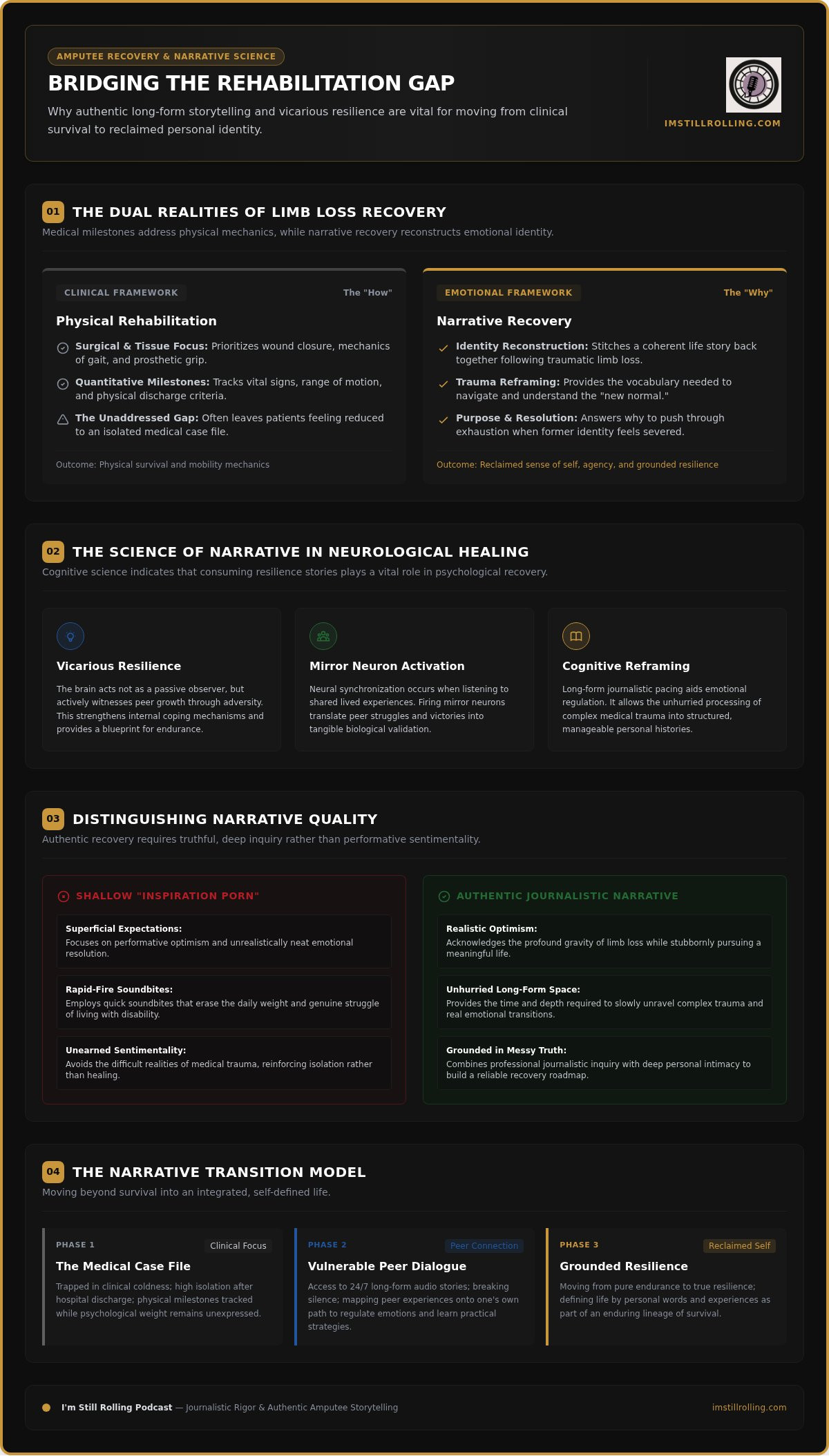
Narrative recovery isn't a term you'll find on a hospital discharge paper. It's the quiet, often messy work of stitching a coherent life story back together after the profound trauma of limb loss. While surgeons focus on tissue and bone, the individual is left to reconcile who they were with who they've become. In 2026, we're seeing a necessary shift in how we discuss disability. The era of superficial "inspiration porn" is finally fading, replaced by a grounded, realistic optimism that acknowledges the gravity of the struggle while stubbornly pursuing a meaningful life.
A medical chart tracks vitals and range of motion, but it rarely captures the psychological weight of a changed body. Understanding the complexities of amputation and rehabilitation is essential for physical survival, but emotional survival requires something more intimate. It requires a story. This is where an amputee recovery stories podcast becomes more than just media; it acts as a mirror for the internal struggle that clinical environments often inadvertently overlook. By giving voice to the "messy" parts of recovery, these narratives break the silence that often follows a life-altering diagnosis.
The Gap Between Physical Rehab and Emotional Healing
Physical therapy is designed to teach you the "how" of movement, focusing on the mechanics of gait or the grip of a prosthetic. However, it often ignores the "why." Why should you push through the exhaustion when your previous identity feels like a phantom limb that's been severed but still aches? Narrative resilience serves as a vital tool for neuroplasticity and emotional regulation by helping the brain reframe trauma into a structured, manageable history. Without this storytelling component, the "new normal" feels like a foreign country where you don't yet speak the language. Stories provide the vocabulary for that new life.
Breaking the Isolation of the "New Normal"
Hospital rooms are crowded but incredibly lonely. Once you return home, that isolation can intensify as friends and family struggle to find the right words. Digital communities and long-form audio have changed this dynamic by providing 24/7 access to peer perspectives. Hearing a familiar struggle in an amputee recovery stories podcast creates a "vulnerable peer" connection that clinical advice simply can't replicate. It's a steady, reliable pulse that reminds you that the transition from patient to survivor isn't a solo trek. You're part of a lineage of endurance, moving beyond the medical file to a life defined by your own words and experiences.
The Science of Narrative: How Listening to Resilience Podcasts Aids Rehabilitation
The healing process is often viewed through the lens of physical milestones, such as wound closure or prosthetic fitting. However, cognitive science suggests that the stories we consume play a nearly equal role in neurological recovery. This phenomenon is known as vicarious resilience. When you listen to an amputee recovery stories podcast, you aren't just a passive observer; your brain is actively witnessing another person's growth through adversity. This process strengthens your own internal resources, providing a blueprint for endurance that a medical textbook cannot offer.
Long-form interviews provide a rare, unhurried space for processing complex medical trauma. Unlike the rapid-fire soundbites of traditional media, these deep dives allow for the slow unraveling of a life altered by limb loss. This deliberate pacing is essential for emotional regulation. By integrating stories of recovery and hope into cognitive behavioral strategies, individuals can begin to reframe their own trauma. Journalistic rigor plays a vital role here, as it ensures the narrative remains grounded in truth rather than falling into the trap of easy, unearned sentimentality.
Mirror Neurons and the Power of Shared Lived Experience
There is a biological reason why hearing a recovery story feels like a personal victory. Mirror neurons in the brain fire when we observe another person performing an action or experiencing an emotion, creating a sense of shared reality. This neural synchronization can significantly reduce the cortisol levels associated with chronic medical anxiety. Mike Sugerman and Janice Wright utilize their extensive media backgrounds to guide these conversations, using professional inquiry to extract deeper truths. Their approach transforms a simple interview into a therapeutic tool that fosters a sense of "vulnerable peer" connection, helping listeners feel seen in their own struggle.
Moving Beyond the "Hero" Narrative
The "super-amputee" trope, often found in mainstream media, can be unintentionally damaging to those in the early stages of recovery. When the only stories shared are those of mountain climbers and paralympians, the average person may feel like a failure for simply trying to get through a difficult Tuesday. Authentic recovery requires valuing the messy parts of the journey, including grief, anger, and the inevitable setbacks. Realistic optimism isn't about ignoring the pain; it's about acknowledging the weight of the challenge while finding the strength to keep moving. If you're looking for a grounded perspective on this journey, you might find solace in the latest I'm Still Rolling podcast episodes, where the focus remains on honest, unflinching narrative.
Beyond "Inspiration Porn": Identifying Authentic Stories of Limb Loss Recovery
Inspiration porn is a term used to describe the objectification of disability for the emotional benefit of a non-disabled audience. It portrays people with limb loss as one-dimensional figures of courage, existing solely to provide a quick "feel-good" moment for others. For those actually living the experience, this type of content feels alienating and profoundly dishonest. When searching for an amputee recovery stories podcast, it's crucial to find a show that prioritizes the raw, unvarnished truth over a polished performance. Authentic narratives don't shy away from the friction of a prosthetic that doesn't fit or the quiet grief of a lost hobby. They embrace vulnerability. They understand that true resilience is built in the shadows of the struggle, not just under the spotlight of a victory.
Red Flags in Disability Storytelling
One of the most common red flags is an over-reliance on "miracle" recoveries. While high-achievement stories are valid, they often skip the grueling daily grind that defines the first few years of life after limb loss. If a guest is being treated as a prop to teach the audience a lesson about "not complaining," the story has lost its human center. There's a fundamental difference between being vaguely "inspired by" a guest and actually learning from their specific emotional and practical strategies. Look for content that respects the guest's agency and acknowledges their setbacks as much as their successes. Honesty is the only path to a real connection.
The Journalistic Difference: Why Production Quality and Rigor Matter
High production quality is more than just clear audio; it's about the rigor of the inquiry. Structured interviews, led by veteran journalists like Mike Sugerman and Janice Wright, prevent a story from wandering into aimless territory or becoming overly clinical. This professional framework allows for a deep dive into the human condition, ensuring that the "messy" parts of life are explored with both grace and purpose. Accessibility is also a hallmark of quality. Providing Podcast Transcripts ensures that these vital conversations are available to everyone, regardless of hearing or processing needs. When a show combines journalistic experience with a "vulnerable peer" approach in an amputee recovery stories podcast, it creates a reliable space for deep reflection. This award-winning approach to disability journalism provides a more stable foundation for those looking to move from survival to resilience.
Integrating Podcast Stories into Your Physical and Emotional Recovery Plan
Recovery is rarely a linear progression. It's a series of peaks and valleys that require different emotional tools at different times. While clinical settings provide the physical framework, an amputee recovery stories podcast can serve as a portable, private companion for the internal work that happens between appointments. To get the most out of these narratives, it helps to approach them with a structured intent rather than just passive consumption. This intentionality transforms a simple audio file into a roadmap for your own reclaimed identity.
Your first step is to identify your current emotional state. Are you looking for the grit required to push through a difficult rehab session, or do you need the quiet validation of someone who has navigated the same grief? Choosing episodes that match your immediate needs, such as spinal cord injury recovery stories, ensures the content resonates with your current headspace. Once you've selected an episode, practice active listening by looking for the specific parallels between the guest's journey and your own. This isn't about comparing tragedies; it's about identifying the emotional strategies they used to endure the "messy" parts of their transition.
To deepen these insights, try discussing specific themes with a therapist or a trusted support group. A podcast episode can act as a safe third party that allows you to explore difficult topics without the pressure of a direct spotlight on your own trauma. Finally, consider journaling as a follow-up. Writing down your reflections after an episode helps you reclaim your narrative voice, turning someone else's wisdom into your own personalized strategy for endurance. If you're ready to find a voice that speaks to your experience, you can explore our latest podcast transcripts and episodes.
Listening as a Form of Peer Support
Not everyone is ready for the vulnerability of an in-person support group in the early stages of recovery. Podcasts offer a unique form of peer support that you can access on your own terms. The unhurried pace of long-form interviews creates a meditative environment, allowing you to process complex emotions without the need to perform for others. Whether you're looking for stories that address the specifics of limb loss or the broader challenges of a life-altering diagnosis, these audio deep dives provide a steady pulse of connection that follows you wherever you go.
Sharing the Journey with Your Caregivers
Disability is rarely a solitary experience; it reshapes the lives of everyone in the household. Using an amputee recovery stories podcast as a shared resource can help spouses and family members understand the internal shifts that are often difficult to verbalize. For example, listening to episodes about caregiving for a spouse with Alzheimer's can build profound empathy for the practical and emotional weight that partners carry. This shared listening creates a common vocabulary for hardship, allowing you and your loved ones to navigate the "new normal" with a sense of collective realistic optimism and grounded grace.
Join the Conversation: Why "I’m Still Rolling" is Your Companion in Resilience
Mike Sugerman and Janice Wright didn't start this project to offer medical advice or sell a specific device. They started it because, as veteran journalists, they knew that the most powerful tool for human endurance is a well-told truth. By creating an amputee recovery stories podcast that values rigor as much as intimacy, they've built a space where the "messy" parts of life are met with grace rather than pity. This isn't a show about "overcoming" in a way that feels unreachable. It's about the steady, daily act of showing up for your own life, even when that life looks different than you expected.
The philosophy of "realistic optimism" is woven into every conversation. It's an approach that refuses to look away from the gravity of a life-altering challenge while simultaneously holding space for hope. Mike and Janice act as both trusted guides and vulnerable peers, utilizing their media expertise to ask the questions that get to the heart of the human condition. You won't find superficial cheerfulness here. Instead, you'll find a steady pulse of resilience that acknowledges the weight of the journey without being crushed by it. This is why an amputee recovery stories podcast can be a vital part of your emotional toolkit.
Accessing the Archive: Audio, Video, and Transcripts
We know that everyone processes their journey differently, which is why we've made sure our content is available in multiple formats. Whether you prefer to listen to I'm Still Rolling Podcast Episodes during a commute, watch the video versions for a deeper sense of connection, or read through our detailed Podcast Transcripts, the goal is accessibility. You can also subscribe to the I'm Still Rolling Newsletter to receive deep-dives into disability rights and the history of the community. We invite you to move beyond being a listener and become an active participant in a community that values your story as much as your survival.
The I’m Still Rolling Mission
Our mission is rooted in the belief that every recovery is a narrative act worth telling with professional discipline. We're committed to unflinching honesty, ensuring that the stories we share are never reduced to clichés or props for someone else's inspiration. By treating these experiences with the journalistic rigor they deserve, we help bridge the gap between being a patient and being a person with a reclaimed identity. If you're looking for a companion on this difficult but meaningful path, we encourage you to Listen to the latest episodes of I’m Still Rolling and find the voices that resonate with your own.
Reclaiming Your Story Through Shared Resilience
Recovery is more than a series of physical adjustments; it's a profound act of narrative reconstruction. By moving beyond the sterile confines of a medical chart and rejecting the shallow tropes of inspiration porn, you can begin to stitch your identity back together with honesty and grace. This journey requires a steady, reliable pulse of connection that only a truly authentic amputee recovery stories podcast can provide. You've seen how vicarious resilience and active listening can turn another person's endurance into your own roadmap for survival.
Hosted by award-winning journalists Mike Sugerman and Janice Wright, our community is built on a foundation of realistic optimism. We provide full transcripts for every episode to ensure these vital conversations remain accessible to everyone. It's time to move from being an observer of your trauma to a participant in your transformation. Subscribe to I’m Still Rolling and Hear the Stories of Resilience. You don't have to navigate the silence alone. There is beauty and strength to be found in the messy parts of the journey; keep rolling forward.
Frequently Asked Questions
Where can I find the best amputee recovery stories podcast?
You can find a high-quality amputee recovery stories podcast at I'm Still Rolling, where seasoned journalists Mike Sugerman and Janice Wright host deep-dive conversations. Unlike directories that list every show regardless of depth, this platform focuses on realistic optimism and professional rigor. It provides a safe space for listeners to explore the messy, honest parts of life after limb loss through audio, video, and written formats.
How do recovery stories help with the emotional impact of limb loss?
Recovery stories address the psychological weight of a changed body by offering a sense of vicarious resilience. When you hear another person navigate the complexities of identity after trauma, it helps your brain reframe your own experience from a medical case file into a human narrative. This process reduces the isolation often felt in clinical environments, providing the emotional validation needed to move from survival to true resilience.
Is there a podcast that talks about the reality of life after amputation without being overly "inspirational"?
I'm Still Rolling is specifically designed to avoid the "inspiration porn" trope by focusing on unflinching honesty rather than superficial cheerfulness. The hosts explore grief, anger, and the daily grind of prosthetic use with the same weight as they do successes. This amputee recovery stories podcast treats guests as complex individuals rather than props for others' emotional growth, ensuring every episode feels grounded and profoundly real.
Can caregivers benefit from listening to amputee recovery podcasts?
Caregivers gain significant value from these narratives as they offer a window into the internal shifts that a spouse or family member might struggle to verbalize. By listening to shared experiences, caregivers can build deeper empathy and develop a shared vocabulary for the hardships they face together. This collaborative understanding helps families navigate the "new normal" with a sense of collective grace and realistic optimism, fostering a stronger support system.
What is the difference between a medical recovery and a narrative recovery?
Medical recovery is defined by clinical milestones like wound healing and prosthetic fitting, while narrative recovery is the process of stitching your life story back together. Narrative recovery focuses on the "why" of living rather than just the "how" of moving. It uses storytelling as a tool for emotional regulation and identity reclamation, helping you find meaning within a struggle that a medical chart simply cannot capture.
How do I subscribe to a podcast that focuses on disability resilience?
You can subscribe to the I'm Still Rolling Newsletter to receive updates on new episodes and deep-dives into disability rights. Most resilience-focused podcasts are also available on major streaming platforms. By staying connected through a newsletter, you ensure you have regular access to stories that provide a steady pulse of hope and practical emotional strategies for navigating life after a major diagnosis or life-altering change.
Are there video versions of amputee recovery interviews available?
Yes, I'm Still Rolling offers audio, video, and written Podcast Transcripts to ensure the content is accessible to everyone. Providing multiple formats allows listeners to choose the medium that best fits their processing needs or lifestyle. Whether you want to see the vulnerability in a guest's eyes or read the text for better clarity, these options ensure the resilience community remains inclusive, unhurried, and deeply connected.
How can journalistic insight change the way we view disability stories?
Journalistic insight brings structure and discipline to disability stories, preventing them from becoming aimless or overly clinical. Professional journalists like Mike Sugerman and Janice Wright know how to ask the difficult questions that extract deeper universal truths. This rigor ensures that the narrative remains focused on the human condition, helping listeners view disability through a lens of authority and lived experience rather than pity or shallow sentimentality.
Comments