Ways to find support when chronic illness makes you feel like a burden
Needing help with a chronic illness doesn’t make you a burden. Feeling like a burden with chronic illness can grow from real dependence, grief over changed roles, and cultural pressure to manage everything alone. Therapy can help you examine guilt and shame, notice the thoughts that turn needing support into a judgment about your worth, and find more compassionate ways to respond.
It makes sense if asking for help feels uncomfortable, especially when illness affects the people you love as well as your energy, work, or plans. This article explores how illness-related needs, dependence, and expectations of independence can shape feeling like a burden with chronic illness, and how supportive relationships can make room for honesty rather than apology. You’ll also learn what therapy may offer, including ways to question thoughts about being a burden and build coping strategies without denying the reality of your symptoms. The aim isn’t to pretend that needing care is easy; it’s to remember that your needs do not determine your worth.
Table of Contents
1. Finding supportive friendships and partnerships
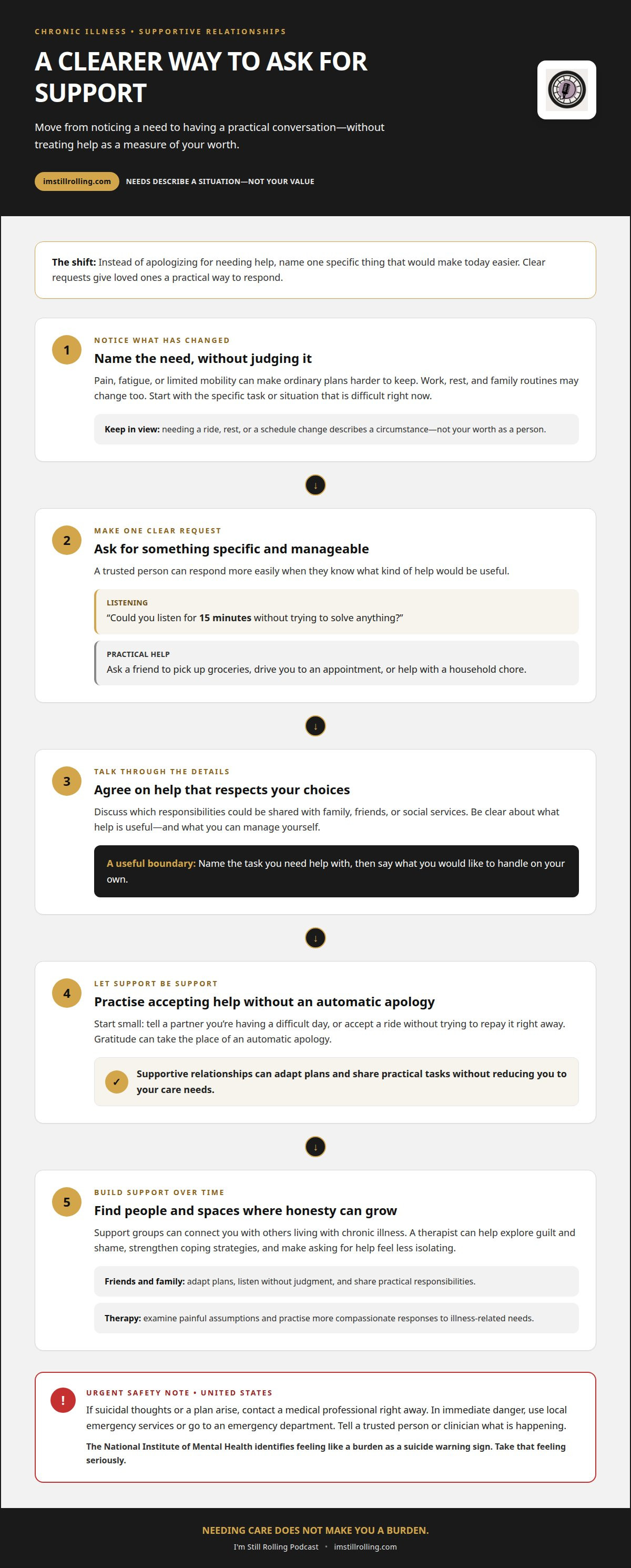
Chronic illness can change how someone works, rests, and takes part in family life. Pain, fatigue, and limited mobility may make ordinary plans harder to keep. Supportive relationships make room for these changes without reducing someone to their care needs. A friend who understands may adapt plans, while family members can share practical tasks.
Make one specific request instead of apologizing for needing help. For example, ask a trusted person to listen for 15 minutes without trying to solve anything. Or ask a friend to pick up groceries, drive you to an appointment, or help with a household chore. Clear requests give loved ones a practical way to respond.
Caregivers can support someone who feels like a burden by listening without judgment and discussing which responsibilities could be shared with family, friends, or social services. Talk together about what help is useful and what preserves the person’s choices. To set boundaries, name the task you need help with and what you can manage yourself. Gratitude can take the place of an automatic apology.
Acceptance can take practice. Start small: tell a partner you’re having a difficult day, or accept a ride without trying to repay it right away. Support groups for people living with chronic illness can connect you with others facing similar challenges. A therapist can also help explore guilt and shame, strengthen coping strategies, and make asking for help feel less isolating.
In the United States, if suicidal thoughts or a plan arise, contact a medical professional right away. In immediate danger, use local emergency services or go to an emergency department. The National Institute of Mental Health identifies feeling like a burden as a suicide warning sign. Take that feeling seriously, and tell a trusted person or clinician what’s happening.
2. Cultural pressures around independence and self-sufficiency
Messages about self-reliance can make assistance feel like failure. Someone raised to praise independence may interpret needing help with symptoms as evidence of weakness rather than a response to changed health. Cultural expectations differ, but noticing the rule you absorbed is a useful first step. Write down the belief, such as “I should manage alone,” and ask whether it fits your circumstances now.
Childhood family experiences can shape self-esteem long after someone leaves home. If a family member dismissed pain or praised children only for being useful, for example, asking for care may stir up old shame. That history doesn’t prove the belief is true today. A therapist can help connect earlier experiences with present-day guilt and explore how they affect mental health, relationships, and responses to illness.
Chronic illness can also disrupt familiar roles. Someone who once organized family outings may now need others to plan around their energy or mobility; someone else may grieve reduced work or household responsibilities. Name what has changed, then identify a value that remains possible in a different form. If you miss contributing at home, sharing a decision or offering emotional support may help preserve connection without requiring the same physical effort.
Burnout can be easy to dismiss as simply part of managing symptoms. Instead, notice a concrete sign, such as dreading routine tasks or feeling depleted after appointments, and treat it as information about your limits. Self-compassion means responding to that information without calling yourself lazy or selfish. Try replacing self-criticism with a specific, fair statement: “My capacity has changed, and rest is part of how I manage today.” A therapist can help challenge harsh self-beliefs and develop coping strategies that respect both your needs and your values.
3. Dependence and emotional distress in chronic illness
Depending on others can reshape routines, privacy, and a person’s sense of control. Anxiety and depression can occur alongside chronic illness, making everyday tasks feel nearly impossible. Pain may disrupt work, for example, while fatigue makes cooking or keeping plans difficult. Financial strain, relationship changes, lost hobbies, and missing important events can deepen emotional distress. These pressures can build, especially when someone feels they must hide their needs.
Shock and grief may follow a chronic illness diagnosis, including grief for a former sense of health. Missing a valued job, passion, or familiar role can bring sadness, anger, or fear. These responses are difficult, but they are not proof of personal failure. Try naming the emotion and its immediate trigger: “I feel angry because I had to cancel plans.” This separates a painful event from a sweeping judgment about your worth.
In the United States, around 62% of adults don’t discuss stress because they don’t want to burden others. That reluctance can make distress harder to share. Learning to notice emotion without judgment offers a small starting point: spend five minutes journaling, grounding, or breathing slowly. Record what happened, what you felt, and what you need next. A clear note can help you explain the situation to someone you trust or a health professional.
Feeling like a burden may signal depression or anxiety when it persists alongside worthlessness, self-hatred, social withdrawal, loss of interest, or major changes in eating or sleeping. Contact a medical professional right away if these signs arise, if basic self-care becomes unmanageable, or if loved ones express concern. A therapist can help examine guilt and shame, understand emotional patterns, and practise coping strategies. Support can address distress without dismissing the real demands of illness.
Feeling like a burden because of illness-related needs
A request for help can start an inner verdict: “I’m too much for everyone.” Yet needing a ride, rest, or schedule changes describes a situation, not your value as a person. Anxiety can make that judgment feel convincing; research cited in the topic materials indicates anxiety is more likely than depression to relate to feeling burdensome. Notice when a practical need becomes a global conclusion about who you are.
Cognitive behavioral therapy offers a way to examine that conclusion. Write down the thought, then separate what happened from what you fear it means. For example, “My partner drove me to an appointment” is observable; “I have ruined their life” is an interpretation. Ask what supports that interpretation and what complicates it. A more balanced thought might be, “I needed help today, and I’m still a valued member of this relationship.”
Try replacing an automatic apology with gratitude, without pretending the need is easy. “Thank you for helping me get there” acknowledges another person’s care without treating your needs as a fault. You can also respect your physical limits, even when doing so feels embarrassing. If symptoms mean you need to sit down or leave early, responding to that need is practical, not a character flaw.
Letting go of self-blame doesn’t require letting go of sadness, frustration, or concern about others. Instead, connect the feeling to its context: perhaps you’re grieving a change in what you can do, or worrying about the impact on someone close. Naming that distinction can make the next conversation clearer. For example, tell a family member, “I’m anxious about needing support, and I’d like to talk about what feels manageable for both of us.” Asking what works can replace assumptions with an honest discussion.
I'm Still Rolling Podcast
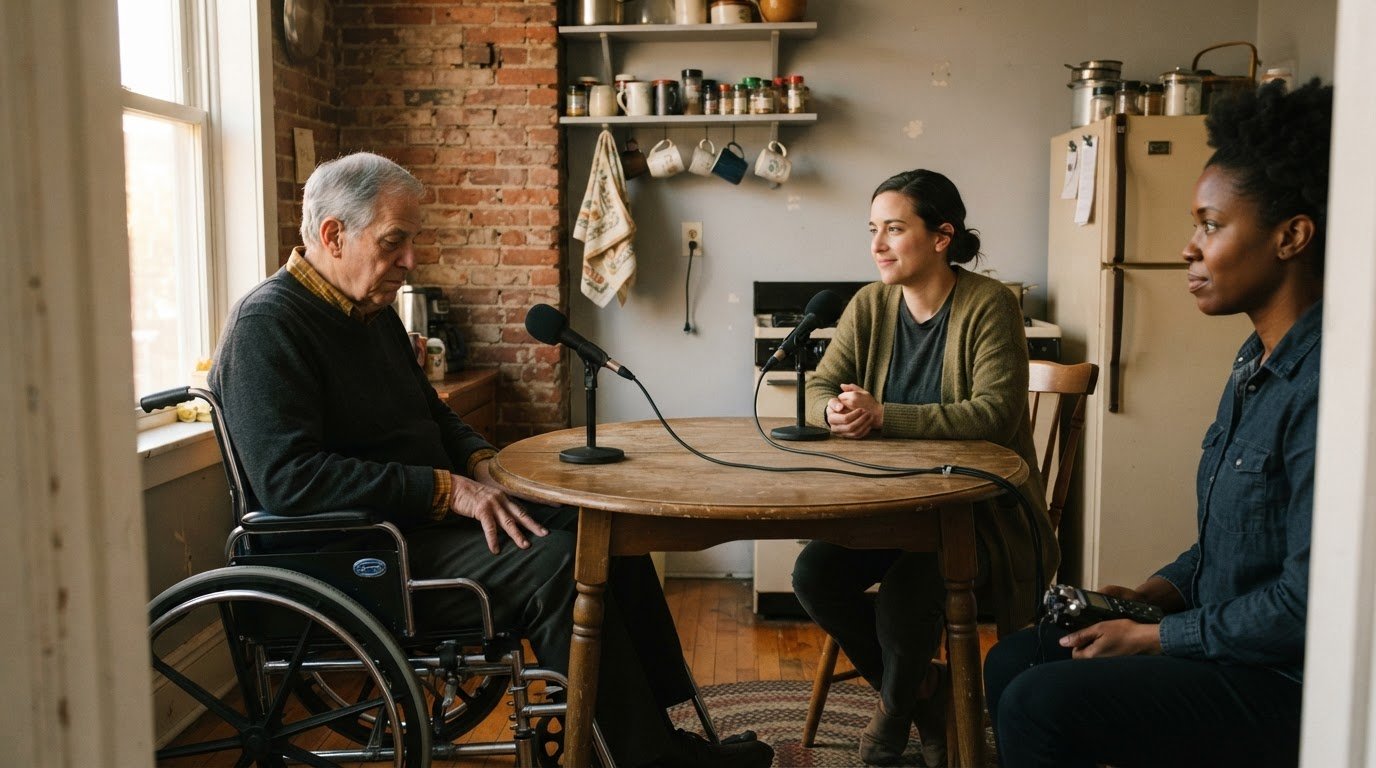
I'm Still Rolling Podcast shares honest conversations about disability, resilience, caregiving, and life after adversity. If illness-related dependence has left you questioning your place in relationships, hearing people speak openly about difficult experiences can offer perspective and connection. The episodes don’t replace therapy or personal care, but they make space for stories that recognize the complexity of living with illness.
Explore I'm Still Rolling Podcast episodes for conversations you can listen to, the I'm Still Rolling Newsletter for written reflections, or Podcast Transcripts to read along. These offerings can be a helpful companion when you want to hear how others make meaning through change, without pretending every challenge has an easy answer. Visit I'm Still Rolling Podcast to explore the stories and resources.
Make room for support that fits your life
Feeling like a burden with chronic illness can make connection seem like something you must earn by needing less. A gentler next step is to notice what kind of connection feels possible today: a brief conversation, a quiet shared activity, or simply being heard without having to explain everything. Your capacity may change from day to day, and your relationships can make room for that reality.
You don’t need to settle every difficult feeling before reaching out. If honest stories about disability and resilience help you feel less alone, connect with I'm Still Rolling Podcast. Let support begin with one small act of openness, at a pace that respects your needs. Your illness may shape what you can do, but it doesn’t erase your place in the lives you care about.
Frequently Asked Questions
What Causes Us to Feel Like a Burden?
Feeling like a burden can happen when someone mistakes needing support for being less valuable. Illness-related changes may collide with family messages about being capable, productive, or independent. Needing to change plans can trigger guilt, for instance, even when nobody has expressed resentment. Separate the event from the interpretation: a canceled outing is a changed plan, not proof that you’re unwanted.
Why do people with chronic illness feel like a burden?
People living with chronic illness may need help with routines that once felt private or effortless, and that shift can bring self-consciousness. Feeling like a burden with chronic illness can also grow when symptoms fluctuate, making it hard to predict what support you’ll need. Try distinguishing the request from the fear behind it: needing assistance today does not establish what others think of you.
How can chronic illness affect self-esteem and relationships?
Chronic illness can change how someone sees their contribution and how relationships share responsibility. A person may compare their current abilities with an earlier version of themselves, while a loved one may be unsure how to respond. Make room for roles beyond practical tasks: sharing opinions, affection, humor, or decisions can sustain mutual connection even when daily responsibilities change.
How can I talk to loved ones about feeling like a burden?
Choose a calm moment and describe the feeling without presenting it as a fact about the relationship. For example: “I’m worried my health needs are changing our time together. Could we talk about what feels difficult for each of us?” This gives your loved one room to respond honestly. If speaking feels daunting, write down your main concern first.
What are practical ways to accept help with a chronic illness?
Make receiving help easier by stating your preferences along with the need. You might say, “Could you handle the pharmacy pickup and text me when it’s done?” Clear details reduce guesswork and keep you involved. If an offer doesn’t suit you, suggest another task or time. Accepting help doesn’t require giving up choice, and appreciation doesn’t create a debt you must repay immediately.
What therapy or support groups help with chronic illness and guilt?
Cognitive behavioral therapy can help examine guilt-related thoughts, while acceptance and commitment therapy focuses on meaningful living alongside symptoms and uncertainty. A therapist can help you explore which approach fits your concerns and practise coping skills. Peer groups can offer conversation with people who understand illness-related changes firsthand. These supports complement medical care; they don’t replace treatment for physical symptoms.


Comments