How to Help a Parent Accept Care at Home
You can’t force an adult parent to accept in-home care. Helping a parent accept care starts with respecting their right to choose while talking honestly about risks and your concerns. A refusal may reflect worries about privacy, independence, cost, or having someone unfamiliar in the home. First, try to understand what’s behind it.
It’s hard to watch someone you love struggle and feel every conversation ending in a stalemate. You can raise concerns without criticism, listen before offering solutions, and suggest a small, practical change instead of presenting care as an all-or-nothing decision.
This article explains how to talk with a parent who resists help, adapt daily routines so support feels less disruptive, and prepare for healthcare decisions together. Find ways to keep the conversation open, offer choices that preserve dignity, and take the next step with care rather than pressure.
Table of Contents
How do I force my parents to get the in-home care they need?
You can’t make an adult parent accept care simply because you believe it’s necessary. A useful first step in helping a parent accept care is understanding what their refusal protects, then offering choices that address their concerns.
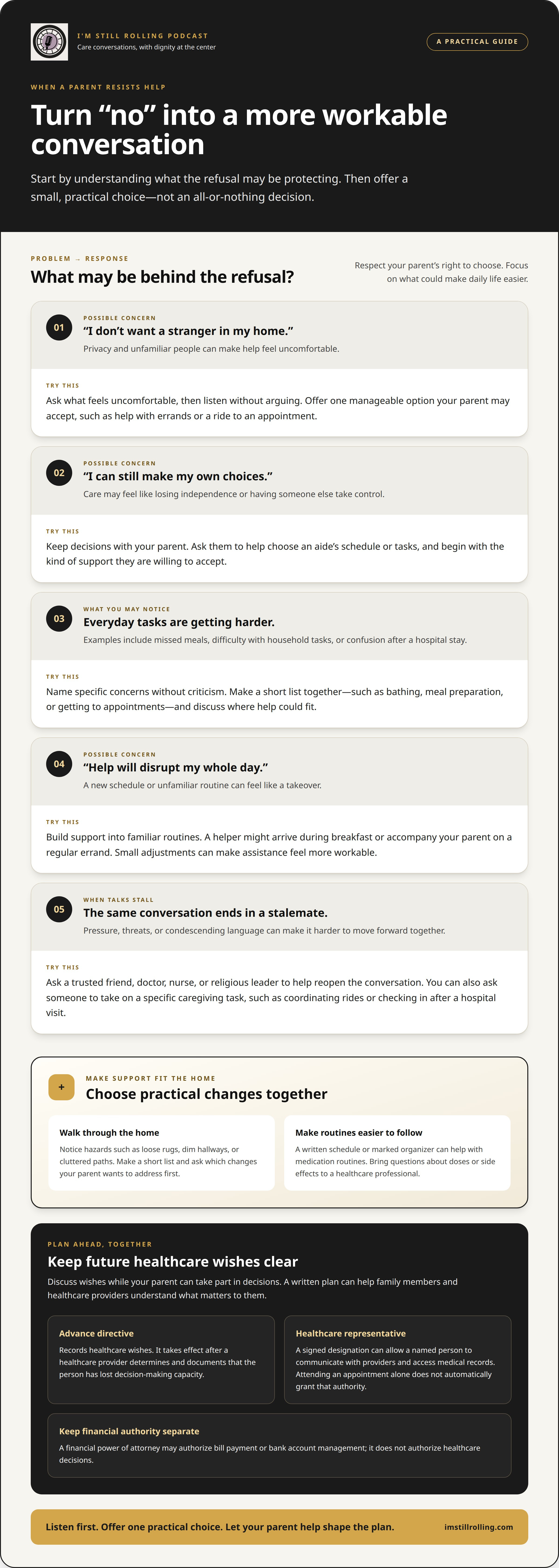
Recognize Caregiving ChallengesBefore discussing care, write down specific concerns, such as missed meals, difficulty with household tasks, or confusion after a hospital stay. Ask your parent what makes help uncomfortable, and listen for concerns about privacy, cost, independence, or unfamiliar people. Avoid threats or condescending language. Focus on what could make daily life easier.Offer one manageable option, such as help with errands or a ride to an appointment. If the conversation stalls, ask a trusted friend, doctor, nurse, or religious leader to help reopen it. Your parent makes their own choices, so focus on solving problems together, not on taking control. Helping a parent accept care starts with treating their concerns as real, not as obstacles to overcome.
Support Emotional WellbeingSet a regular time to talk with friends or relatives about the strain of caregiving. Ask someone to take on a specific task, such as coordinating rides to appointments or checking in after a hospital visit. A support group can offer a place to discuss family resistance with others facing similar responsibilities.Notice whether stress is affecting your sleep, patience, or daily responsibilities. Consider counseling or a support group before exhaustion takes over. When helping a parent accept care, remember that your wellbeing matters too. Asking for support is a practical step, not a failure.
Contact community resources to learn what help may fit your family’s circumstances. In the United States, the Eldercare Locator can be reached by phone at 800-677-1116, according to the Administration for Community Living. State Medicaid 1915(c) waivers can help pay for home and personal services, including caregiving.
Keep records of care-related expenses and ask a tax professional whether any tax credits or deductions may apply to your situation. Eligibility depends on individual tax details, so don’t assume every expense qualifies. You can also ask community resource staff about financial assistance programs that may help support care at home.
Changes in the home and daily routines
Match support to the tasks your parent finds difficult, then adjust the home and routine to those needs. Coverage depends on the service: according to the Centers for Medicare & Medicaid Services, Medicare covers part-time or intermittent home health aide care only alongside specified skilled services. Medicaid waivers may help pay for home and personal services, while long-term care insurance coverage depends on the policy.
Compare Home Care and Facility PlacementList daily tasks that are becoming difficult, such as bathing, preparing meals, or getting to appointments, then discuss where support could happen. Home care brings assistance into familiar surroundings; facility placement means living in a setting where care and daily life are organized. Consider your parent’s preferences, safety needs, and how much support family members can reliably provide. Neither option is a verdict on independence.
Arrange In-Home ServicesStart with help your parent is willing to accept, such as light housework, errands, or rides to appointments. If a doctor has prescribed skilled services, distinguish them from nonmedical help provided by a home care aide. Ask your parent to help set the aide’s schedule or choose their tasks. Respite care can give a family member time away while someone else provides support.
Walk through the home together and note practical hazards, such as loose rugs, dim hallways, or cluttered paths. Make a short list of changes, then discuss which ones your parent wants to address first. A written schedule or marked organizer can make medication routines easier to follow. Bring questions about doses or side effects to a healthcare professional. An attorney can explain who may make financial decisions, but that doesn’t replace your parent’s role in everyday care choices.Build support into familiar routines: a helper might arrive during breakfast or accompany your parent on a regular errand. Small adjustments can make support feel less like a takeover and more like a workable part of the day.
Advance directives and healthcare decision-making
Prepare for future medical decisions while your parent can still explain their wishes. A written plan can help family members and healthcare providers understand what matters to them.
Ask your parent to discuss the care they would want if serious illness left them unable to communicate. An advance directive records those wishes and takes effect after a healthcare provider determines and documents that the person has lost decision-making capacity. Talk through examples, such as which treatments or comfort priorities matter most, rather than treating the form as paperwork alone.
Invite your parent to name a trusted healthcare decision-maker and complete an advance directive while they have decision-making capacity. A designation of personal representative form can allow that person to communicate with providers and access medical records after your parent signs it. Attending an appointment doesn’t automatically give an adult child authority to make decisions or access medical information.Keep financial authority separate. A financial power of attorney may authorize someone to pay bills or manage bank accounts, but it doesn’t authorize healthcare decisions. If your parent has questions about what the documents mean, an attorney can explain their options.
Arrange a healthcare appointment if you notice changes in mobility, memory, or thinking. Occasional forgetfulness can happen with aging, but more significant changes may signal a condition that needs medical attention. Bring specific examples, such as missed medication doses or difficulty moving around the home, so the provider can assess the concern.
Take signs of depression or urgent mental distress seriously. Ask directly how your parent is feeling, stay with them if immediate safety is a concern, and seek urgent help. In the United States, the Substance Abuse and Mental Health Services Administration says the 988 Suicide & Crisis Lifeline is available 24 hours daily; people can call or text 988.
Talking with a parent who resists care
You can’t force an adult parent to accept home care. Helping a parent accept care starts with understanding what the refusal means to them, then offering choices that preserve their dignity and control.
Start a Conversation About CareChoose a calm moment and raise one specific observation without sounding critical. For example, say, “I noticed preparing meals seems harder. What’s been difficult for you?” Then listen without interrupting or disputing their answer. Ask whether privacy, independence, or having someone unfamiliar at home is the main concern.Explain one practical reason for considering assistance, such as making errands less tiring. You can also describe how support might ease your worries without making your parent responsible for your feelings. Keep the first conversation warm and brief. If it turns tense, pause rather than pressing for agreement.
Introduce Care GraduallyOffer help with one task your parent identifies, such as a ride to an appointment or company during an outing. If they decline, return to the topic after a few days with a smaller request. A casual coffee or short visit can make meeting an aide feel less like a formal handover.Ask your parent to help choose the aide’s tasks and schedule. Present assistance as support for a valued routine, not a replacement for it. Helping a parent accept care can mean letting them set the pace and keeping the conversation open if the first offer doesn’t feel right.
Preserve a Parent's IndependenceAsk which decisions your parent wants to keep making, then shape support around those preferences. They might choose their meals, decide when to go out, or select the household tasks that matter most. Offer genuine options rather than presenting a settled plan.If resistance continues, ask a trusted friend, physician, or spiritual leader to join a future conversation. Be candid about what you can manage, with a concrete example such as being unable to provide nursing-level care. Helping a parent accept care works best as a shared discussion, not a contest over control.
I'm Still Rolling Podcast
I'm Still Rolling Podcast shares honest stories of resilience, disability, caregiving, and life after adversity. When family conversations leave you feeling alone with the strain, hearing how others navigate difficult changes can offer perspective without pretending there’s a simple answer. Explore podcast episodes, read the newsletter, or use podcast transcripts in the format that suits you. These stories can accompany practical family conversations, not replace decisions about care or healthcare. To share a thought or question, contact I'm Still Rolling Podcast.
Make the Next Conversation a Small Beginning
There may be no single conversation that settles everything. A useful next step is to find a moment of connection that isn’t about persuading your parent: share a meal, ask about a favorite routine, or listen to what they most want to protect. That understanding can shape how helping a parent accept care unfolds, leaving more room for trust and less pressure to decide everything at once.
Caregiving can bring tenderness and frustration into the same day. You can seek perspective as you find your footing, especially when family needs and emotions feel hard to manage alone. Stories of resilience can offer company without claiming to solve your family’s decisions.
Connect with I'm Still Rolling Podcast if you’d like to share what this experience is bringing up for you. Keep moving at a pace that respects your parent and your own limits; a thoughtful next step still counts.
Frequently Asked Questions
How do I get my siblings on the same page?
Agree on shared observations before debating solutions. Each sibling can describe what they’ve personally noticed, such as unopened mail or difficulty preparing meals, then separate facts from fears. Assign manageable roles based on availability: one person might coordinate appointments, while another handles regular check-ins. Keep your parent involved where possible, so family planning supports their wishes instead of becoming a decision made around them.
Is it selfish to not want to take care of my parents myself?
No. Loving a parent doesn’t mean you must provide every kind of care personally. Your capacity, health, work, distance, and family responsibilities all matter. You can contribute by organizing visits, helping with decisions, or staying connected while other people provide hands-on assistance. Naming what you can and can’t do clearly helps prevent resentment and gives relatives a more realistic basis for sharing responsibilities.
Step 1: Understand the Situation: Why is your elderly parent resisting help?
Look for the reason behind the refusal, not just the word “no.” Your parent may fear losing familiar routines, feel embarrassed about needing assistance, or worry that accepting help will lead to bigger changes. Ask what they think would happen if support began. Their answer may reveal whether the main concern is the task, the person helping, or what accepting help seems to represent.
What are the living situation options?
Options can include staying at home with adjustments and support, living with family, or moving to a residential care setting. The right arrangement depends on your parent’s preferences, daily needs, home environment, and the support loved ones can sustain. Talk about what an ordinary day should look like, not only where someone will live. This can clarify trade-offs and keep your parent’s priorities central.
What if my parent flat-out refuses?
If your parent understands the choice and isn’t putting themselves or others in danger, respect their decision, even if you disagree. Stay connected, note concrete changes, and revisit support if circumstances shift. In an immediate emergency, contact emergency services. For ongoing concerns, ask someone your parent trusts to help open a calm conversation.
What if the first conversation goes badly?
Stop pushing in the moment. A tense exchange can make care feel like a threat, so acknowledge the strain and give your parent room to settle. Return to the subject after a few days with one smaller, specific request, such as accepting a ride to an appointment. If they remain unwilling, preserve the relationship through ordinary contact rather than turning every visit into another attempt to persuade them.



Comments