Personal Stories of Life Changing Diagnosis: Navigating the New Normal with Resilience
A single sentence in a doctor's office can instantly cleave your timeline into a "before" and an "after," leaving you standing in the rubble of a life you no longer recognize. Whether it's a traumatic spinal cord injury or a progressive chronic condition, the weight of a new reality often feels less like a medical milestone and more like a profound loss of identity. You aren't alone in this transition; as of 2026, 60% of young adults and 90% of seniors are managing at least one chronic condition. These personal stories of life changing diagnosis reveal that while the medical jargon is overwhelming and the isolation feels absolute, the "after" doesn't have to be a diminished version of your existence.
It's natural to feel like a burden or to grieve the person you were yesterday. We understand that the path forward isn't found in superficial cheerfulness but in a grounded, honest acknowledgment of the hardship. This article promises to guide you from the initial shock toward a place of resilience and purpose. By blending journalistic insight with raw, real-world experiences, we'll explore practical coping strategies and provide evidence that joy remains possible, even when the roadmap has been rewritten.
Table of Contents
The Anatomy of a Life-Changing Diagnosis: Navigating the Initial Shift
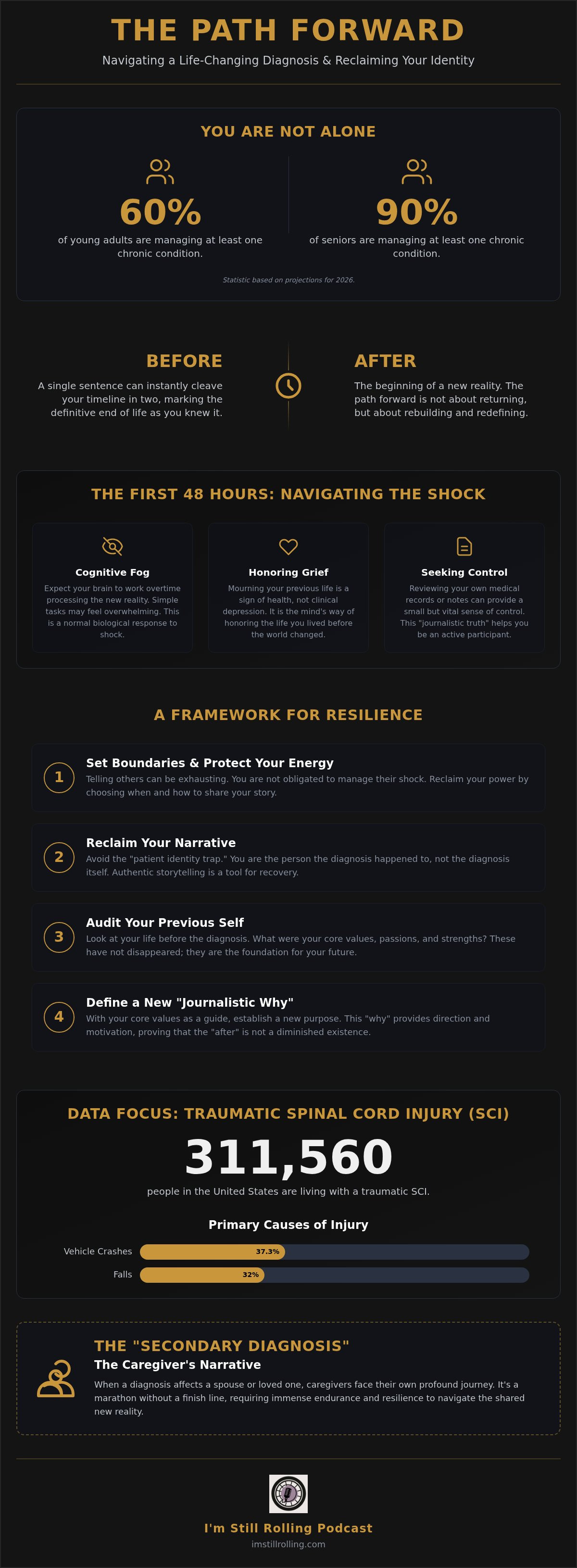
A diagnosis isn't just a collection of medical syllables; it's a structural collapse of your previous reality. When you hear life-altering news, the world doesn't just change, it pivots on an axis you didn't know existed. The first 48 hours often feel like a fever dream where time dilates and the air itself feels heavy with the weight of new, unwanted vocabulary. This threshold marks the definitive end of your "before" and the unceremonious beginning of your "after." Understanding The Anatomy of a Life-Changing Diagnosis requires looking past the clinical charts to the human spirit's attempt to reconcile a shattered identity.
Many people try to force their experience into the traditional five stages of grief, but trauma is rarely that linear. Instead of a tidy progression from denial to acceptance, many find a fluid, messy landscape where anger and hope sit at the same table. It's helpful to adopt a journalistic lens here, observing your own reactions with a blend of curiosity and distance rather than judgment. This approach helps you avoid the "patient" identity trap, where your entire existence becomes defined by a diagnostic code rather than your character or history. These personal stories of life changing diagnosis often start with this realization: you are the person the diagnosis happened to, not the diagnosis itself.
The Shock Phase: When the World Stops Turning
Cognitive fog is a biological reality after a major shock. Your brain is working overtime to process a threat it wasn't prepared for, making simple tasks feel like climbing a mountain. During this time, seeking "journalistic truth" in your own medical records or notes can provide a small but vital sense of control. It's also essential to distinguish between the natural mourning of your previous life and clinical depression. Grieving what you've lost is a sign of health, not a symptom of a secondary disorder. It's the mind's way of honoring the life you lived before the world changed.
Breaking the News: Managing the Social Ripple Effect
Telling others can be more exhausting than the diagnosis itself. You shouldn't feel obligated to be the emotional anchor for everyone else's shock. Protecting your energy is a priority, not an indulgence. You'll likely encounter well-meaning peers who offer "inspiration" that feels hollow or insensitive. Narrative agency is the ability to tell your own story on your own terms. By choosing when and how to share, you reclaim a piece of the power that the diagnosis tried to take away. Authentic personal stories of life changing diagnosis highlight that setting boundaries with others is the first step toward internal resilience.
Real Stories of Resilience: From Spinal Cord Injuries to Chronic Illness
Mike Sugerman didn't just report on the news; he became the story when a medical crisis fundamentally altered his physical capabilities. This transition from observer to participant is what grounds the "I'm Still Rolling" philosophy. It's not about ignoring the hardship, but about finding a way to keep the wheels turning. For the 311,560 people in the United States living with a traumatic spinal cord injury, the journey is rarely about a miraculous return to a previous state. Whether the cause was a vehicle crash, which accounts for 37.3% of injuries, or a fall, which accounts for 32%, the path forward is rarely a straight line. These personal stories of life changing diagnosis often serve as the only reliable map for a territory that feels entirely alien.
These spinal cord injury recovery stories highlight that resilience isn't a single event. It is a daily, sometimes hourly, choice. Similarly, those navigating life after a stroke find that the path to a new normal is frustratingly non-linear. One day brings a breakthrough in mobility; the next brings a setback in speech. Chronic illness functions as a marathon without a finish line, requiring a level of endurance that clinical pamphlets often fail to capture. By examining Real Stories of Resilience, we see that the most profound healing often happens in the mind long before the body catches up.
Physical Transformation and the New Body Image
Living in a wheelchair introduces physical barriers, but the psychological barriers of body image are often more daunting. It's a fundamental restructuring of how you see yourself in the world. True rehabilitation requires emotional healing to walk alongside physical therapy. Finding purpose after disability doesn't mean returning to exactly how things were. Instead, it involves:
Challenging the "broken" narrative that society often imposes.
Redefining success through small, daily victories that clinical charts don't measure.
Cultivating a community of "fellow travelers" who understand the nuances of this transition.
The Power of the Long-Form Interview
Clinical advice has its place, but it lacks the soul of a peer who has sat in the same waiting rooms. This is why I'm Still Rolling Podcast Episodes focus on the deep dive. Hearing another person's unfiltered struggle creates a community that statistics cannot build. Realistic optimism is the courage to acknowledge the grit and pain of a situation while maintaining a disciplined belief in one’s ability to endure and find meaning within it. Unlike toxic positivity, it doesn't ask you to smile through the pain; it asks you to survive it. If you're looking for more ways to stay grounded, you can find a wealth of perspective in these personal stories of life changing diagnosis by browsing our journalistic guides to resilience.
The Caregiver’s Narrative: Resilience When the Diagnosis Isn’t Yours
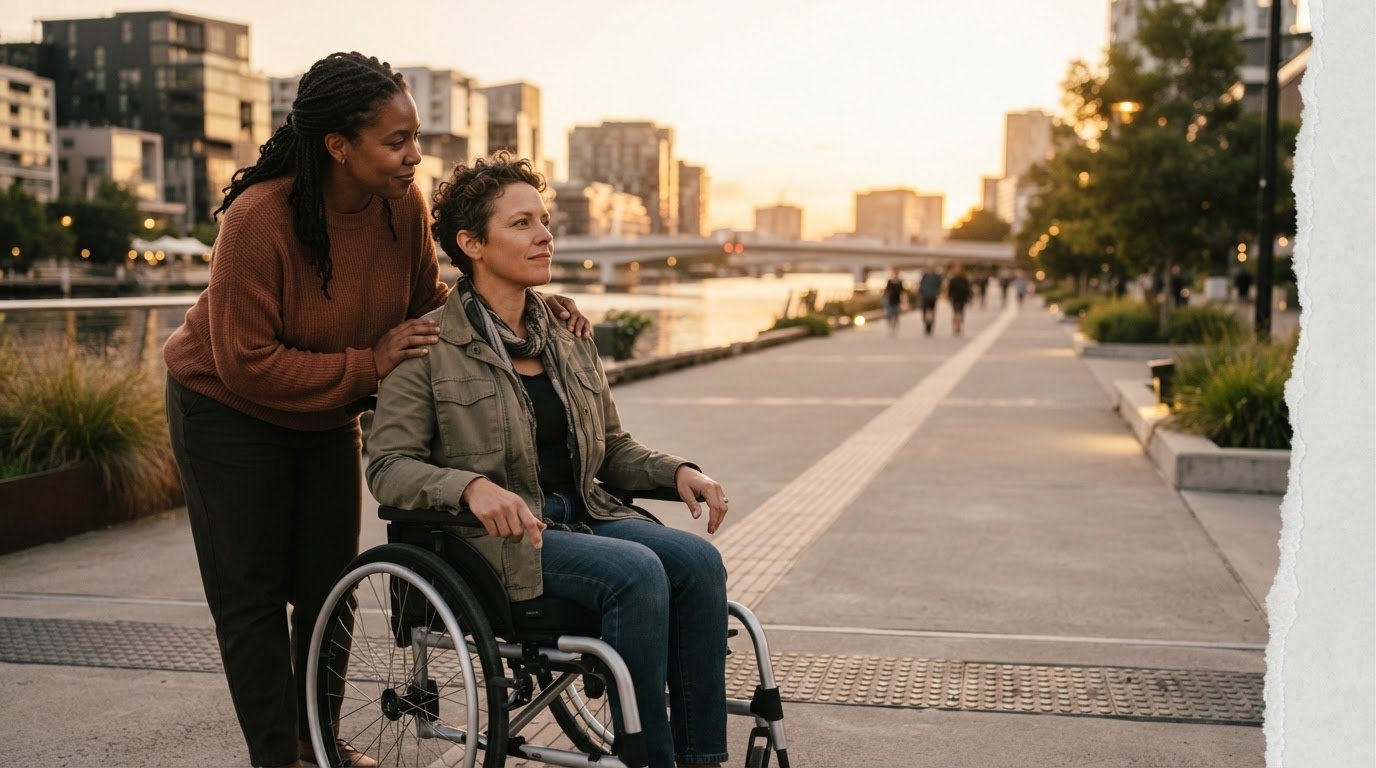
When a medical crisis strikes, the clinical focus is naturally fixed on the person in the hospital bed. Yet, there is a secondary diagnosis that occurs simultaneously for the partner standing at the bedside. This parallel trauma fundamentally alters the caregiver's life trajectory, often without the same level of social support or medical roadmap. These personal stories of life changing diagnosis aren't limited to those with the physical ailment; they encompass the entire family ecosystem. In the United States, 63 million family caregivers navigate this unmapped territory, providing unpaid care valued at an estimated $1.01 trillion. It's a role that demands a sophisticated blend of logistical precision and emotional endurance.
Janice Wright brings a necessary journalistic rigor to this experience, balancing the need for objective truth with the raw intimacy of her own history as a caregiver. She understands that the "martyr" complex is a dangerous trap that leads directly to burnout. Instead of suffering in silence, resilience requires an unflinching look at the invisible weight of the role. Navigating the complexities of caregiving for a spouse with alzheimer's or a spinal injury means managing a life that was never part of the original plan. It's about finding a way to remain a partner while becoming a provider, a transition that requires a radical restructuring of one's own identity.
The Emotional Toll of Ambiguous Loss
Ambiguous loss is a unique form of grief where a partner’s personality may shift or fade while they remain physically present. This is particularly prevalent in cognitive conditions, where the person you married seems to slip away in increments. Maintaining intimacy amidst medical demands feels like a monumental task. You aren't just a spouse anymore; you're a medication manager, a physical therapist, and a legal advocate. Self-care in this context isn't a luxury or a spa day. It's a functional necessity. If the caregiver collapses, the entire system follows, making your own health a vital part of the patient's care plan.
Building a Sustainable Support System
Isolation is the primary enemy of the long-term caregiver. You need a community that understands the specific nuances of your situation, from the frustration of insurance hurdles to the specific grief of a quiet house. Many caregivers feel that asking for help is a sign of failure, but it's actually an act of professional-grade management. A common objection is the claim that there's no time to listen to a podcast or engage with personal stories of life changing diagnosis. In reality, shared experience is the most efficient way to process trauma. Hearing a peer's voice for twenty minutes can provide more clarity and validation than hours of clinical reading, proving that you're still rolling, even when you're the one doing the pushing.
Turning Trauma into Truth: How to Reclaim Your Identity
Reclaiming your identity after a medical crisis isn't about returning to a former version of yourself; it's about synthesizing your history with your new reality. The "patient" label is a heavy cloak that often obscures the person beneath, but you can strip it away through a deliberate, structured process of self-discovery. These personal stories of life changing diagnosis suggest that the most resilient individuals aren't those who "bounce back" to their old lives, but those who build something new on the foundation of what remains. It's a transition from being a subject of medical study to being the author of your own narrative.
The first step is a rigorous audit of the "Old Self." Ask yourself what stays, what must go, and what is capable of evolving. You might lose certain physical hobbies, but your curiosity, humor, and core values often remain untouched. Next, find your "Journalistic Why" by interviewing yourself with the same rigor a reporter brings to a lead story. What motivates you in this new context? By redefining success outside of traditional "healthy" metrics, you can find purpose in endurance and adaptation. Advocacy often becomes a vital tool for healing, where you turn personal struggle into public purpose. Engaging with overcoming adversity podcasts helps normalize this transition, providing a steady pulse of shared survival for those who feel isolated.
The Role of Storytelling in Personal Growth
Externalizing your story is a powerful way to reduce the internal weight of trauma. When you speak your truth, you move from "being a victim" to "having been victimized by circumstance." There is a profound difference in agency between those two states. Try a practical exercise: write your own "headline" for the next chapter of your life. If your story was a front-page feature, what would the subhead say about your resilience? To hear how others have written their headlines after a crisis, listen to the latest episodes of our community conversations.
Re-entering the World: Disability Rights and Pride
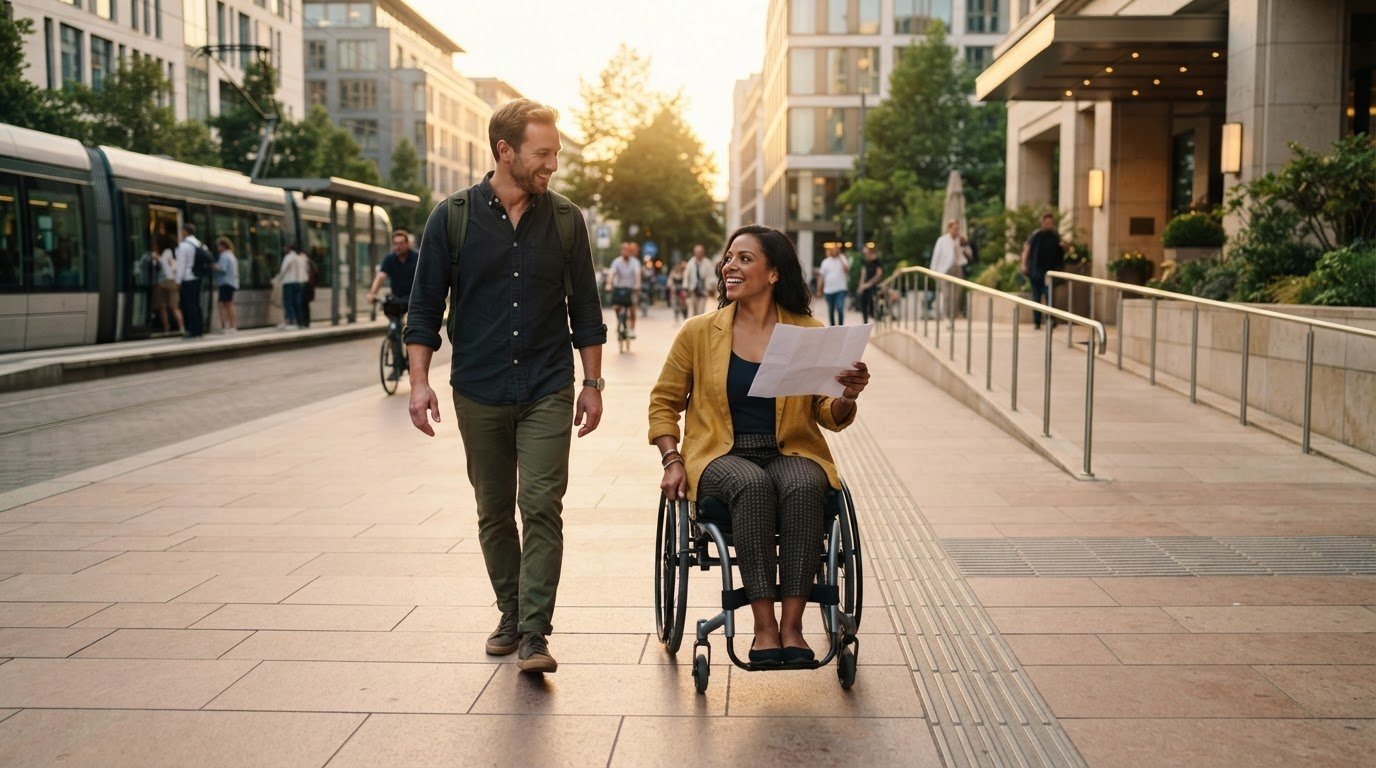
Re-entering the world with a diagnosis often involves a shift from hiding to living authentically. You don't have to apologize for your new reality or the equipment that facilitates it. Understanding disability history can provide a sense of belonging and power, situating your struggle within a larger movement for equity. Representation in media matters because it validates the existence of those living with life-changing conditions, proving that a different life is still a full life. Moving from shame to pride is a slow process, but it's the ultimate act of reclamation within personal stories of life changing diagnosis. You're still you; the circumstances have simply changed the medium of your expression.
Rolling Forward: Why Authentic Stories are the Best Medicine
The journey from a life-altering diagnosis to a state of resilient "rolling" is rarely a straight line; it is a series of pivots, setbacks, and small, hard-won victories. We've explored the anatomy of the initial shock, the complexities of caregiving, and the profound shift in identity that follows. Now, we must recognize that these personal stories of life changing diagnosis are more than just anecdotes. They function as a form of medicine that clinical settings often cannot provide, offering a visceral connection to the human experience that a medical chart simply lacks.
Journalistic rigor is essential for keeping these stories grounded. Mike Sugerman and Janice Wright bring decades of professional reporting to these conversations, ensuring the narratives remain rooted in truth rather than empty platitudes. This isn't about "inspiration porn" or superficial cheerfulness; it is about the grit required to move forward when the world has stopped making sense. By prioritizing journalistic truth, we create a space where the gravity of a situation is acknowledged without descending into pity. Pity is a passive emotion that isolates, whereas the "realistic optimism" shared in these stories is an active force that connects us.
Joining the Resilience Community
Reclaiming your narrative begins with the realization that you don't have to navigate this terrain in silence. We invite you to subscribe to the I'm Still Rolling Newsletter for ongoing support and insights that bridge the gap between professional reporting and personal lived experience. The value of "vulnerable peer" connections cannot be overstated in long-term recovery. These relationships provide a mirror for your own endurance, showing you that while your life has changed, your capacity for meaning has not. Your next step is simple: listen to your first episode of the I'm Still Rolling Podcast Episodes and begin the process of externalizing your own story.
A Final Word on Realistic Optimism
Being "Still Rolling" is a choice made every single day, often in the quiet moments between medical appointments and daily hurdles. It is about finding beauty in the "messy" parts of the human condition and accepting that a different life can still be a deeply fulfilling one. Resilience isn't about the absence of struggle, but the discovery of strength within it. We've seen through countless personal stories of life changing diagnosis that joy is not only possible; it is a radical act of defiance against circumstance. Join the conversation, find your community, and discover the strength to keep rolling forward.
Reclaiming Your Narrative in the New Normal
Navigating the aftermath of a life-altering medical event is a profound exercise in endurance that requires a radical shift from grieving what was lost to auditing what remains. We've seen that whether you are the one adapting to a wheelchair or the partner managing the complexities of home care, the path to resilience is built on honest, unfiltered truth. These personal stories of life changing diagnosis serve as a vital bridge, connecting individual struggle to a collective strength that refuses to descend into pity or hollow platitudes.
Hosted by award-winning journalists, our community is built on a foundation of realistic optimism and raw honesty. We feature real stories from SCI survivors and Alzheimer's caregivers, offering a space where the messy parts of the human condition are met with grace and maturity. You don't have to carry the weight of a new normal in isolation. Listen to the latest episodes of I'm Still Rolling and find your resilience.
The road ahead may be unmapped and difficult, but it's a journey you are still capable of leading with purpose. Your story isn't over; it's simply entering a new, more resilient chapter. Keep rolling forward.
Frequently Asked Questions
What is considered a life-changing diagnosis?
A life-changing diagnosis is any medical condition that permanently alters your physical capabilities, cognitive function, or life expectancy, requiring a fundamental shift in daily living and identity. This includes traumatic events like spinal cord injuries or strokes, as well as progressive conditions like Alzheimer’s or multiple sclerosis. It's defined less by the clinical terminology and more by the definitive "before and after" threshold it creates in a person’s life trajectory.
How do you cope with the initial shock of a terminal diagnosis?
Coping with the initial shock requires allowing yourself the space to experience cognitive fog without judgment or the pressure to "stay positive." In the first 48 hours, focus on immediate needs and emotional safety rather than long-term planning. Seeking "journalistic truth" by recording medical interactions can provide a small sense of agency. It's a time for endurance and honest acknowledgment of the crisis, not for finding immediate meaning or silver linings.
How can I support a family member who has received life-altering news?
Supporting a family member involves showing up with steady presence rather than hollow platitudes or unasked-for advice. Avoid making "inspirational" comments that might feel insensitive to their current grief. Instead, offer practical assistance with logistical burdens and sit with them in the silence of their new reality. Your role is to be a witness to their process, protecting their limited energy as they navigate the social ripple effect of their news.
Is it normal to feel angry after a medical diagnosis?
Yes, feeling intense anger is a completely normal and often necessary response to a medical crisis. Anger is frequently a protective layer over deep grief or a natural reaction to the sudden loss of control over your body and future. Instead of suppressing these feelings, recognize them as a signal of your internal resilience fighting to make sense of an unfair situation. It's a fluid part of the trauma landscape that rarely follows a tidy timeline.
Can life really be good after a major disability or spinal cord injury?
Life can be profoundly good after a major disability, though it will look and feel different than it did before. Resilience isn't about returning to your previous state; it’s about discovering new motivations and redefining success on your own terms. Many people find that while physical barriers exist, their capacity for deep joy, connection, and purpose remains intact. Authentic personal stories of life changing diagnosis prove that a different life is not a diminished one.
How do I find stories of other people who have survived similar medical trauma?
Finding personal stories of life changing diagnosis is best achieved through communities that prioritize raw, lived experience over clinical summaries. Look for platforms that feature long-form interviews and deep-dives into the "messy" parts of recovery and adaptation. Hearing a peer's unfiltered struggle provides a sense of community that clinical advice cannot replicate. These narratives act as a reliable map for the unmapped territory of medical trauma and long-term resilience.
What is the difference between palliative care and stories of resilience?
Palliative care is a medical specialty focused on relieving symptoms and improving quality of life, while stories of resilience focus on the internal psychological and spiritual transformation of the individual. While palliative care manages the physical and logistical burden, resilience narratives explore the reclamation of identity and the discovery of meaning within the struggle. Both are essential for recovery, but one is a clinical service while the other is a deeply personal human connection.
How does the I'm Still Rolling Podcast help with the emotional impact of disability?
The I'm Still Rolling Podcast helps by providing a sophisticated platform for honest conversations that refuse to descend into pity. Hosted by seasoned journalists Mike Sugerman and Janice Wright, it blends professional rigor with raw, personal intimacy. By listening to these episodes, you engage with "vulnerable peers" who understand the nuances of disability and caregiving. It acts as a vital companion, helping you move from the initial shock of diagnosis toward a place of realistic optimism.

Comments