How to Be a Resilient Person Through Life’s Challenges
What if resilience isn’t about staying unshaken, but finding a way forward while life is still difficult? Learning how to be a resilient person means building habits that help you adapt, not pretending that loss, stress, or uncertainty don’t hurt. Supportive relationships can remind you that you don’t have to carry everything alone. Mindfulness can help you notice what you’re feeling, while focusing on what you can control can make the next step clearer.
It’s understandable to wish you could simply feel stronger when a challenge arrives. But resilience isn’t a fixed trait reserved for a fortunate few, and it doesn’t require constant optimism. It can grow through small, repeatable choices: reaching out to someone who listens, making room for your emotions, and choosing one useful action when the whole situation feels too large. This article explores how to strengthen those practices, adapt when plans change, and cope with hardship without expecting yourself to have everything figured out at once.
Table of Contents
1. Building supportive relationships
People build resilience through habits such as reaching out, listening, and accepting help. Openness matters too: telling a trusted friend, “I’m having a hard week,” gives them a clear way to respond. These habits don’t erase hardship, but they can make challenges easier to face with support rather than isolation.
Supportive relationships can help people through adversity by offering comfort, perspective, and practical guidance. A friend who listens without rushing to fix everything can help you feel understood; a loved one might help plan the next appointment or prepare a meal. Connection doesn’t remove the difficulty, but it can make the next step feel possible.
Build a support network with different kinds of connection. Start by identifying one person you trust, then consider a civic group, faith-based community, or local organization where you can meet others. Friends may offer familiarity, while a community group can provide a regular place to connect. Ask for a specific kind of help, such as company during a difficult conversation or a regular check-in.
At work, support can mean flexibility around tasks, schedules, or communication during a difficult period. If a challenge is affecting your work, describe the practical issue and suggest a workable adjustment, such as prioritizing urgent tasks or agreeing on a check-in. A supportive colleague or manager can help clarify expectations. Explain what would help you keep moving, rather than trying to hide every strain.
Resilience can also grow through reciprocal care. Helping someone with a manageable task can strengthen connection, purpose, and self-worth, even when you’re facing difficulties yourself. For example, offer to listen to a friend or share a useful community resource. Keep the offer realistic, and accept support in return. A network becomes more dependable when people can both give and receive help without shame.
2. Mindfulness and stress management
Resilience means adapting to stress, rather than expecting difficult experiences to disappear. Mindfulness can help you notice feelings and physical reactions before they shape your next move. For example, pause during a tense conversation, notice your breathing, and name what you feel: worry, anger, or exhaustion. That small act of attention creates room to respond more deliberately.
Try a simple practice when pressure rises: breathe slowly, notice where your body feels tense, then bring your attention back to the present task. Meditation, guided imagery, prayer, or journaling may also help settle your thoughts. You don’t need to eliminate stress to cope with it. The aim is to find a steadier way through the moment while recognizing when you need rest or support.
Self-care gives your mind and body resources for adapting. Protect sleep where you can, drink water, eat nourishing food, and make time for movement or an activity you enjoy. A short walk after a demanding day, for instance, can offer a change of pace. Choose a practice that fits your circumstances, then return to it when stress builds. Small routines are often more manageable than trying to overhaul everything at once.
Humor can create connection and a little breathing room. Call a friend who makes you laugh, or choose a funny show after a difficult day. Laughter won’t resolve the underlying problem, but it can interrupt tension and help you reconnect with a lighter experience.
Seek guidance from a mental health professional if you’re unsure where to begin or aren’t making progress with coping. Asking for help is one way to respond to stress, not evidence that you’ve failed. If daily life feels increasingly difficult to manage, professional support can help you consider useful next steps.
3. Accepting change and focusing on what you can control
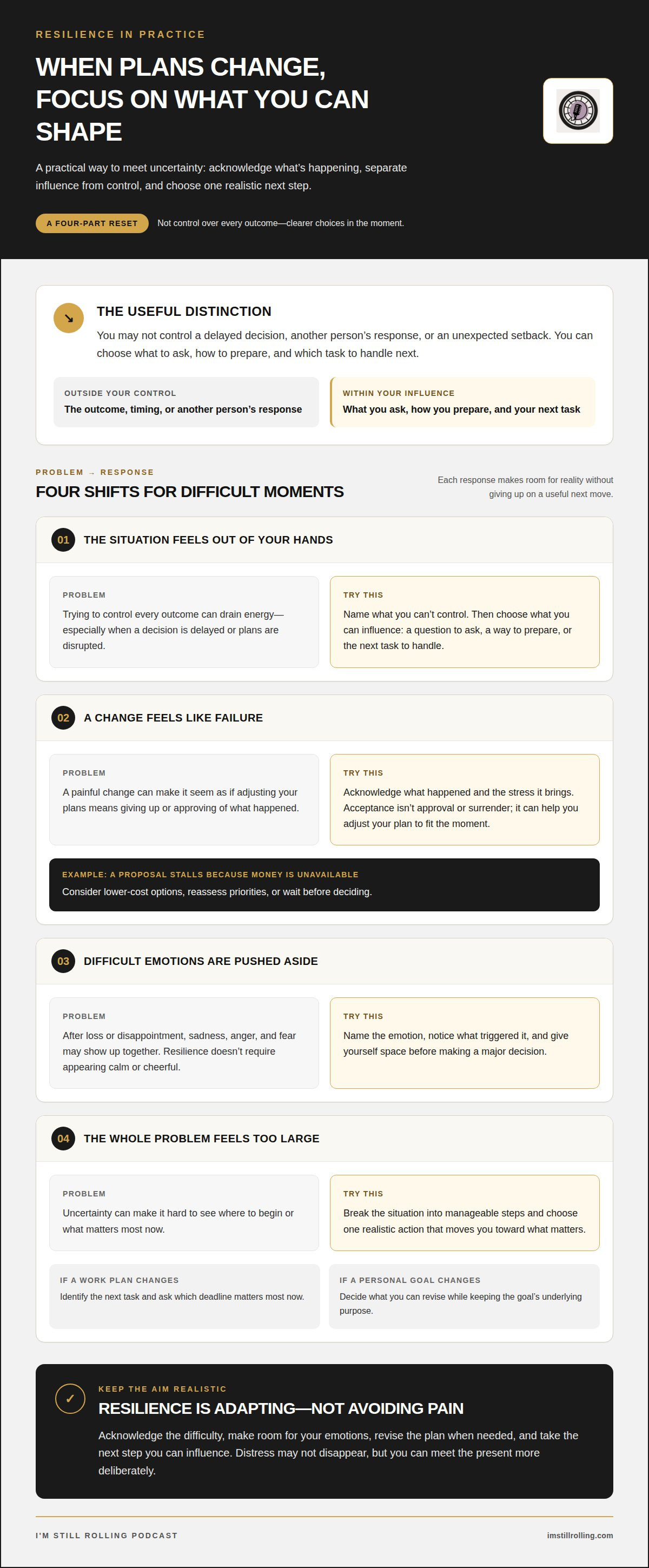
When plans change, separate what you can influence from what you can’t. You may not control a delayed decision, another person’s response, or an unexpected setback. You can choose what to ask, how to prepare, and which task to handle next. This distinction helps direct your energy toward useful action instead of an exhausting attempt to control every outcome.
Acceptance doesn’t mean approving of a painful situation or giving up. Start by naming what happened and the stress it brings. If a proposal stalls because money is unavailable, for example, consider lower-cost options, reassess priorities, or wait before deciding. Acknowledging the limits of the moment can help you respond more clearly. It also makes room to adjust plans without treating a change in direction as personal failure.
Difficult emotions deserve attention, not denial. After a loss or disappointment, you might feel sadness, anger, fear, or several emotions at once. Try naming the emotion, noticing what triggered it, and giving yourself space before making a major decision. Emotional pain can be part of adapting to adversity; resilience doesn’t require you to appear calm or cheerful. A more honest response starts with recognizing what you’re experiencing.
Then choose one realistic action that moves you toward what matters. If a work plan changes, identify the next task and ask which deadline matters most now. If a personal goal becomes unreachable, decide what you can revise while keeping its underlying purpose. Breaking a large problem into manageable steps gives you a place to begin, even when the whole situation remains uncertain.
These practices can support mental health by helping you cope with strain, including experiences connected with depression. They don’t promise that distress will disappear. Instead, acceptance and flexible planning can help you meet the present more deliberately: acknowledge the loss, revise the plan, and take the next step you can influence.
4. Resilience and coping with challenges
Resilience doesn’t mean hardship leaves you untouched. After failure, loss, or trauma, anxiety, grief, and anger can exist alongside hope. The aim isn’t to force those feelings away, but to find healthy ways to cope while life remains difficult. A setback can change your plans without defining your worth or every possibility ahead.
Learning how to be a resilient person starts with a practical sequence: name what happened, notice your response, identify the next useful action, and review what helped afterward. If a project fails, for example, separate the outcome from your identity. Ask what you can learn, what needs attention now, and who might offer perspective. Keep the next step small enough to begin, such as revising one part of the plan.
After loss or trauma, progress may be uneven. Give yourself room to feel sadness, and avoid measuring your recovery against someone else’s pace. When thoughts become overwhelming, focus on a manageable task, such as preparing food or writing down what feels hardest. If distress makes daily responsibilities difficult, reaching out for support can be part of coping, not a sign of weakness.
Understanding how to be a resilient person also means remembering how you’ve handled earlier challenges. Think of a time you adapted, solved a problem, or continued despite uncertainty. Which strength did you use? Keep that example in mind when anxiety predicts failure; past experience can offer a more balanced view, even when this challenge is different. Resilience develops through repeated practice, rest, reflection, and action. For honest accounts of people moving through adversity, explore real stories of resilience.
I'm Still Rolling Podcast
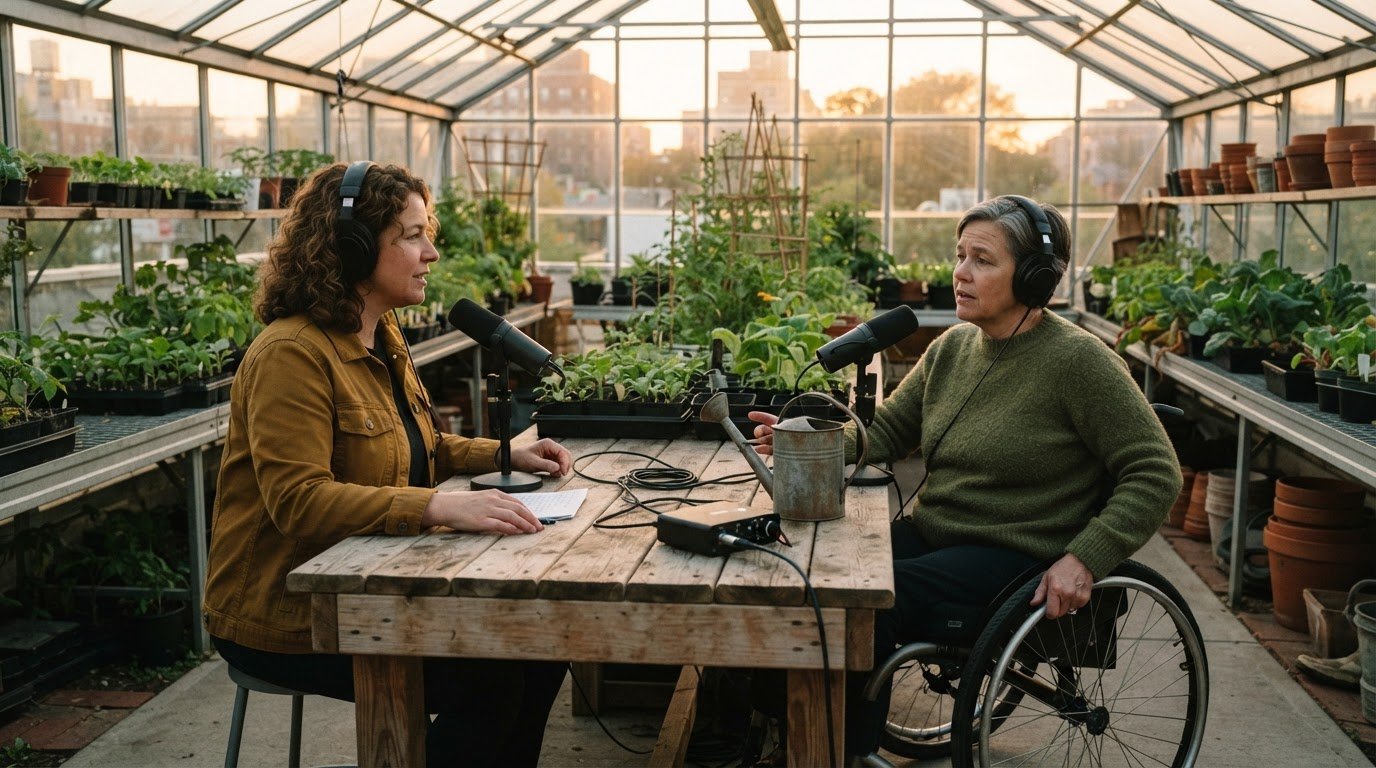
I'm Still Rolling Podcast shares candid stories of resilience, disability, and life after adversity. When you want to hear how people make sense of difficult experiences, its conversations can offer perspective and a reminder that everyone's experience of coping is different. The episodes bring together guests' lived experiences and thoughtful journalism, making room for struggle without reducing anyone to it.
Explore I'm Still Rolling Podcast episodes for personal accounts, or read the conversations in the podcast transcripts. The I'm Still Rolling Newsletter offers another way to stay connected with these stories. These resources can complement the practices in this guide, offering reflection and connection rather than replacing professional support when you need it.
If these stories speak to where you are, contact I'm Still Rolling Podcast.
Keep building resilience, one choice at a time
Learning how to be a resilient person isn’t a finish line you cross once. It’s an ongoing practice of meeting the life in front of you, adjusting when circumstances shift, and allowing your understanding of yourself to grow. Some days, progress may look like taking a brave step. On others, it may mean resting, asking for support, or simply choosing to try again tomorrow.
Let your next step be small enough to take today. You might write down one lesson from a difficult experience, make room for a conversation that matters, or notice what helped you get through a demanding moment. You don’t need a perfect plan to begin. You only need a choice that brings you closer to the kind of life you want to build.
If honest stories of resilience would offer perspective along the way, connect with I'm Still Rolling Podcast. Keep going at your own pace. Each thoughtful step can help you meet what comes next with greater steadiness.
Frequently Asked Questions
Why is developing resilience important?
Developing resilience can help you respond to hardship without letting one painful event define your future. After a rejection, for example, you can acknowledge the disappointment, seek useful feedback, and decide what to try next. Resilience doesn’t guarantee a particular outcome or remove distress. It can help you keep adapting, make considered choices, and stay connected to goals that still matter to you.
What does resilience mean in psychology?
In psychology, resilience describes adapting while facing tragedy, trauma, threats, or significant stress. It isn’t the absence of fear or sadness, and it doesn’t mean recovery follows a straight line. Someone may feel shaken after a difficult event and still find ways to adjust, seek support, or manage everyday responsibilities. The experience and pace of adapting differ from person to person.
What coping strategies help with stress and setbacks?
Useful coping strategies include identifying the immediate problem, choosing a manageable response, and reviewing what you learned afterward. If you miss an important deadline, for instance, clarify what remains unfinished, tell affected people what you can complete, and make a realistic revised plan. Short breaks can help you regain focus before acting. If a problem feels too large, divide it into smaller tasks.
How can mindfulness and self-compassion improve resilience?
Mindfulness helps you notice thoughts and feelings without reacting to each one immediately. Self-compassion adds a kinder response: instead of calling yourself a failure after a mistake, describe what happened and consider what you’d say to someone you care about. Together, these practices can make it easier to pause, respond thoughtfully, and learn from a hard experience without adding harsh self-judgment.
What daily habits support mental and physical resilience?
Consistent routines can support your ability to handle everyday demands. Aim for adequate sleep, regular movement, hydration, and nourishing meals when circumstances allow. You might take a walk during a break, keep water nearby, or set a regular time to wind down. Making room for enjoyable activities matters too. Choose habits that fit your current capacity, then return to them when your routine is disrupted.

Comments