Family support for chronic illness for loved ones
A chronic illness rarely affects just one person. Family support for chronic illness can help loved ones manage changing routines, practical demands, and uncertainty around symptoms while respecting the person’s independence and choices.
Supporting someone you love can feel like a balancing act. You want to help, but may not know what to do, what to say, or how to prepare for an emergency. That uncertainty can feel even heavier when an illness is rare or difficult to explain. Family support can complement medical care, but it does not replace it.
This article explores how chronic illness can affect family life and shares practical ways to support a loved one, talk about needs, and prepare for emergencies. It also considers challenges families may face when an illness is rare, so support can be thoughtful without letting the condition define the relationship.
Table of Contents
What Are Chronic Illnesses, and How Do They Affect Families?
A chronic illness can reshape daily life, shifting family time toward appointments, symptoms, and care tasks. Family support works best when relatives recognize both the practical load and its effects on each person’s mental and emotional well-being.
Caregiving Roles Across Generations
Adults caring for chronically ill parents can start by asking which tasks their parent wants help with, such as organizing medications, arranging transportation, or handling paperwork. Agreeing on specific responsibilities helps preserve autonomy and makes support more predictable. Parents caring for an ill child may also spend more time managing treatment and daily routines, leaving less time for siblings.
That shift can lead to sibling conflict or attention-seeking. Parents may also disagree about care decisions or household rules. Set aside individual time with each child, keep expectations as consistent as possible, and discuss decisions away from tense moments. Medication, routine visits, emergency care, and hospital stays can bring substantial costs. Insurance coverage and out-of-pocket expenses depend on the family’s plan and care needs.
Family Communication About Care Needs
Direct, age-appropriate conversations help children understand changes without making them responsible for solving the illness. Explain, for example, why a parent has an appointment or why a sibling needs extra help that day. Invite each person to share a concern, then reflect back what you heard before discussing solutions. This can bring hidden frustration into the open and prevent misunderstandings.
Potential financial support may include insurance benefits, public assistance, or tax deductions. Availability depends on eligibility, location, and household circumstances. As part of planning, families can review their coverage and relevant benefit or tax rules rather than assuming a particular option applies to everyone.
Care Planning and Shared Responsibilities
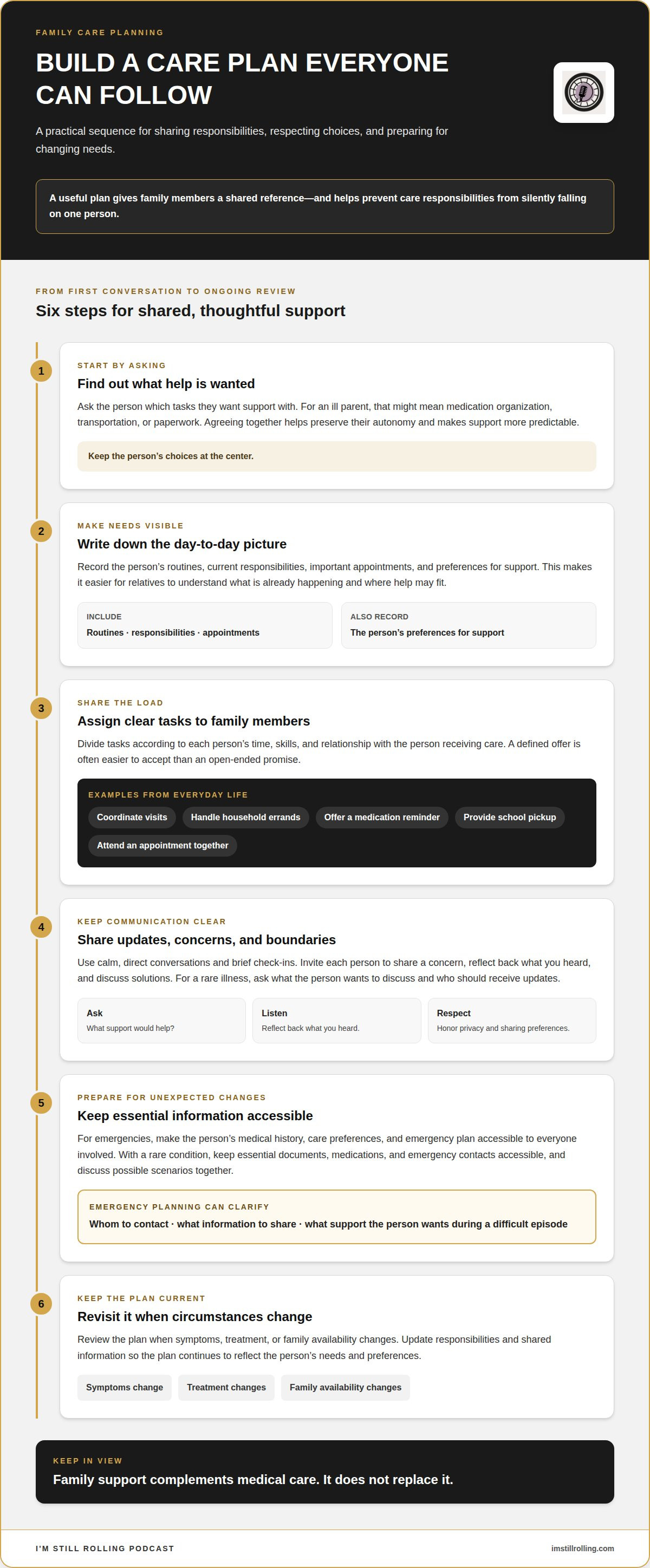
A useful care plan records the person’s routines, current responsibilities, important appointments, and preferences for support. Family members can divide tasks according to their time, skills, and relationship with the person receiving care. One relative might coordinate visits while another handles household errands. Revisit the plan when symptoms, treatment, or family availability changes.
For emergencies, keep the person’s medical history, care preferences, and emergency plan accessible to everyone involved. Family support complements medical care; it does not replace it. A clear plan gives relatives a shared reference and helps prevent caregiving responsibilities from falling silently on one person.
Support for spouses, partners, parents, adult children, friends, and neighbors
Practical help varies by relationship, but a specific offer is easier to accept than an open-ended promise. A medication reminder, school pickup, or company during an appointment can ease one part of a demanding day.
Parenting Children With Chronic Conditions
Parents may need to coordinate medication, schoolwork, appointments, and care arrangements while preserving family routines. A child’s treatment can disrupt outings or plans when symptoms change, and parents may worry whether a caregiver feels prepared to give medication or respond to an emergency. Share clear care instructions with trusted adults, and plan flexible activities that can change without blame.
Support for Children and Young Carers
Siblings may get less parental attention when one child needs extra care, leading to conflict or attempts to regain attention. Make time for each child and explain changes in language they can understand. A child with an illness may feel guilty about family expenses or disrupted plans and avoid self-care, such as taking medication as prescribed. Reassure them that care decisions are the adults’ responsibility.
Caregiver Groups and Respite Services
In the United States, caregiver support groups offer space to share experiences and practical concerns, while respite services provide temporary relief from caregiving tasks. Families can explore options through community organizations, health-related groups, or local caregiver programs, then consider which format suits their schedule and care needs. Health care proxies and advance directives are documents families can discuss to record a person’s wishes and identify who can speak for them.
Finding Local Resources and Caregiver Services
Start with the person’s care team, community organizations, or local health and social service offices to find nearby support, respite options, and condition-specific resources. Describe the practical need clearly, such as transportation or a short break from supervision. Spouses, adult children, friends, and neighbors can each take on a defined task. Regular conversations can help ensure one caregiver is not carrying every responsibility alone.
Support for people with rare chronic illnesses
With a rare chronic illness, relatives may have to learn unfamiliar terms while daily life continues. The person living with the condition remains the authority on their experience, even when symptoms are hard to explain. Ask which aspects they want to discuss, what support would help, and who should receive updates. Respecting these boundaries protects privacy and leaves room for relationships beyond illness.
Practical preparation can reduce confusion when symptoms change. Keep essential documents, medications, and emergency contacts accessible, and discuss possible scenarios together. A family member might organize records while the person with the illness decides what information to share. Include care preferences in the plan, such as whom to contact and what support the person wants during a difficult episode.
Rare conditions can affect energy, mobility, concentration, or social plans in ways relatives may not notice. Instead of assuming what someone can manage, ask before arranging visits or activities. Offer flexible options, such as a shorter gathering or a quiet place to rest. If the person needs time alone, respect that boundary without taking it as rejection.
Peer connection can help families feel less isolated when a condition is unfamiliar to their community. A Body Politic group for people with Long Covid, ME/CFS, fibromyalgia, dysautonomia, and their families and caregivers meets on Zoom twice per month. Shared conversation can bring recognition and practical perspective, but each person can decide whether group participation feels right for them.
Keep support specific and based on consent. Ask whether a relative can help prepare a short summary of the person’s needs for family members or accompany them to an appointment. Avoid turning every conversation toward symptoms. Sharing a meal, messaging about an ordinary interest, or making a plan that allows for rest can affirm that the person is more than a diagnosis.
How can families communicate effectively about chronic illness and caregiving needs?
Begin with a calm, direct conversation about what has changed and what would make daily life easier. Effective family support for chronic illness starts with a specific offer, not an open-ended promise. Instead of saying, “Tell me if you need anything,” try, “Would a ride to your appointment or help with dinner be useful this week?” A clear choice makes it easier to answer honestly, including when the person would rather manage alone.
Listen before offering solutions. If someone says repeated appointments are exhausting, reflect the feeling first: “It sounds like keeping up with visits is wearing you down.” Then ask whether they want practical help, time to talk, or a pause. Active listening and “I” statements can reduce blame. For example, “I’m worried when plans change without notice” leaves more room for discussion than an accusation.
Short, regular check-ins let relatives exchange updates without making every conversation a medical briefing. Ask what has changed, what feels difficult today, and whether a particular task needs attention. A family member might share an appointment update with permission, while the person living with the illness decides who receives health information and when they want privacy.
When siblings or partners disagree, focus the discussion on one decision. One person may prefer more reminders, while another finds them intrusive. Ask the person receiving support what feels respectful, agree on an approach, and revisit it if circumstances change. Good family support for chronic illness allows for changing preferences. Avoid resolving disagreements during a stressful appointment or in front of children.
Some concerns are hard to voice within a family. Counseling can give a person living with chronic illness and their relatives space to express fear, frustration, or grief. Family or multifamily psychotherapy can help families preserve ordinary activities while managing care. Direct conversation will not remove every strain, but it can make needs visible and responsibilities easier to discuss.
I'm Still Rolling Podcast
I'm Still Rolling Podcast shares honest conversations about resilience, disability, caregiving, and life after adversity. For loved ones supporting someone with chronic illness, these stories add a human perspective to practical guidance and can help families feel seen without suggesting every experience is the same. Listen when you want to hear people describe the complexities of illness and care in their own words. The newsletter and podcast transcripts offer other ways to engage with these conversations.
These stories are not medical advice or a substitute for care. They can open space for reflection, help relatives find words for difficult experiences, and remind families that identity extends beyond illness. To share a question or response, contact I'm Still Rolling Podcast.
Let the Next Conversation Begin
Care does not have to be solved all at once. Choose one manageable next step: make space for an honest conversation, revisit what support means to your loved one, or acknowledge what you are carrying yourself. A family’s needs can shift, and a thoughtful response can shift with them. Family support for chronic illness is not about doing everything. It grows through attention, respect, and a willingness to keep listening.
Stories can also help people find words for experiences that are difficult to explain. If you’d like to continue reflecting on resilience, disability, caregiving, and life after adversity, explore the conversations from I'm Still Rolling Podcast. When you’re ready, contact I'm Still Rolling Podcast.
Every family’s path is different. One thoughtful next step can make the road ahead feel more shared.
Frequently Asked Questions
What types of support can family members provide to someone with a chronic illness?
Family members can offer practical help, companionship, and steady emotional support while respecting the person’s preferences. A relative might take over grocery shopping during a difficult week, join a video call when an in-person visit feels tiring, or help track questions for an upcoming appointment. Ask before stepping in, and let the person decide what feels useful rather than assuming every offer is welcome.
How can family caregivers manage stress, burnout, and their own health?
Caregivers can protect their well-being by stating personal limits early and making time for responsibilities beyond care. Choose a recurring activity, such as a walk or a meal with a friend, and arrange coverage for that time when possible. Notice signs such as persistent irritability or trouble concentrating, then tell someone you trust. Sharing these changes can make it easier to seek support before exhaustion starts shaping every interaction.
What challenges can arise in family relationships when someone has a chronic illness, and how can they be addressed?
Illness can create tension when relatives disagree about help, privacy, or how much family life should change. A sibling may feel overlooked, while the person receiving care may feel watched or managed. Set a time to discuss one concern at a time, give everyone room to speak, and agree on a small adjustment to try. For example, set up a private check-in instead of repeating reminders throughout the day.



Comments