Empty Nest Syndrome for Caregivers: How to Find Your Footing
What if the quiet after caregiving feels less like freedom and more like an empty room you don’t know how to leave? When a caregiving role changes or ends, the routines, responsibilities, and daily contact that shaped your days can disappear all at once. That’s why empty nest syndrome for caregivers can feel like a profound loss, even when you’re relieved to have more time or glad a loved one’s suffering has eased.
If you’re grieving, feeling untethered, or judging yourself for experiencing both relief and sadness, your feelings aren’t a contradiction. Caregiving can become part of how you understand yourself. When that role recedes, it can take time to recognize who you are beyond it.
This article will help you name the transition without self-blame and find compassionate ways to rebuild structure, relationships, and a sense of purpose. We’ll look at why grief, burnout, and adjustment can overlap, how small steps can help you find your footing, and when support from a professional or peer group may be important. You don’t have to fill every quiet hour right away. You can begin by noticing what you need in this new chapter.
Table of Contents
What Does Empty Nest Syndrome Mean for Caregivers?
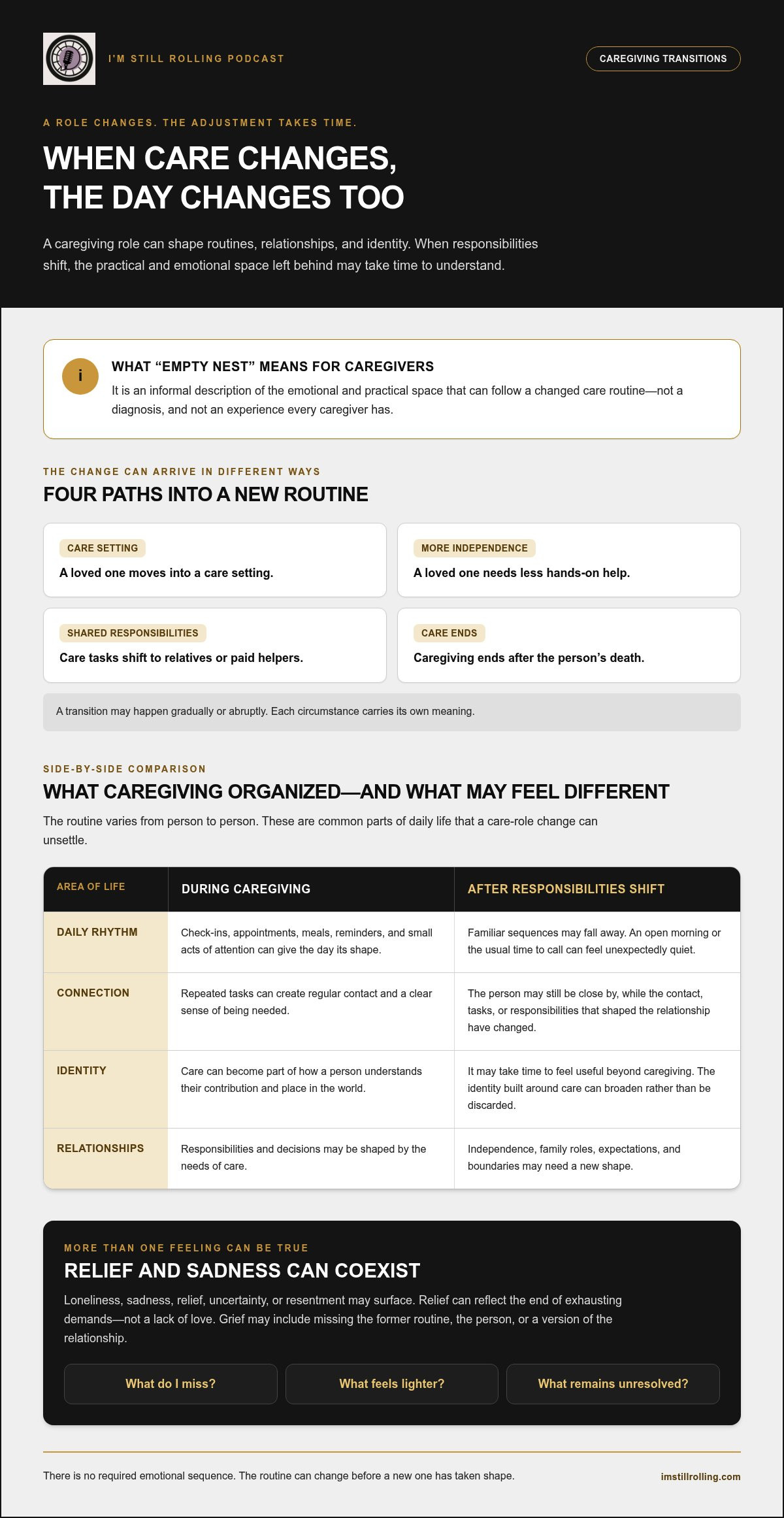
For caregivers, “empty nest” describes the emotional and practical space left when a caregiving role or routine changes. It is not a diagnosis, and not every caregiver experiences it. The phrase borrows from the familiar idea of parents adjusting when children leave home, but a caregiving transition is different: the person receiving care may still be close by, even as the tasks, contact, or responsibilities that organized daily life shift.
The change can happen gradually or arrive abruptly. A loved one may move into a care setting, gain more independence, or need a different kind of support. A caregiver may hand responsibilities to relatives or paid helpers, or care may end after the person’s death. Each circumstance carries its own meaning. What these transitions can share is a disruption to familiar rhythms: the check-ins, appointments, meals, reminders, and small acts of attention that once gave the day its shape.
The traditional Empty Nest Syndrome phrase refers to feelings some parents experience as children leave home. For caregivers, the comparison can help name a sense of absence, but it shouldn’t flatten distinct experiences into one story. Empty nest syndrome for caregivers is best understood as an informal description of adjusting after a care routine or role changes, not a clinical label or a measure of how much someone cared.
Why can a caregiving change feel like an empty nest?
Caregiving often involves more than a list of duties. Repeated tasks can create structure, daily contact, and a clear sense of being needed. When those tasks fall away, you may find yourself facing an unplanned morning, reaching for your phone out of habit, or wondering what to do with time that once belonged to care. The care recipient may still be present, while the relationship and practical demands have changed.
Composite example: Imagine a caregiver who used to call a parent each morning, organize medications, and coordinate weekly appointments. After the parent moves closer to other family and needs less hands-on help, the caregiver is still in contact but no longer starts the day with those responsibilities. The relief may be real, and so may the strange quiet afterward.
Which emotions can arise when caregiving changes?
Loneliness, sadness, relief, uncertainty, and even resentment may surface. None is inevitable, and no single feeling tells the whole story. Relief can reflect the end of exhausting demands, not a lack of love. Grief can involve missing the former routine as well as mourning a person or a version of the relationship. These emotions can coexist without canceling one another out.
Try noticing what is present without grading it against someone else’s transition. Ask yourself: What do I miss? What feels lighter? What remains unresolved? Your answers may change from day to day. There is no required emotional sequence, and you don’t have to choose one “correct” feeling before you begin adjusting.
Why a Caregiving Role Change Can Disrupt Identity and Routine
When care shapes the day, a change in caregiving can unsettle both the schedule a person relies on and the way they understand their place in the world. Repeated tasks may have offered more than practical structure. Preparing meals, tracking appointments, checking in, or coordinating with relatives can create a steady sense of contribution and connection. When those responsibilities lessen, it may take time to feel useful in ways that aren’t tied to caregiving.
This shift can ripple through ordinary life. A night once shaped by interrupted sleep may feel different when vigilance eases, while the body still expects to wake or listen for a familiar sound. Work hours, household chores, and social plans may have been arranged around care. Even when the calendar opens up, energy and concentration may not return on the same timetable. Having more time is not the same as knowing what to do with it.
What happens when daily caregiving tasks become fewer?
The silence can be practical as well as emotional. There may be fewer calls to make, supplies to organize, visits to plan, or details to keep in mind. The exact routine varies widely: one person’s care may have involved a few weekly check-ins, another’s constant hands-on attention. Either way, a familiar sequence can vanish before a new one has taken shape. You might notice the gap in small moments, such as reaching for the phone at the usual time or finding an open morning unexpectedly difficult to fill.
An identity built around care doesn’t have to be discarded. It can broaden. You may still value attentiveness, patience, and advocacy while making room for parts of yourself that had little space during caregiving. There’s no need to turn that process into a reinvention project. Start by recognizing what you miss, what you want to keep, and what you’re ready to set down.
How can relationships shift alongside the caregiving role?
Relationships may need to find a new shape, too. The person you cared for may want more independence, or you may be renegotiating who handles decisions and practical tasks. Family members who weren’t involved day to day may assume you’re immediately available, while friends may not understand why you’re still adjusting after the workload has eased. A direct, gentle conversation can help: describe what has changed, what you can offer now, and where you need time or clearer boundaries. There’s no single arrangement that works for every family.
As routines shift, caring for your own well-being can become part of the adjustment. The National Institute on Aging’s caregiver self-care guidance offers practical reminders about tending to your needs and connecting with support. For a human perspective on caregiving and life after adversity, listen to lived stories about caregiving. Such stories can offer companionship, not a prescription for how your own transition should unfold.
Is Caregiver Empty Nest Syndrome Grief, Burnout, or Adjustment?
After caregiving changes, the question may not be “Which one am I feeling?” but “What parts of this experience need attention?” Grief, burnout, and adjustment can overlap, yet they describe different aspects of a transition. The phrase empty nest syndrome for caregivers is an informal way to describe the disruption some people feel when a care role recedes. It cannot explain every emotion or determine whether someone has a mental health condition.
Adjustment is the process of adapting to changed responsibilities, routines, and expectations. You may feel unsettled while figuring out how to spend time or relate to others in a new way.
Grief can involve longing and sorrow after a loss. A person may grieve a changed relationship, lost routines, or, following a loved one’s death, the person themselves.
Burnout describes deep physical, emotional, or mental exhaustion associated with prolonged caregiving demands. It may not disappear as soon as those demands lessen.
These experiences aren’t mutually exclusive, and none can be diagnosed from a list of feelings. Only a qualified professional can assess an individual’s mental health and help make sense of persistent or troubling symptoms.
Can relief and grief exist at the same time?
Yes. If the demands of care ease, you may feel relief and still miss the closeness, purpose, or familiar rhythm the role brought. Relief doesn’t prove you were indifferent, selfish, or less devoted. It can simply acknowledge that a demanding chapter has changed. Nor is relief required: people respond differently, and their feelings may shift over time.
If you’re struggling to explain the mix, you might tell someone you trust: “I’m relieved that some pressure has lifted, and I’m sad about what’s changed. I need room for both.” If the person you cared for has died, name that loss directly. Bereavement deserves recognition in its own right; it isn’t merely the end of a schedule or caregiving role.
When might a caregiver need additional support?
Consider reaching out to a qualified mental health professional if distress persists, feels hard to manage, or disrupts daily life, relationships, sleep, or your ability to care for yourself. You don’t have to wait until you can name the problem precisely. Sharing what has changed and how you’re feeling can be a useful first step toward being heard and assessed.
There’s no set timeline for adjustment, and support can’t promise a particular outcome. If you or someone else may be at immediate risk of harm, contact local emergency services or a crisis resource in your area now. That is a moment for urgent help, not a burden you need to carry alone.
How to Rebuild Daily Life After a Caregiving Change
There’s no need to replace caregiving with a packed calendar or a new version of yourself. A steadier approach is to notice what you need now, introduce a little structure, reconnect with people and interests, then review what feels supportive. These steps can happen in any order and can change as your energy or circumstances shift.
Start by noticing what feels missing, what feels easier, and what you need today. Then try one small routine and one point of connection, keeping only what genuinely helps. That’s enough of a beginning. For people experiencing empty nest syndrome for caregivers, rebuilding daily life isn’t a test of productivity. Rest, pleasure, and relationships deserve room alongside practical responsibilities, without needing to be earned.
How can you create structure without overfilling the day?
Choose one or two anchors rather than planning every hour. A regular breakfast, a short walk, or a check-in with someone you trust can give a day a gentle shape. Pick anchors that fit your present life, not just the schedule you used to keep for someone else. If your energy is low, the walk might become a few minutes outside. If a routine starts to feel burdensome, change it.
Make each new activity an experiment, not a promise. Try a class, a hobby, or a simple errand you’ve missed, then ask yourself afterward: Did this give me energy, comfort, or connection? You’re gathering information about what suits you now. An empty afternoon doesn’t have to be filled immediately. Leaving space can be a choice, too.
How can you reconnect with identity and other people?
Begin with questions, not demands. What did you enjoy before caregiving took up so much room? Which relationships would you like to tend? What have you become curious about? Choose one low-pressure step, such as sending a message, sharing a quiet meal, or spending time with someone who doesn’t expect you to explain everything. A full social calendar isn’t the goal; genuine contact matters more than frequency.
Family relationships may also need an honest reset. If responsibilities have shifted, talk through who is handling which tasks, what you can realistically contribute, and where you need boundaries. Clear conversations can prevent old expectations from quietly returning, though the right arrangement will depend on the people involved.
Some people also find comfort in hearing how others make meaning from caregiving, disability, and life after adversity. Listen to lived stories about resilience as a companion to your own reflection, not a blueprint for how you should feel. Give yourself time to notice what resonates. You’re allowed to build a life with room for care, rest, connection, and interests that belong to you.
Finding Connection and Support After Caregiving Changes
Support after caregiving doesn’t have to come in one form, or all at once. You might need someone who understands the strange quiet after a role changes, practical help with a task that still feels difficult, or professional support to work through distress. Naming what would help can make reaching out feel less daunting. You can begin with one trusted person rather than joining a group or explaining your experience to everyone.
What kind of support might fit this transition?
Consider what you’re looking for in a particular moment. A friend who listens without trying to fix things may offer connection; a family member might help sort out changing responsibilities; a qualified mental health professional can assess emotional concerns and provide professional care. These forms of support can complement one another, but they aren’t interchangeable.
Caregiver organizations may be a starting point for finding peer communities, information, or local support. Explore options at a pace that feels manageable. You could attend a group once, listen without sharing, or simply learn what’s available before deciding whether it fits. If you’re thinking about how care shaped a close relationship, this perspective on caregiving for a spouse with Alzheimer’s may offer a related point of reflection. Your circumstances are your own, but recognizing a familiar feeling in someone else’s account can help you feel less alone.
How can real stories help without offering a quick fix?
First-person stories can offer language for feelings that are hard to explain and a reminder that people find their footing in different ways. One person’s account may resonate; another’s may not. That difference doesn’t make your response less valid. Stories can provide companionship and perspective, but they can’t assess your mental health, replace practical assistance, or promise that a particular path will work for you.
For a broader reflection on life after upheaval, explore these stories of recovery and hope. If listening feels easier than talking, I'm Still Rolling Podcast episodes offer lived stories about caregiving, disability, resilience, and life after adversity. Hosted by journalists Mike Sugerman and Janice Wright, the podcast brings personal experience and journalistic insight to these conversations. Listening can offer perspective, but it isn’t a substitute for professional mental health support or care tailored to your situation.
You don’t have to make a sweeping decision about support today. Choose one small opening: tell someone what kind of listening you need, look into a caregiver community, or spend time with a story that helps you feel understood. Let connection begin where you are.
Let the Next Chapter Begin at Your Pace
You don’t have to know what your life should look like before you take a next step. A small choice, made with care for the person you are now, can be enough: make room for an interest, accept company, or simply let a quiet day be quiet. The transition described as empty nest syndrome for caregivers doesn’t require you to prove you’re coping by moving on quickly. Your footing can return gradually, in a way that honors both what caregiving meant and what you need now.
If hearing another person’s honest account would feel companionable, explore honest stories of resilience and caregiving from I'm Still Rolling Podcast. Journalists Mike Sugerman and Janice Wright host conversations available in audio and video, with written transcripts. These lived stories offer perspective, not a prescription for your own path. Visit I'm Still Rolling Podcast to explore episodes and subscribe to the newsletter for updates.
You’re allowed to begin again gently, one choice at a time.
Frequently Asked Questions
Is empty nest syndrome an official diagnosis for caregivers?
No. “Empty nest syndrome” is an informal phrase, not an official mental health diagnosis for caregivers. It can help describe feelings after a care role changes, but it can’t explain exactly what you’re experiencing or establish a condition. If you’re concerned about persistent sadness, anxiety, or difficulty functioning, a qualified mental health professional can listen, assess your situation, and discuss appropriate support. The phrase empty nest syndrome for caregivers is a starting point for conversation, not a label you have to adopt.
Can you feel empty nest syndrome when a loved one moves into residential care?
Yes. A move into residential care can change how often you see your loved one and what you do for them, even if your relationship remains close. You might find that you’re no longer managing morning routines or coordinating every appointment, yet still feel uneasy during the hours you used to spend on those tasks. You could try agreeing on a visit or call routine that suits both of you, then adjust it as the transition unfolds.
How long do empty nest feelings last after caregiving changes?
There’s no set timetable. Feelings may shift as new routines develop, and they can return around reminders, family changes, or difficult dates. Rather than measuring your experience against someone else’s, notice whether you’re gradually finding ways to manage daily life. If distress continues, worsens, or interferes with sleep, relationships, work, or self-care, consider speaking with a qualified mental health professional. You deserve support based on what you’re experiencing, not an arbitrary deadline.
What happens if caregiving ends because the person dies?
The death of the person you cared for brings bereavement, which deserves recognition beyond the loss of caregiving duties. You may miss the person, feel the absence of shared rituals, and face practical matters such as notifying people or sorting belongings. There’s no single right way to mourn. If it helps, ask someone trusted to sit with you or assist with one task. A bereavement group or qualified mental health professional may offer further support.
Is it selfish to feel relieved when caregiving responsibilities decrease?
No. Feeling relieved doesn’t mean you cared less. It may reflect the release of pressure, fewer urgent demands, or a chance to attend to your own needs. You may still miss the person or parts of the relationship. If guilt appears, try describing the feeling precisely: “I’m glad this responsibility has eased, and I still care deeply.” Both truths can be present without one making the other less sincere.
How can I support a caregiver experiencing an empty nest after a role change?
Ask what would help rather than assuming they want advice. You might say, “Would you rather talk, have company, or get help with something practical?” Then follow their lead. A shared meal, help with an errand, or a regular check-in can be more useful than urging them to stay busy. Avoid treating the change as purely positive or expecting them to feel better on a schedule.
Can listening to other caregivers' stories help with this transition?
It can. Hearing someone describe a feeling you couldn’t quite name may ease isolation and help you consider your own experience from another angle. Still, one person’s story isn’t a template, and listening isn’t a replacement for practical assistance or professional mental health support when those are needed. Choose stories that feel respectful of complexity, and take a break if they leave you feeling overwhelmed rather than accompanied.



Comments