Emotional Toll of Being a Long-Term Caregiver and Burnout Signs
The emotional toll of being a long-term caregiver can build when care is constant, responsibilities feel inescapable, or you’re carrying them largely alone. Living with the person you care for, financial pressure, limited guidance, and competing work or family needs can all add to the strain. Burnout isn’t a sign of failure; it can be a response to prolonged stress without enough support.
You can love the person in your care and still feel exhausted, frustrated, lonely, or guilty about wanting time away. These feelings can coexist with devotion. Naming them does not mean you’re giving up.
This article explores what can increase burnout risk and how emotional exhaustion, withdrawal, or changes in sleep and appetite may appear. It also covers grief before a loved one’s death, ways to share responsibilities and find support, and how caregiving can become a journey carried by more than one person.
Table of Contents
Respite care and support groups
Care needs change as a loved one’s condition progresses. Someone with limited mobility may need help with meals and appointments; dementia or advanced illness may call for closer supervision. As needs intensify, so can the emotional toll of being a long-term caregiver, especially when one person manages the schedule alone.
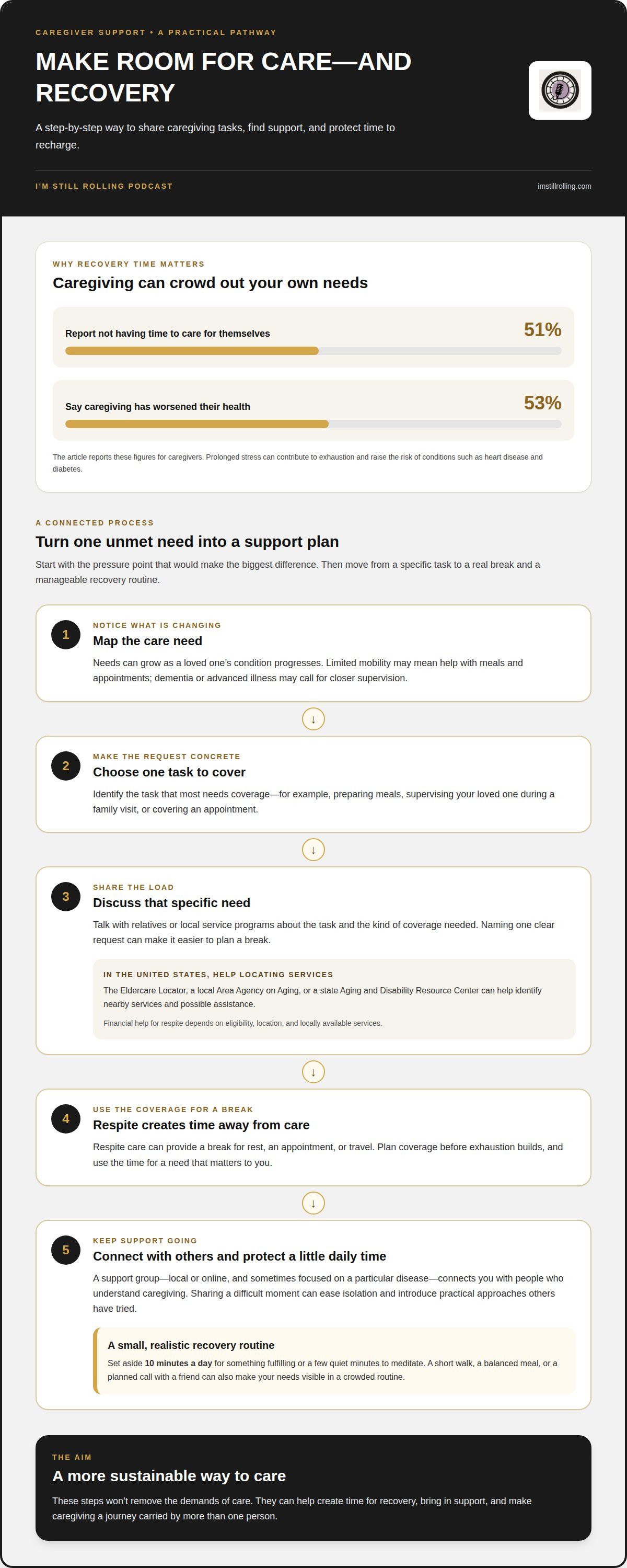
That responsibility can leave little time for your own health. Fifty-one percent of caregivers report not having time to care for themselves. Caregivers may put off meals, sleep, medical appointments, or contact with friends. Over time, prolonged stress can contribute to exhaustion and raise the risk of conditions such as heart disease and diabetes.
Financial help for respite depends on eligibility, location, and locally available services. In the United States, the Eldercare Locator, a local Area Agency on Aging, or a state Aging and Disability Resource Center can help identify services and possible assistance nearby.
Respite care offers a break from caregiving for rest, an appointment, or travel. Start by identifying the task that most needs coverage, such as preparing meals or supervising your loved one during a family visit. Then discuss that specific need with relatives or local service programs.
A support group connects you with people who understand the demands of caregiving. Some groups focus on a particular disease and meet locally or online. Sharing a difficult moment, such as feeling frustrated after a disrupted night’s sleep, can ease isolation and help you consider practical approaches others have tried.
Keep self-care realistic enough to fit your life. Set aside ten minutes a day for an activity you find fulfilling, or take a few quiet minutes to meditate. A short walk, a balanced meal, or a planned call with a friend can also make your needs visible in a crowded routine.
These practices won’t remove the demands of care, but they can protect time for recovery. Ask someone to cover one appointment, decline a draining request, or plan a break before exhaustion builds. A support group, respite program, and one manageable daily practice can help make caregiving more sustainable.
What are the signs and symptoms of caregiver burnout?
Burnout can emerge gradually, as physical exhaustion and emotional strain start shaping ordinary days. Notice persistent changes, not only the difficult moments.
Stress, Emotions, and Expectations
Managing stress starts with recognizing difficult emotions and adjusting expectations to what’s possible. A family caregiver may stay mentally alert to medications, appointments, safety, and crises, even during quiet hours. Notice changes such as irritability, trouble concentrating, disrupted sleep, appetite loss, or hopelessness. Naming frustration can help you distinguish a hard day from a pattern that needs attention.
Chronic stress can affect the body, too. Caregivers may experience headaches, muscle tension, persistent tiredness, and changes in sleep or appetite. Fifty-three percent of caregivers say caregiving has worsened their health. Prolonged stress can raise the risk of conditions such as heart disease and diabetes, making regular meals, rest, and personal medical appointments important parts of caring for yourself.
Effects on Relationships and Work
Caregiver burden is the accumulated strain of caregiving, and it can affect relationships and work. Fatigue or constant worry may leave you with less patience for a partner, children, or friends; missed plans can deepen isolation. At work, interruptions for appointments or care tasks can affect concentration and performance. Recognizing these effects helps families discuss specific coverage needs and realistic expectations.
Caregiving can also affect mental health. Chronic stress may contribute to anxiety or depression, while withdrawing from others can deepen loneliness. Seek professional mental health support if sadness, severe loneliness, or intense guilt lasts more than two weeks. A doctor can help assess what you’re feeling and discuss support options.
Burnout isn’t a verdict on your relationship or the care you provide. Treat persistent symptoms as a signal to reduce strain, share tasks, and take your health seriously.
Ambiguous loss and anticipatory grief
In the United States, more than half of surveyed caregivers reported increased stress, worry, concern for the future, and anxiety. Family caregivers’ depression rate is two times the national rate. Illness can also change familiar roles before a loved one dies.
Depression, Sadness, and Grief
Sadness is a response to painful change, while depression can persist and affect daily life. Caregivers may feel grief and emotional strain as chronic illness, cognitive decline, or a mental health condition changes someone’s abilities. A partner who once shared decisions may now need help making them. Naming your feelings without judgment can help you explain what has changed and seek support from someone you trust or a therapist.
Anticipatory Grief
Anticipatory grief means mourning losses that may happen before a loved one dies. It can emerge as familiar abilities, conversations, or shared roles change, bringing love and sorrow into the same day. You may miss a parent’s independence while still sharing ordinary moments. Accepting these mixed feelings doesn’t mean giving up hope. It gives grief a name and can make honest conversations about the changing relationship easier.
Caregiver Stress, Depression, and Anxiety
The findings above show how often emotional distress occurs in caregiving; they don’t indicate personal failure. Stress can intensify as a condition progresses, support falls short, or care feels unavoidable. Track changes in mood, sleep, social contact, and daily responsibilities. If sadness, severe loneliness, or intense guilt lasts more than two weeks, talk with a doctor about what you’re experiencing.
Try writing down one change in your loved one’s abilities and one feeling it brings up. This simple record can help you describe the strain clearly when talking with someone you trust.
Reframing caregiving as a shared journey
Shared caregiving means treating support as a set of roles, not one person’s burden. One relative might handle appointments while a friend brings groceries or calls regularly. Contributions don’t need to be equal to matter. Naming the tasks makes the work visible and gives others a practical way to connect.
Caregiving can hold purpose and pride alongside exhaustion. A National Opinion Research Center survey found that 83 percent of caregivers viewed caregiving as a positive experience. That finding doesn’t erase strain or mean every day feels meaningful. It shows that difficulty and meaning can coexist, even when a loved one’s needs reshape family routines.
Make requests specific: “Could you drive Mom to her appointment on Thursday?” is easier to answer than “Can you help more?” Put recurring needs on a shared calendar, such as meal preparation, pharmacy pickups, or a visit that gives the primary caregiver time away. If someone can’t take one task, ask whether they can handle another.
Sharing care also means talking honestly about limits. A caregiver who works full-time may not be able to manage every evening task, while a sibling nearby might check in after dinner. Decide what’s essential, divide responsibilities according to people’s capacity, and revisit the plan when your loved one’s condition changes.
Guilt can make you feel responsible for doing everything perfectly. Try replacing self-blame with the recognition that you’re doing your best in a difficult situation. Then choose one manageable next step, such as asking a friend to stay during an appointment or protecting time for a familiar activity. This shift won’t remove caregiver burnout, but it can make care feel less solitary and more honestly shared.
I'm Still Rolling Podcast
I'm Still Rolling Podcast shares honest conversations about caregiving, disability, resilience, and life after adversity. Turn to these stories when you want to hear how others make sense of difficult changes, complicated feelings, and the work of continuing through uncertainty. The episodes offer lived perspectives, not a substitute for professional mental health support or practical caregiving services.
The I'm Still Rolling Newsletter and Podcast Transcripts offer other ways to engage with these conversations. Whether you prefer listening, reading, or revisiting a story in your own time, these offerings can help you reflect on caregiving as part of a wider human experience.
If these stories would be meaningful to you, contact I'm Still Rolling Podcast.
Make room for your own next chapter
The emotional toll of being a long-term caregiver can change how you see yourself, not just how you spend your days. Your next step doesn’t have to solve everything. It might be an honest conversation, a moment to name what has become difficult, or letting someone hear your experience without trying to fix it.
Caregiving is part of your story, but it isn’t all of who you are. Making space for your own voice can help you feel connected to more than the responsibilities in front of you. Stories of resilience can offer company and perspective, especially when your own path feels hard to explain.
If you’d like to continue the conversation, contact I'm Still Rolling Podcast. Your experience deserves to be heard, and the next step can begin with sharing it.
Frequently Asked Questions
What are the risk factors for caregiver burnout?
Burnout risk rises when care is demanding, prolonged, or difficult to share. Caring for a spouse, living with the person receiving care, providing constant supervision, and spending many hours on caregiving tasks can compound strain. Feeling helpless or alone, facing financial problems, and having little guidance can add to the pressure. Risk reflects the caregiving situation, not your commitment or character.
What is the long-term impact of caregiver burnout?
Prolonged burnout can affect emotional well-being, physical health, and the ability to sustain daily responsibilities. Chronic stress may contribute to anxiety, depression, sleep disruption, and physical symptoms such as headaches or muscle tension. It can also make relationships and work harder to manage. If exhaustion or low mood continues, treat it as a reason to seek support, not as a personal shortcoming.
What emotional effects are common among long-term caregivers?
Long-term caregivers may experience worry, sadness, frustration, anger, guilt, loneliness, or emotional numbness. You can feel deep affection for a loved one and still resent the demands of care or wish for relief. These reactions may shift as health needs and family roles change. Naming a feeling, such as guilt after declining an extra task, can make it easier to discuss.
What factors increase the emotional toll of long-term caregiving?
The emotional toll of being a long-term caregiver can deepen when care feels unavoidable and your relationship changes alongside a loved one’s health. Uncertainty about future needs, conflicting family expectations, limited practical guidance, and competing work or parenting duties can leave little room to recover. A manageable task can feel overwhelming when it comes amid isolation, financial pressure, and ongoing worry.
What are signs of caregiver burnout or depression?
Possible signs include persistent exhaustion, irritability, trouble concentrating, changes in sleep or appetite, hopelessness, and withdrawing from friends. You may also feel detached or lose interest in familiar activities. One difficult day doesn’t establish depression, but persistent changes deserve attention. If sadness, severe loneliness, or intense guilt lasts more than two weeks, talk with a doctor about what you’re experiencing.
How can long-term caregivers manage stress and protect their mental health?
Choose a practical support step that fits this week: ask a relative to cover one recurring task, make time for a trusted friend, or join a group focused on the loved one’s condition. A therapist can help process difficult feelings and build coping strategies. Keep personal medical appointments on the calendar, too. If thoughts of self-harm arise in the United States, call or text 988 for immediate crisis support.



Comments