Discussing End-of-Life Wishes With Family: Care Choices
The clearest way to decide what care should continue, or when to stop an intervention, is to understand what matters to the person before a crisis leaves the family guessing. Discussing end-of-life wishes with family means talking about which outcomes matter, what treatments feel acceptable, and who should speak for the person if they can’t communicate. These choices belong to the person whose care is at stake, even when relatives find them difficult to accept.
It’s understandable to put off a conversation that brings mortality into the room. But making space for it early can give loved ones something more reliable than assumptions: an understanding of the person’s priorities, recorded wishes, and trusted decision-maker. You’ll learn how a healthcare proxy fits into planning, how to begin a family conversation without turning it into a debate, and how personal values can shape medical care and funeral wishes. The goal isn’t to settle every question at once; it’s to make the next conversation possible, with greater clarity and care.
Table of Contents
1. What is a healthcare proxy ?
A healthcare proxy is someone chosen to make healthcare decisions if a person cannot communicate with their care team. The proxy speaks for that person when illness or injury prevents direct communication. The role calls for trust, steadiness, and a willingness to follow stated priorities, even when relatives disagree. A proxy may be a family member, close friend, or trusted neighbor.
Choose someone who can listen carefully, understand the person’s values, and communicate them under pressure. A relative isn’t automatically the best choice if family conflict could make decisions harder. Ask directly: “Would you be willing to speak for me if I couldn’t tell the care team what I want?” Discuss likely choices together, including what matters most if treatments involve different outcomes. A substitute decision-maker should know the person’s wishes, not simply guess what the family prefers.
Make time for this conversation before a medical crisis. Choose a quiet, private place where phones, television, and visitors won’t interrupt. A familiar living room or a calm walk can feel less formal than a hospital room. Ask permission before beginning, explain why the conversation matters, and let the person set the pace. If emotions rise, pause and return to the discussion when everyone feels calmer.
In the United States, children generally need to be over 18 to make healthcare decisions as next of kin. Who qualifies as next of kin can differ by country, so families should distinguish that role from the person deliberately chosen as proxy. An advance directive is a legal document that takes effect if someone can’t communicate what they want. The American Bar Association provides links to free advance directive forms organized by U.S. state. Put wishes in writing, share them with the proxy, and discuss where relevant records can be found. A clinician may also document preferences in the healthcare chart, helping the care team understand the person’s choices.
2. Starting end-of-life conversations before a crisis
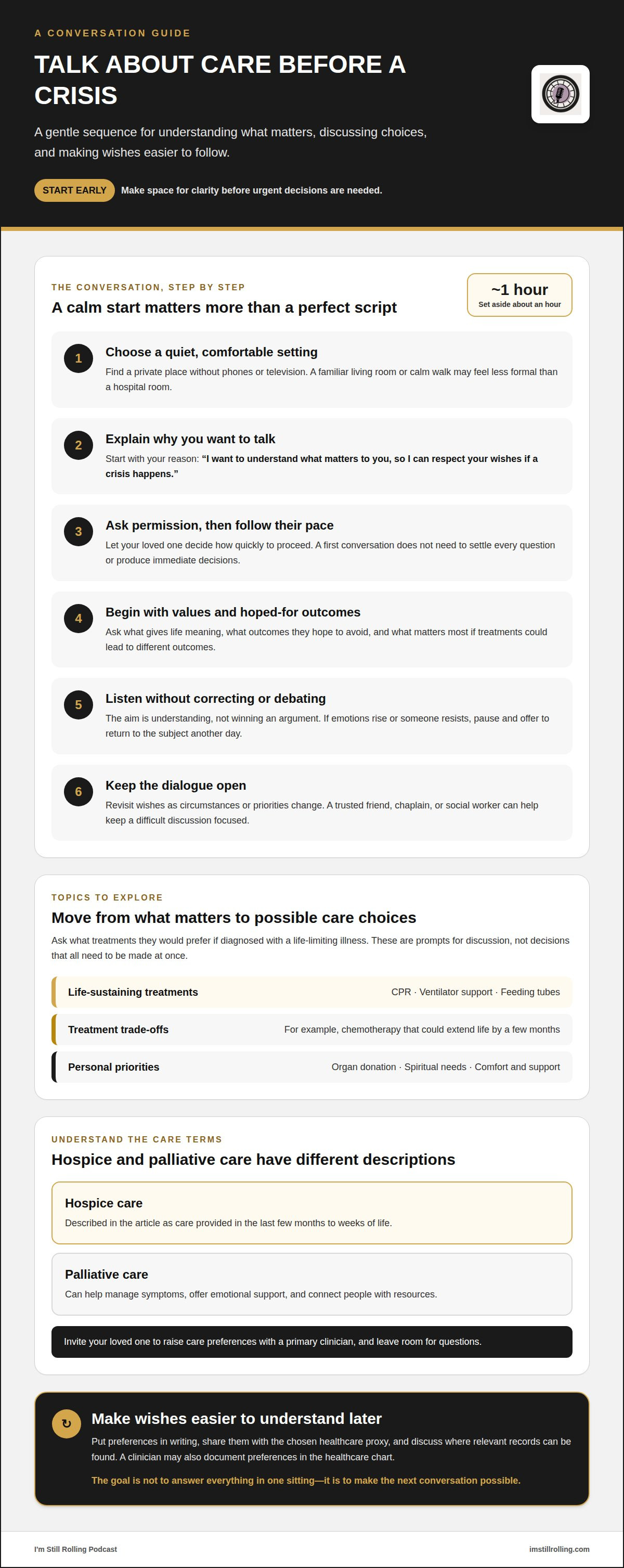
Begin while everyone can speak freely, rather than waiting for a hospital emergency to force decisions. Choose a quiet, comfortable place without phones or television, and set aside about an hour. Before raising medical choices, explain why you want to talk: “I want to understand what matters to you, so I can respect your wishes if a crisis happens.” Ask permission, then let your loved one decide how quickly to proceed.
A first conversation doesn’t need to resolve every question. Start with what gives life meaning and what outcomes the person hopes to avoid. Then ask what treatments they would prefer if diagnosed with a life-limiting illness. Topics might include CPR, ventilator support, feeding tubes, organ donation, spiritual needs, or whether they would decline chemotherapy that could extend life by a few months. Listen without interrupting or correcting; the aim is understanding, not winning an argument.
Discussing hospice and palliative care wishes means asking what comfort, support, and treatment priorities the person would want if illness becomes serious. Hospice care is described as care provided in the last few months to weeks of life; palliative care can help manage symptoms, offer emotional support, and connect people with resources. Invite the person to raise these preferences with a primary clinician, then make room for questions.
If a relative resists, don’t turn the conversation into a debate. Explain gently that talking now may reduce uncertainty for loved ones later, and offer to return to the subject another day. When emotions become overwhelming, pause and try again when everyone feels calmer. Families can treat this as an ongoing dialogue, revisiting wishes as circumstances or priorities change.
The Conversation Project, an initiative led by the Institute for Healthcare Improvement, offers starter forms to help people identify what matters to them. Use a prompt from those forms to begin, or invite a trusted friend, chaplain, or social worker to help keep a difficult family conversation focused. Children younger than teenagers may be included depending on their maturity.
3. Connecting personal values with funeral planning
Funeral preferences can express what a person wants remembered, not just what happens during a service. Ask what would feel personally meaningful: a quiet gathering, shared stories, a favorite piece of music, or a spiritual ritual. Someone who valued time outdoors might prefer a remembrance shaped around nature; another person may want family to gather at home. These examples give relatives a starting point for understanding the values behind each choice.
Talk plainly about disposition preferences, including burial or cremation, and invite the person to explain what informs that preference. The answer may reflect faith, family tradition, environmental concerns, or a wish for simplicity. Ask whether they have specific preferences for a service, readings, music, or who should be invited. Treat these choices as the person’s own, even if relatives would choose differently. Record preferences clearly so family members aren’t left interpreting hints during a difficult moment.
A funeral home can help families discuss how personal wishes might translate into arrangements. A useful next step is to bring a written list of preferences and ask staff to explain which choices they can help organize. For example, a family could describe a small gathering and ask what planning decisions it involves. Keep the conversation focused on the person’s wishes; relatives don’t need to settle every detail in one meeting.
Separate what matters deeply from what remains flexible. A person might care strongly about cremation but feel open about the location or format of a memorial. Note that distinction, along with any meaningful objects, traditions, or stories they want included. Then share the notes with the people likely to take part in planning. If relatives disagree, return to the person’s stated reasons rather than treating the disagreement as a vote. This turns remembrance planning into a way to honor a life as it was lived.
4. Why families should discuss end-of-life wishes
A family facing an urgent decision can’t reliably reconstruct someone’s values from scattered memories. One relative may recall a parent saying, “Keep trying,” while another remembers their fear of prolonged dependence. Discussing end of life wishes with family before a crisis gives those memories context: what outcomes mattered, which treatments felt acceptable, and what the person meant by comfort. That clarity can guide loved ones when time is short and emotions are raw.
These conversations also protect the person’s right to make choices, even when family members disagree. A daughter may hope her father will accept another treatment, while he may prioritize comfort or time at home. Listening doesn’t require agreement. It means recognizing that the person receiving care, not the family’s hopes or fears, should guide decisions about their life. The proxy can speak from the person’s expressed wishes rather than treating the family’s preferences as a vote.
Talking in advance can make uncertainty more manageable, but it doesn’t remove grief or guarantee that every relative will feel at peace. It gives the family something concrete to return to: a written preference, a named decision-maker, or a remembered explanation. If siblings disagree about a treatment, they can consider what their parent said about its likely benefits, burdens, and acceptable quality of life. That shifts discussion from “What would I choose?” toward “What did they tell us mattered?”
Make the takeaway practical: after each conversation, record decisions, questions, and unresolved differences. Share the notes with the person’s chosen proxy and care team, then revisit them if circumstances or preferences change. Don’t treat silence as consent or assume relatives already understand one another. Discussing end of life wishes with family may feel uncomfortable, but returning to the person’s own words gives everyone a more faithful guide than guesswork during a crisis.
I'm Still Rolling Podcast
I'm Still Rolling Podcast shares honest stories that can help families reflect on care, resilience, and life after adversity. When a conversation about end-of-life wishes feels difficult to continue, listening to people describe their lived experiences can offer a thoughtful way to sit with complicated feelings and prepare questions for another family discussion.
Explore I'm Still Rolling Podcast Episodes for conversations about caregiving, disability, and personal growth, or choose Podcast Transcripts to read at your own pace. The I'm Still Rolling Newsletter offers another way to stay connected with these stories. These offerings provide perspective through personal experience, not medical or legal guidance. If you’d like to learn more or share a question, contact I'm Still Rolling Podcast.
Let the next conversation begin
One conversation doesn’t need to settle every question. It can make room for another, especially as health, relationships, and personal priorities change. Choose one point still on your mind, then invite your loved ones to revisit it when they’re ready. A steady habit of discussing end-of-life wishes with family can keep understanding alive beyond a single difficult moment.
There may be disagreement, uncertainty, or silence. Those responses don’t erase the value of listening; they remind everyone that these choices are personal. Give each person space to speak, and keep returning to what the person whose care is at stake wants their life to reflect.
If stories of resilience and lived experience would help you reflect further, connect with I'm Still Rolling Podcast. Let the next step be a thoughtful one, taken at your own pace.
Frequently Asked Questions
How do you decide what should be done and when it’s okay to stop medical intervention?
Start with the person’s priorities and the outcomes they consider acceptable, then discuss specific treatments and their likely burdens with the care team. For example, someone may value extra time only if they can remain conscious enough to communicate. Ask what each option could mean for comfort, awareness, and daily life, and use the person’s stated priorities to guide choices rather than relying on family members’ individual hopes.
So how do you even bring up such a sad topic?
Use a specific, caring reason and an opening that leaves room for refusal. You might say, “I’ve been thinking about how we can support each other through hard decisions. Would you be open to talking about what matters to you?” If the person says no, acknowledge that response without pushing. You can return to the subject later, or begin by sharing what you would want for yourself.
What happens if your family doesn’t agree with you?
Disagreement doesn’t change whose wishes are being discussed: the person whose care is at stake. Ask each relative to name the concern behind their position, then bring the conversation back to what that person has expressed. If the discussion turns into an argument, a therapist, chaplain, social worker, or trusted facilitator can help everyone speak and listen more constructively.
What is a healthcare proxy?
A healthcare proxy is a person chosen to make healthcare decisions if someone can’t communicate with their care team. The proxy’s task is to represent the person’s expressed wishes, not to choose what they personally would prefer. This differs from assuming a relative will automatically speak for someone: next-of-kin rules vary between countries, while a proxy is selected deliberately.
What makes it so hard?
Talking about death can bring fear, grief, and memories of earlier losses into the same room. Family members may also hold different beliefs about hope, independence, or what “doing everything” means. A parent may fear upsetting adult children, while the children may worry that asking questions sounds like giving up. Naming that tension can help everyone approach the subject with more honesty.
What should you cover during your talk?
Begin with what makes life meaningful, then explore care preferences, spiritual needs, and practical arrangements. Topics can include CPR, ventilator support, feeding tubes, organ donation, and funeral wishes. You might ask, “What would you want us to understand if you couldn’t speak for yourself?” Keep a note of unanswered questions for a later conversation, rather than treating one discussion as a complete plan.