Disability Inclusion in Marketing That Reaches More Audiences
Disability inclusion in marketing means featuring disabled people in everyday brand stories and making campaigns accessible. About one in six people globally live with a disability, so inclusion goes beyond adding a single image to an ad. It also means considering access across digital and physical touchpoints. Representation and accessibility belong together.
It’s understandable to focus on respectful language and imagery. But inclusion also depends on who helps shape the message, whether people can access the content, and whether a brand’s actions match its words.
This article explores how representation can reflect agency and everyday life, how inclusive language can avoid stereotypes, and why social impact matters to disabled audiences. It also considers intersectionality: disability is one part of a person’s identity, not the whole story. Together, these ideas offer a practical approach to making marketing more welcoming across campaigns, channels, and real-world experiences.
Table of Contents
Disabled people’s representation in advertising
Disability inclusion in marketing means representing disabled people as full participants in everyday life and making sure audiences can access and engage with the message.
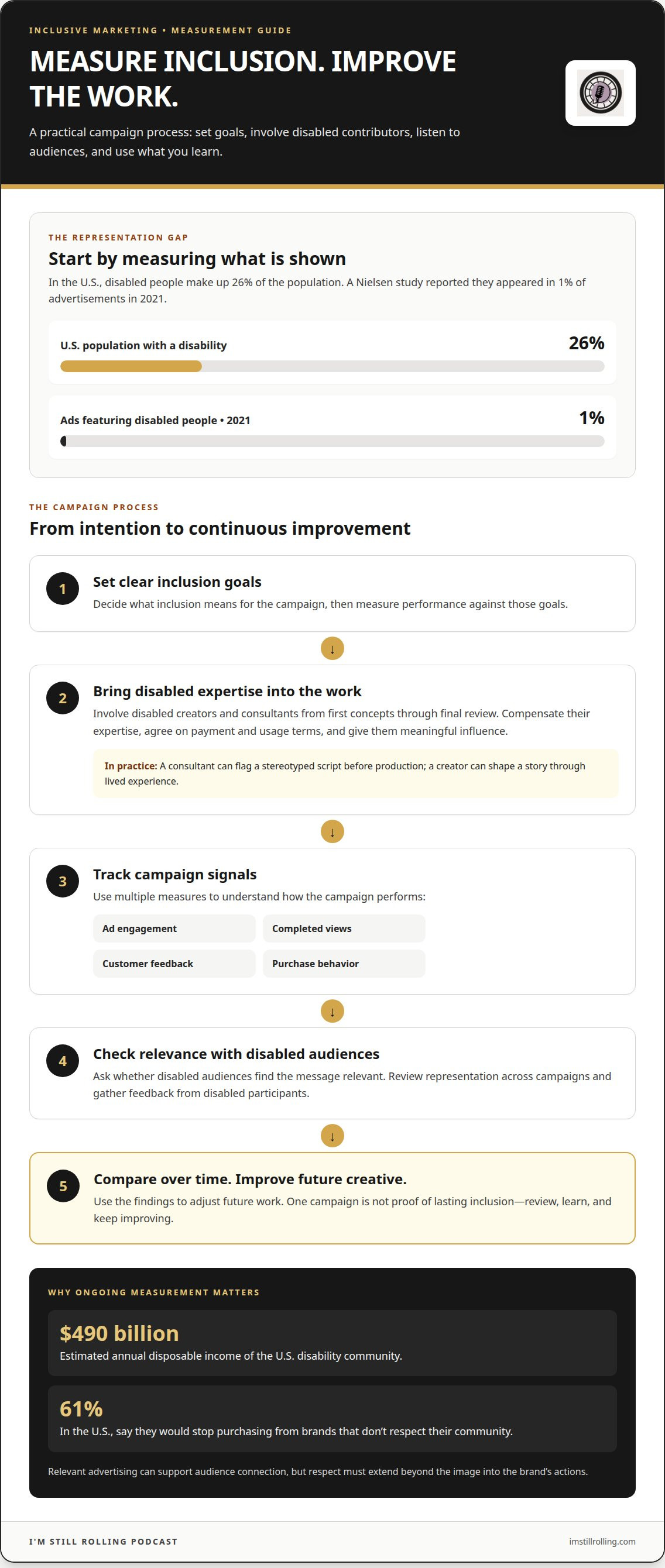
Disabled people make up 26% of the U.S. population. A Nielsen study reported that disabled individuals appeared in 1% of advertisements in 2021, leaving a gap between audiences and representation.
Authentic Disability Representation
Authentic representation shows disabled people with agency, individual identities, and roles beyond disability or hardship. It matters because stereotypes can flatten real lives into a single, familiar image. For example, a wheelchair user can appear shopping with friends, rather than serving as a symbol of vulnerability. Advertising can include disability naturally without making it a spectacle or the person’s only defining trait.
Collaboration With Disabled Creators and Consultants
Involve disabled creators and consultants in campaign decisions, from the first concepts through final review. Compensate their expertise and creative work, agree on payment and usage terms, and give them meaningful influence. A consultant might flag a stereotyped script before production, while a creator can shape a story through lived experience. This makes participation substantive, not symbolic.
Measuring Inclusion’s Marketing Impact
Measure campaign performance against clear inclusion goals. Track ad engagement, completed views, customer feedback, and purchase behavior, then assess whether disabled audiences find the message relevant. Review representation across campaigns and gather feedback from disabled participants. Compare results over time and use what you learn to improve future creative work, rather than treating one campaign as proof of lasting inclusion.
Disabled people also influence spending and loyalty: the U.S. disability community has an estimated $490 billion in annual disposable income. In the U.S., 61% say they would stop purchasing from brands that don’t respect their community. Relevant advertising can support audience connection, but respect must extend beyond the image into the brand’s actions.
Business benefits of inclusive marketing language
Respectful language helps people understand a brand without reducing anyone to a diagnosis or stereotype. In disability inclusion in marketing, word choice influences whether a message feels accessible, relevant, and meaningful. For example, “wheelchair user” is more accurate than “confined to a wheelchair.” Recognizing people’s abilities and preferences can also make communication clearer to a wider audience.
Common mistakes include using pity or inspiration as a shortcut, treating disabled people as one group, and using terms such as “special needs” without considering their impact. These choices can reinforce stereotypes and weaken trust. Preferences vary: some Autistic people prefer identity-first language, while others prefer people-first wording. Ask individuals what terms they use and include that preference in the campaign process.
Inclusive language can also support business performance. A study by the Unstereotype Alliance, Saïd Business School, University of Oxford, and Unilever found inclusive campaigns had a 62% likelihood of being a consumer’s first choice. The same study associated inclusive campaigns with 3.5% higher short-term sales, 16% higher long-term sales, and 15% higher consumer loyalty. These findings suggest an advantage, not a guaranteed result for every campaign.
Use language that reflects the experience being described. Replace “suffers from a disability” with neutral wording unless the person chooses otherwise. Recognize someone for a specific accomplishment instead of presenting ordinary activities as extraordinary because of disability. This keeps the person, rather than an assumed narrative, at the center.
Use a simple review to improve accessible communication: flag language that labels or generalizes, check preferred terms with disabled contributors, then revise for clarity and respect. For example, describe an athlete’s performance without presenting disability as the obstacle they had to overcome. This deliberate process helps teams create more precise, human, and meaningful messages.
Consumer expectations for social impact
Disabled consumers expect brands to connect public values with actions that affect their community. In the U.S., 63% of disabled individuals will consider seeking a new brand because their current brand doesn’t align with causes they care about. Also, 52% expect brands to support causes aligned with their community. These figures distinguish a public statement from sustained commitment.
Meaningful support can include accessible communications, inclusive hiring, or backing initiatives shaped by disabled people. The action should connect to the brand’s actual work, not appear only during a seasonal promotion. A company discussing access, for example, can make its own campaign materials easier to use. That connection between message and practice gives audiences something concrete to assess.
Social impact can also influence consumer response beyond disability communities. In a 2017 consumer report, 87% of consumers favored brands with active social or environmental initiatives, while 76% avoided brands that fell short. More than 80% of participants responded positively to disability inclusion. These figures point to broader interest, but diverse audiences may judge the same campaign differently.
Authenticity depends on whether people see support as real and specific. In an experiment involving a fictional restaurant chain, participants viewed a campaign featuring a wheelchair user as equally inclusive whether the company acted voluntarily or to meet European standards. What mattered was meaningful, concrete support. A campaign can therefore shape perception when a brand’s actions extend beyond its imagery.
Turn audience insights into a clear review: name the cause, identify the action behind the claim, and assess whether disabled people helped shape it. Then compare the campaign’s promise with the customer experience it creates. The Public Relations and Communications Association’s accessible communications guidelines say accessible communications improve brand preference, purchase intent, and loyalty among disabled consumers and their networks. Access is part of social impact, not a separate finishing touch.
Intersectional disability representation in marketing
Disability intersects with race, gender, age, and other parts of identity. Among Black women with disabilities, 60% report feeling misrepresented. A campaign that includes disability but repeatedly shows only one racial or gender group can still leave audiences unseen. Representation becomes more meaningful when brands consider whose experiences appear, who speaks, and who remains absent.
Consider a campaign featuring a Black woman who uses a wheelchair. Does the story give her a recognizable role, such as leading a project or spending time with friends, or reduce her to a lesson about resilience? That distinction shapes whether the portrayal feels genuine. It also shows why one image cannot represent the range of communities and experiences.
Review casting, scripts, settings, and distribution together. Ask whose perspective shaped the concept, whether the setting reflects everyday life, and whether the story relies on stereotypes. A workplace campaign, for example, can show disabled colleagues in varied roles rather than placing one person in a token position. Include disabled people with different identities in review conversations, and act on their feedback.
In the United States, the Americans with Disabilities Act (ADA) is a disability discrimination law relevant to accessibility. The Web Content Accessibility Guidelines (WCAG) provide guidance for accessible websites and apps. Digital marketing teams can use WCAG’s principles of perceivable, operable, and understandable content to assess campaign pages and materials.
A lasting commitment pairs representation with access. A campaign featuring a Deaf Latina creator, for example, should make its video content accessible and give her meaningful influence over the story. Review each campaign for who appears, who shaped it, and whether audiences can engage. This makes inclusion an ongoing practice, not a one-time casting choice.
I'm Still Rolling Podcast: I'm Still Rolling Podcast Episodes
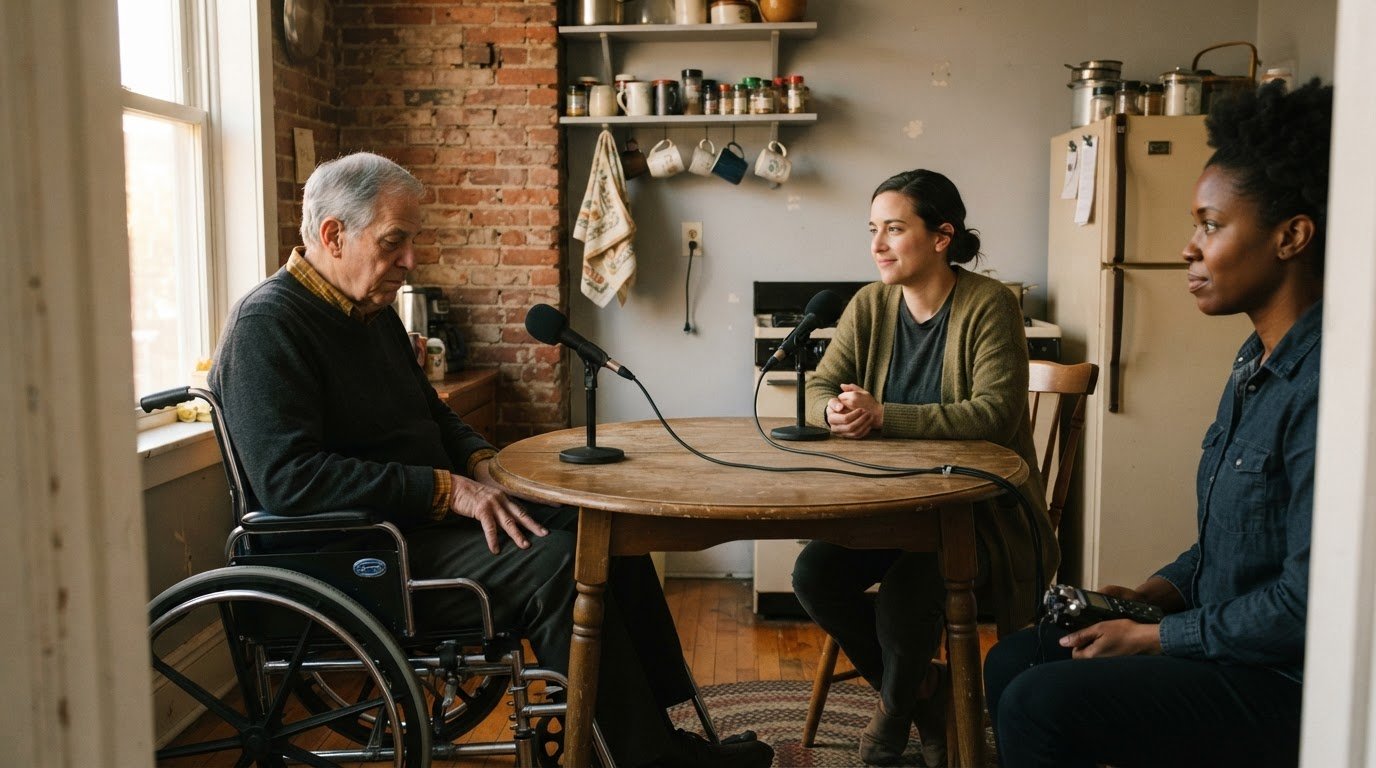
I'm Still Rolling Podcast shares honest conversations about disability, resilience, and life after adversity. Its episodes offer marketers and audiences a chance to hear lived experience beyond campaign imagery, including stories about disability rights, caregiving, and personal growth.
Explore these conversations when your team wants thoughtful perspectives to inform future messaging, or when you want to listen beyond a short campaign. The I'm Still Rolling Newsletter and Podcast Transcripts offer additional ways to engage with the stories and revisit key ideas at your own pace.
For a more grounded understanding of how disability and adversity shape people’s lives, explore an episode or transcript. You’re welcome to contact I'm Still Rolling Podcast or visit imstillrolling.com.
Let lived experience shape what comes next
More inclusive work starts with listening beyond a campaign review. Make room for disabled people’s perspectives as ideas take shape, decisions are made, and audiences respond. That ongoing attention makes disability inclusion in marketing part of how a brand communicates, not a message reserved for one moment.
Marketers can take a next step by spending time with stories that hold complexity without reducing people to a diagnosis or an inspirational lesson. Listening closely can raise questions a campaign team might otherwise miss and help turn good intentions into more thoughtful choices.
I'm Still Rolling Podcast shares conversations about disability, resilience, and life after adversity. If you’d like to continue listening or discuss the stories, contact I'm Still Rolling Podcast. Every campaign is an opportunity to make more room for real lives, told with dignity and care.
Frequently Asked Questions
How Can Brands Be More Digitally and Physically Inclusive?
Build access into online content and in-person experiences. On a campaign page, use meaningful alt text, support keyboard navigation, caption videos, and provide audio transcripts. For an event, consider step-free routes, wider doorways, and accessible restrooms. Test the entire journey, from finding event details to entering the venue, so people aren’t included in the message but excluded from taking part.
How Do You Achieve Inclusive Marketing?
Make inclusion part of planning, production, and review, not a last-minute creative adjustment. Involve disabled contributors while developing a campaign brief, then invite feedback on the script, imagery, and final materials. Give contributors clear roles and influence over decisions. After launch, use audience feedback to identify what to change in the next campaign.
How Does Inclusion Help Organizations Succeed?
Inclusion helps organizations reach audiences whose needs and perspectives might otherwise be overlooked. Accessible instructions, readable copy, and flexible content formats can make messages easier for more people to use. Internal review also helps teams identify assumptions before they reach the public. Over time, these insights can inform clearer campaigns and more thoughtful customer experiences.
What is Disability-Inclusive Language?
Disability-inclusive language describes people respectfully without making disability their whole story. Preferences differ, so use the terms each person chooses for themselves. A practical editorial approach is to ask contributors how they identify, record their preferences, and apply them consistently in captions, interviews, and campaign copy. This keeps language personal instead of imposing one rule on everyone.
What is ableist language?
Ableist language uses disability as an insult or reinforces negative assumptions about disabled people. Terms such as “crazy” or “insane” can stigmatize mental health conditions, while phrases that equate disability with incompetence dismiss people’s abilities. Editors can review idioms as well as labels, replacing harmful wording with precise descriptions of the situation or behavior.
Why is disability inclusion important in marketing?
Disability inclusion in marketing matters because disabled people are part of every audience, yet campaigns can overlook their lives and access needs. Thoughtful representation and accessible content help people engage without being treated as an afterthought. A captioned product video, for example, can serve viewers who need captions and those watching without sound, making the message easier to follow in different settings.

Comments