Conversations About Death and Dying: How to Begin with Honesty and Care
Conversations about death and dying don’t have to begin with answers, plans, or certainty. They can start with a simple question, asked gently, and make room for whatever comes next.
If you’re afraid of upsetting someone you love, unsure what to say first, or worried that different beliefs could lead to conflict, that hesitation makes sense. These conversations carry emotional weight. Avoiding them can leave important wishes unspoken, while trying to cover everything at once can feel overwhelming. You don’t need perfect words, and you don’t have to settle every question in one sitting.
This guide offers practical ways to open a conversation, listen without rushing to fix or reassure, and respond with care when you disagree or don’t know what to say. You’ll also learn how to make room for changing wishes and uncertainty. The aim isn’t one definitive talk, but a series of small, values-led conversations that help someone feel heard and help loved ones understand what matters most.
Table of Contents
Why conversations about death and dying matter, even when nothing is urgent
How to start conversations about death and dying with values, not pressure
When conversations about death and dying bring fear, silence, or disagreement
A practical plan for continuing conversations about death and dying
How honest stories can make conversations about death and dying feel less lonely
Why conversations about death and dying matter, even when nothing is urgent
Talking about death can feel frightening, awkward, or difficult to raise, especially with someone you love. You might worry that mentioning it will cause distress or sound as though you’ve given up hope. But the conversation doesn’t have to begin with a diagnosis or a decision. It can start with what matters in someone’s life now: the people, beliefs, routines, hopes, and worries they want others to understand.
Sharing preferences can help loved ones understand a person’s values if difficult decisions arise later. It won’t prevent every disagreement or remove the uncertainty that can come with illness and loss, but it can reduce some of the guesswork. You don’t need a complete plan before speaking. One question, reflection, or preference is enough to begin.
What people may mean when they say they want to talk about death
Sometimes a person wants to reflect on mortality: what gives life meaning, what they fear, or what they hope others will remember. At other times, they mean practical questions about future care and who they would want involved. Both belong in conversations about death and dying, but one doesn’t have to lead immediately to the other.
Beliefs and family traditions shape how people approach death, grief, and remembrance. Don’t assume relatives share the same spiritual, cultural, or personal views. A conversation might focus on a worry about being alone, a hope for a particular ritual, or a wish to protect a close relationship. Thanatology, the scientific study of death and dying, also reflects how the subject reaches beyond medical decisions into broader human questions.
Why a conversation can begin before a crisis
In a crisis, people may be frightened, tired, or trying to make sense of fast-changing information. An ordinary, calm moment can leave more room to listen and ask what someone means. You might begin after a family story, during a quiet walk, or while discussing what makes a day feel meaningful. The point isn’t to turn a gentle opening into a formal meeting.
A values-led death conversation is an open exchange about what matters to someone, with no demand to settle every question at once. Leave room for uncertainty: “I’m not sure what I’d want yet” is a real answer. Understanding can grow over several conversations, and people may change their minds as circumstances or feelings shift. Starting early makes room for that change before urgency narrows the conversation.
How to start conversations about death and dying with values, not pressure
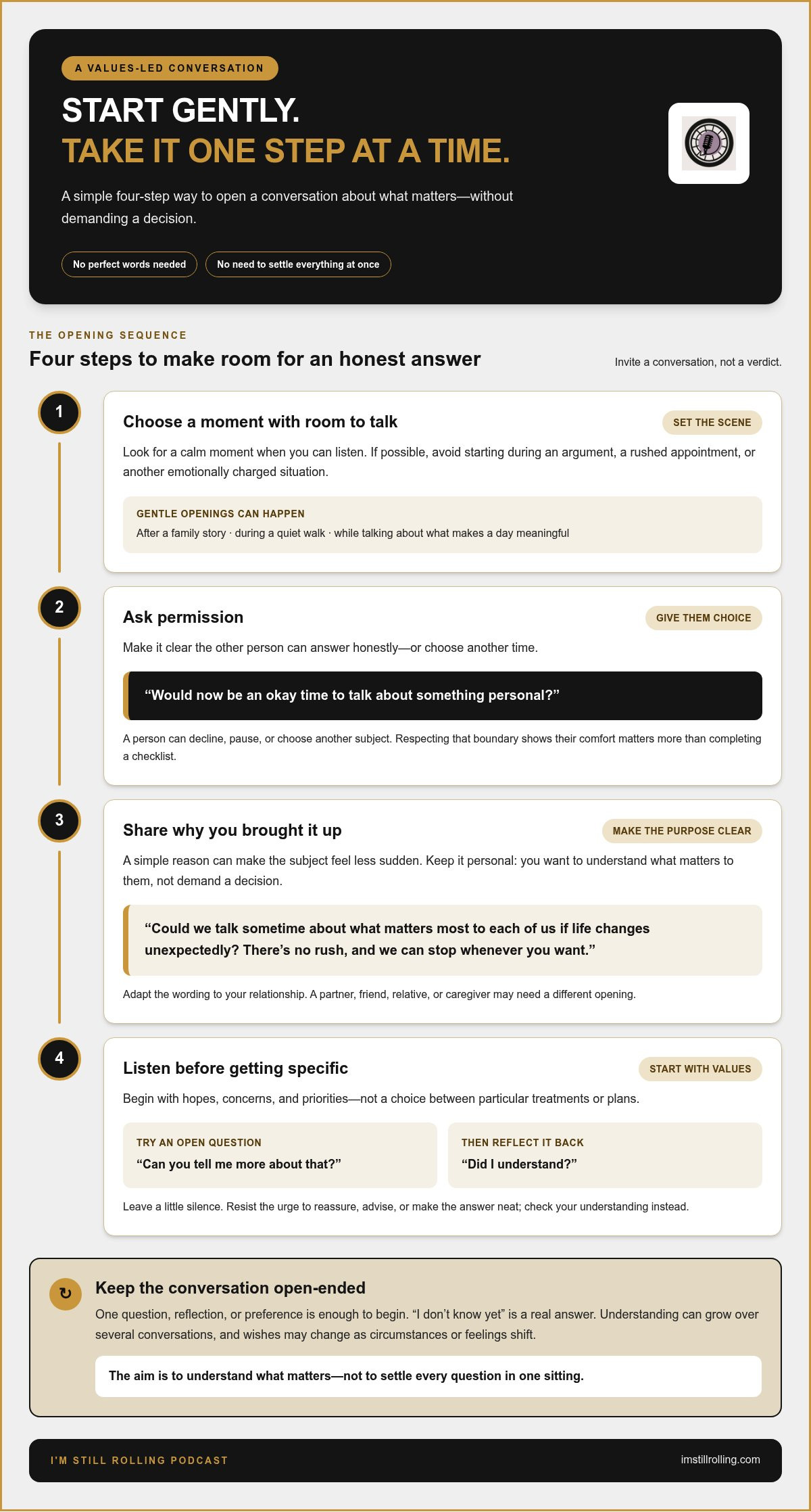
A gentle beginning is less about finding perfect words than making it clear the other person can answer honestly. Choose a calm moment, ask whether they’re open to talking, explain why you brought it up, and listen. This makes the purpose clear: you’re inviting a conversation, not demanding a decision.
You might say, “Could we talk sometime about what matters most to each of us if life changes unexpectedly? There’s no rush, and we can stop whenever you want.” Or try, “I’ve been thinking about the things that make life feel like yours. Would you be comfortable sharing what you’d want me to understand?” Adapt the wording to your relationship. A partner, friend, relative, or caregiver may need a different opening, but the invitation can still be personal and calm.
Choose a moment with room to talk. If possible, avoid bringing up the subject during an argument, a rushed appointment, or another emotionally charged situation.
Ask permission. Try, “Would now be an okay time to talk about something personal?”
Share your reason. A simple explanation, such as wanting to understand what matters to them, helps the topic feel less sudden.
Listen before getting specific. Start with hopes, concerns, and priorities rather than asking someone to choose between particular treatments or plans.
Conversation starters that leave room for an honest answer
Ask questions that leave room for a real response, including “I don’t know” or “not today.” For example: “What do you hope the people close to you understand about what matters most?” You can also share your own reflection: “I’ve been thinking about how important it is to feel connected to family. I’m still working out what that means for me.” Sharing first is an invitation, not an expectation that the other person will share equally.
Make the next step optional: “Would you rather talk about this another time, or focus on one part of it?” A person can decline, pause, or choose another subject. Respecting that boundary doesn’t close the door. It shows their comfort matters more than completing a checklist.
How to listen when the answer is complicated
Try an open question such as, “Can you tell me more about that?” Then leave a little silence. Reflect what you heard: “It sounds like staying close to family matters most, and you’re unsure about the rest. Did I understand?” Resist the urge to reassure, advise, or make the answer neat. You’re checking your understanding, not reaching a verdict.
Values can guide later decisions, but they aren’t a substitute for medical or legal guidance when specific options or documents are involved. First understand what the person means, then recognize when a decision needs qualified advice. Hearing candid stories of resilience and caregiving can offer perspective without dictating what your conversation should sound like.
When conversations about death and dying bring fear, silence, or disagreement
Discomfort doesn’t mean the conversation has failed. Someone may go quiet, cry, make a joke, become angry, or say they don’t want to continue. These are human responses to a subject that can touch fear, grief, faith, and family history. No one has to show readiness, acceptance, or calm for a conversation to matter.
Meet the reaction without correcting it. If there’s silence, give the person time instead of filling every pause. If they cry, you might say, “I’m here. We don’t have to rush.” Humor can ease tension, so acknowledge it without assuming the person wants to change the subject. If anger surfaces, try to lower the temperature: “I can hear this feels upsetting. Would you rather stop?”
If someone does not want to talk right now
Take a clear no seriously. Don’t corner someone with repeated questions or treat reluctance as proof they don’t care. You could answer, “Okay. I won’t push. If you ever want to return to it, I’m willing to listen.” If they seem open to revisiting the subject, let them choose when. If not, leave the invitation there without turning it into a promise they’re expected to keep.
Connection can continue without discussing death. Offer a cup of tea, ask about something they care about, or simply sit together. That ordinary gesture communicates that your relationship isn’t conditional on disclosure. It also gives the person space to decide whether and when they want to talk more.
If loved ones disagree about wishes or beliefs
Family members can care deeply and still disagree about what a good life, a peaceful death, or meaningful care looks like. Instead of trying to win the argument, ask what sits beneath each view: “What are you most worried might happen?” or “What does that belief help you protect?” Curiosity can reveal the values involved, even when it doesn’t create agreement.
Listening isn’t the same as endorsing another person’s position, and understanding doesn’t require an immediate resolution. Focus on hearing each other rather than deciding who is right. Don’t assume one person speaks for everyone. A loved one may hold a distinct view, even within a close family.
Some disagreements concern personal beliefs. Others involve practical decisions, medical options, or legal documents. Keep those threads separate. A conversation can clarify what people value, but it can’t replace guidance from qualified medical or legal professionals when specific decisions require it.
A pause can be a respectful outcome, not a retreat. Ask whether the person would prefer to leave the subject here, talk about a different part another time, or not revisit it at all. That choice keeps the conversation grounded in care rather than obligation. Conversations about death and dying aren’t tests of courage. They’re opportunities to understand one another, including when the honest answer is “I can’t talk about this today.”
A practical plan for continuing conversations about death and dying
A thoughtful conversation doesn’t have to be improvised, but it doesn’t need a script either. A little preparation can help you stay present, notice when the other person needs a pause, and remember what you hope to understand. Use this checklist to shape the conversation around care rather than pressure:
Purpose: What do you hope to understand or share? Choose one focus, such as what brings comfort or what someone hopes loved ones will remember.
Person: Who needs to be part of this conversation? Consider whether the person wants to speak one-on-one or include someone else.
Setting: Find a private, unhurried place where you can pause without an audience or immediate demands.
Opening: Prepare a simple invitation, not a list of questions. For example, “Could we talk about what matters to you if your needs change?”
Pause: Decide how you’ll make stopping easy. Agreeing that either person can take a break helps keep the conversation respectful.
Before the conversation: prepare without scripting every word
Ask yourself what you hope the other person will understand and what you genuinely want to learn. You don’t need to anticipate every answer. Leave time for silence, and prepare a gentle way to stop: “We can leave it here for today.” When caregiving is part of the picture, feelings and practical responsibilities may overlap. Caregiving for a spouse with Alzheimer’s can bring its own emotional and practical shifts.
After the conversation: reflect, record, and return
Ask permission before writing anything down. Then summarize what you heard using the person’s own words and check your understanding: “You said being near family matters most. Have I got that right?” A brief note can help you remember what was actually shared rather than what you assumed it meant. Keep informal reflections distinct from formal documents or instructions.
If the discussion points toward specific medical or legal choices, treat those as separate questions for qualified guidance. Don’t let a casual conversation stand in for a formal document or professional advice. A useful next step may simply be agreeing on what still needs exploring and who the person wants involved.
Preferences can evolve as health, relationships, and understanding change, so a past conversation is a starting point, not a permanent answer. Revisit the subject when circumstances shift, or ask whether the person still feels the same about what they shared. That check-in needn’t reopen everything. One gentle question can be enough to learn whether anything has changed.
For another perspective on resilience, disability, caregiving, and life after adversity, explore the candid stories in the podcast. Hearing people describe difficult experiences in their own words can offer companionship as you find your own way to listen and return to the conversation.
How honest stories can make conversations about death and dying feel less lonely
Hearing someone describe an experience you’ve struggled to put into words can help. A story may offer language for fear, a new way to think about caregiving, or the reassurance that uncertainty doesn’t belong to one family alone. It doesn’t tell you what to feel or decide. It gives you another human perspective to consider.
That distinction matters. A personal account isn’t a template, and listening won’t necessarily soften grief, ease family tension, or settle a difficult question. Notice what resonates and let the rest go. One person’s beliefs, relationships, and circumstances are their own. Their experience can open a door to reflection, but your conversation still needs to happen between you and the person you care about.
What a personal story can offer, and what it cannot
Stories can make a difficult subject feel less abstract by showing how people speak about change, vulnerability, and what helps them endure. They may give you a question to bring to your own conversation, such as, “What would help you feel heard?” But they can’t determine another person’s wishes or replace qualified medical or legal guidance for specific decisions. Listen for insight, not instructions.
Finding a next step that feels manageable
You don’t need to turn a new perspective into a sweeping plan. Choose one person, one question, or one short conversation. If you’re not ready to speak yet, listening or reading can be a quieter first step. Go at your own pace, pause when you need to, and return to the subject only when it feels right.
The I'm Still Rolling Podcast, hosted by journalists Mike Sugerman and Janice Wright, shares candid conversations about resilience, disability, caregiving, and life after adversity. Guests’ lived experiences can offer language and perspective for reflecting on your own relationships and values without prescribing a single response. Explore episodes in audio or video, or read a transcript, and choose the format that suits you.
Let a story accompany you, not stand in for a direct conversation or professional advice when you need it. If you’d like a little company as you consider what to say, listen to an episode or read a transcript at your own pace.
Connection matters more than finding perfect words.
Let one honest conversation be enough for today
You don’t have to resolve every question before you begin. A meaningful next step might be checking in with someone you love, asking what they’d like you to understand, or simply making it clear you’re willing to listen. Conversations about death and dying can unfold in their own time, with room for uncertainty, changing feelings, and moments when neither person knows quite what to say.
If you need perspective before reaching out, stories of people facing adversity can offer a sense of company without telling you what your own path should be. Explore I'm Still Rolling Podcast's honest conversations and resilience stories when you’re ready, and let listening be a small step toward connection.
You don’t need perfect words to show someone they don’t have to face a difficult conversation alone.
Frequently Asked Questions
Is it too early to talk about death if I am healthy?
No. You can begin while you’re healthy without turning the conversation into a major planning session. For example, tell a trusted person what helps you feel respected when facing uncertainty, or ask what they hope family members remember about their values. Keep the first exchange small and relevant to your relationship. If either of you feels unready, leave the subject there and return only if you both want to.
What should I say when someone refuses to talk about dying?
Accept their answer without trying to persuade them. You could say, “I understand. I care about you, and I’m here if you want to talk another time.” Then shift to something they’re comfortable discussing; don’t label their response as denial. If a practical decision can’t wait, address that separately by seeking appropriate qualified guidance rather than using urgency to pressure the person into an emotional conversation.
How do I talk to children about death and dying?
Use simple, truthful language suited to the child’s age and the situation, and answer the question they actually asked. If a child asks whether someone will come home, for instance, avoid promising an outcome you can’t know. Let them know they can ask more questions later. Children may revisit the same concern as they grow or as circumstances change. Their family’s beliefs and the child’s connection to the person can guide what you explain.
Can we talk about death without making medical or legal decisions?
Yes. Conversations about death and dying can focus on personal meaning, such as what makes someone feel cared for, what they fear, or which relationships matter to them. Practical decisions can wait. If the discussion turns to a specific medical choice, legal document, or formal arrangement, treat that as a separate task and seek guidance from a qualified professional familiar with the subject.
What if my family disagrees about what the person would want?
Separate what each person remembers the individual saying from what each person believes should happen. One relative may recall a specific comment, while another may be expressing fear about a possible outcome. Ask what each view is based on without deciding immediately whose account is right. If an actual medical or legal decision is at stake, a conversation alone may not resolve the process. Seek appropriate professional guidance about the decision and relevant documentation.
Do I need to write down what we discuss?
No. Not every personal exchange needs to become a record. If the person agrees, a brief note can capture a phrase or preference you want to remember, along with what remains uncertain. Keep it distinct from formal medical or legal documents, which may have their own requirements. You can check the note with the person later; they may clarify, add context, or say their view has changed.



Comments