Companies That Support Disability Inclusion: 2026 Guide
What if a visible disability-inclusion award tells you less than the everyday experience of asking for an accommodation? Finding companies that support disability inclusion can be difficult when polished statements and workplace realities don’t always align. A public pledge may signal intent, but it can’t show on its own whether hiring, technology, flexibility, and advancement are accessible in practice.
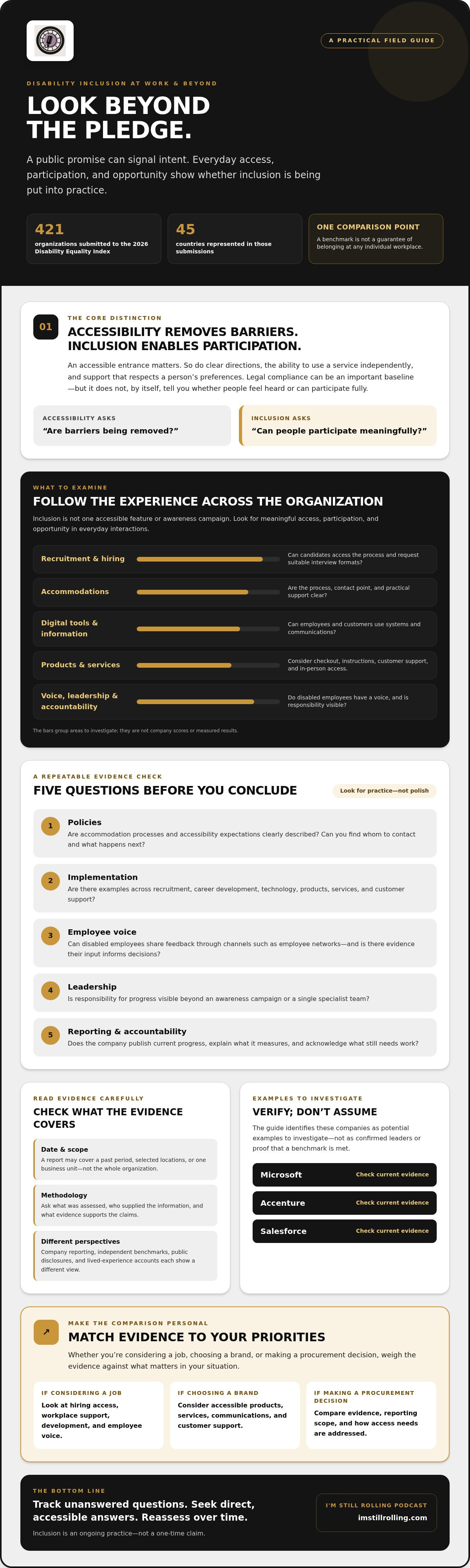
That skepticism is reasonable. This 2026 guide explains how to look beyond slogans, awards, or a single benchmark when assessing an employer or brand. The 2026 Disability Equality Index drew submissions from 421 organizations across 45 countries, offering one point of comparison, not a guarantee of belonging at any individual workplace. We’ll consider evidence across recruitment, accommodations, accessible digital tools, leadership, employee resource groups, and accountability. You’ll find practical questions to ask, signals to verify, and ways to judge whether inclusion is part of how a company operates, not just how it presents itself.
Table of Contents
What Does It Mean for a Company to Support Disability Inclusion?
A company’s disability-inclusion work can’t be measured by an awareness campaign, a polished statement, or a single accessible feature. It shows in whether disabled people can access spaces and information, participate in decisions and everyday activities, and pursue opportunities over time. The details matter: disability is diverse, and a practice that works well for one person may not meet another person’s needs.
A useful definition: Disability inclusion is the ongoing work of removing barriers and creating meaningful access, participation, and opportunity for disabled people, supported by evidence that commitments are being put into practice.
That distinction matters when evaluating companies that support disability inclusion. Public commitments describe intent; implementation is visible in how an organization hires, responds to access needs, designs products, shares information, and listens to disabled people. Workplace practices are one part of the picture. Accessible customer service, communications, digital tools, and in-person experiences matter too.
How Is Disability Inclusion Different from Accessibility?
Accessibility focuses on removing barriers. Inclusion asks whether people can participate meaningfully once those barriers are addressed. An accessible entrance matters, for example, but so do clear directions, the ability to use a service independently, and help that respects a visitor’s preferences.
These questions often intersect. A workplace may need accessible facilities, usable digital systems, clear communication, and flexible practices that account for different needs. Meeting a legal standard can be an important baseline, but it doesn’t show by itself whether employees or customers feel heard, can participate fully, or can get practical support when a barrier remains. The Americans with Disabilities Act of 1990 provides important U.S. legal context, but legal compliance and lived experience are not interchangeable measures.
Why Do Company Practices Matter to Disabled People?
Hiring processes and workplace support shape who gets a fair chance to apply, contribute, and advance. A candidate may need an interview format that works with their access needs, while an employee may benefit from tools or arrangements that help them do their job effectively. These are examples, not universal solutions. The person’s own experience and preferences should guide what’s useful.
Products and services shape participation beyond work. An inaccessible checkout, hard-to-follow instructions, or customer support without a usable communication option can create a barrier during an otherwise ordinary task. Looking at these everyday touchpoints helps reveal whether inclusion is an ongoing practice or a message reserved for public campaigns.
How to Tell Whether a Company’s Disability-Inclusion Claims Have Substance
A company’s statement can tell you what it wants people to believe. To understand what employees and customers may experience, look for evidence that commitments are resourced, applied, and revisited. This checklist can help compare companies that support disability inclusion without treating a polished campaign as proof of lasting change.
Policies: Are accommodation processes and accessibility expectations clearly described? Can you find out whom to contact and what the process involves?
Implementation: Are there examples across recruitment, career development, technology, products, services, and customer support?
Employee voice: Do disabled employees have channels to share feedback, such as employee networks? Is there evidence that their input informs decisions?
Leadership: Is responsibility for progress visible beyond a single awareness campaign or specialist team?
Reporting: Does the company publish current progress, explain what it measures, and acknowledge areas still needing work?
Check dates and scope before drawing conclusions. A report may cover a past period, selected locations, or one business unit rather than the whole organization. Check its methodology too: what was assessed, who supplied the information, and what evidence supports the claims? Company reporting, independent benchmarks, public disclosures, and lived-experience accounts each offer a different view. None should automatically stand in for the others. For broader context, the U.S. Department of Labor’s latest disability employment statistics can help readers understand employment patterns, though they don’t verify an individual company’s practices.
What Evidence Should a Reader Look For?
Look for practical details, such as accessible job applications and interviews, a clear route for requesting accommodations, employee networks, and support for development and advancement. Then examine experiences beyond the workplace. Can people use the company’s digital platforms, products, services, and customer-support channels with different access needs? Current updates are more informative than broad promises, especially when a company explains what changed after disabled people raised a concern.
How Can Benchmarks and Company Statements Be Compared?
The Disability Equality Index is one possible benchmarking resource, not a complete verdict on any employer. Before relying on a score or recognition, check what the benchmark measures, which entities participated, and what reporting period it covers. A company announcement is a useful starting point. Compare it with other available evidence and ask whether it applies to the specific team, location, product, or service relevant to you.
One award or campaign can’t establish organization-wide inclusion; sustained evidence across teams, services, and time offers a more credible picture. For added human context, explore disability-rights stories and lived experiences from I'm Still Rolling Podcast. These stories can deepen understanding of why access and representation matter, though they aren’t company ratings.
Companies to Investigate for Disability-Inclusion Practices
Microsoft, Accenture, and Salesforce are useful starting points for research, not automatic picks for a “top companies” list. A responsible profile needs a specific, attributable practice, a dated source, and a clear account of what the evidence covers. This guide doesn’t establish current, company-specific disclosures that meet that standard, so it would be misleading to present an unverified initiative as fact.
Use the table to identify what still needs checking, then consult each company’s latest accessibility, workforce, and disability-inclusion disclosures. Company reports can document stated commitments and practices; independent sources and firsthand accounts can add context. Neither should be mistaken for a complete picture on its own.
Microsoft, Accenture, and Salesforce: Verify Practices Before Comparing
Before drawing conclusions, check each source’s publication date, reporting period, methodology, and organizational scope. A practice described for one product, location, or business unit doesn’t necessarily apply across an entire company. The questions below are research prompts, not claims that a particular practice currently exists.
What Makes a Company Example Worth Including?
A credible profile names a concrete practice and attributes it to a source readers can inspect. It also specifies whether the evidence concerns employees, customers, suppliers, products, or more than one area. A broad statement of support may signal intent, but it doesn’t show how that intent is carried out.
Benchmarks and company statements can help frame further research, but check what each measures and which entities or reporting periods it includes. For readers comparing companies that support disability inclusion, an award or campaign is a lead to investigate, not an endorsement or definitive ranking. A fair comparison depends on current evidence, consistent criteria, and unanswered questions kept in view.
How to Compare Inclusive Employers and Brands for Your Situation
A company’s overall reputation can’t tell you exactly what a particular team, location, product, or support channel will be like. Start with the situation you’re evaluating, then gather evidence that applies to it. Use these five steps to make the comparison more concrete:
Define your priorities. Decide what access, support, or experience matters most to you.
Gather relevant evidence. Review current information about the specific role, location, product, or service.
Ask focused questions. Request details about how practices work in the setting you’re considering.
Compare the responses. Look at clarity, consistency, and whether answers address your actual needs.
Revisit over time. Practices and experiences can change, so treat your assessment as a snapshot, not a permanent verdict.
The right questions depend on your role. A job seeker may care most about interviews and workplace support; a customer may be assessing a website or service interaction; a procurement decision-maker may need to understand accessibility across a product or partnership. Focus on the specific experience you’ll have, rather than relying on brand reputation alone. For a broader view of how disability rights and public narratives connect, explore disability rights and journalism.
Questions Job Seekers Can Ask About Inclusion
Ask how to request interview accommodations, what the accommodation process looks like after hiring, and how adjustments are considered for the specific role. You can also ask whether employee networks are active and how career development and advancement opportunities are communicated. You don’t have to disclose more than you’re comfortable sharing to ask about processes. Public information can help you prepare, but it may not answer every individual question.
Questions Customers and Business Partners Can Ask
As a customer, check whether the digital service, physical location, and support channels work for your access needs. As a business partner or procurement decision-maker, ask how the supplier gathers accessibility feedback and what happens after someone reports a barrier. Compare the answers with the actual product, service, or partnership, not a general corporate promise. If key details remain unclear, note what you still need to know and request an accessible response.
Comparing companies that support disability inclusion is ultimately about matching evidence to your own priorities. To hear more about the lived experiences behind disability rights and inclusion, explore disability-rights stories from I'm Still Rolling Podcast.
Corporate Commitments to Lived Experience: Next Steps
Disability inclusion isn’t a statement a company makes once and then leaves behind. It’s ongoing work, best judged through current evidence that fits the specific workplace, service, or product you’re assessing. If answers are incomplete, note what remains unclear and ask the organization directly for an accessible response. A focused question can reveal whether a public commitment has a practical counterpart.
This matters because policies shape real experiences: whether an employee can participate and progress, whether a customer can use a service, and whether disabled people have a voice in decisions that affect them. No single account represents everyone. Listening to a range of disabled people’s experiences can help organizations and readers understand where formal commitments meet daily life, and where gaps remain.
How Can Organizations Move Beyond Public Commitments?
Organizations can make progress easier to assess by setting measurable priorities and reporting updates with clear dates and scope. They can involve disabled employees and customers in feedback and decision-making, then explain what changed in response. These steps don’t guarantee that every barrier will be resolved, but they make it possible to see whether concerns are heard and acted upon.
Most of all, treat an access barrier as something to investigate and address, not as a shortcoming of the person who encounters it. Review the process, environment, communication, or technology involved, and seek input from the people affected. For companies that support disability inclusion, accountability is not only about what they promise; it’s also about how they learn and respond.
Where Can Readers Hear More Lived Experience?
I'm Still Rolling Podcast is hosted by journalists Mike Sugerman and Janice Wright and features personal stories and conversations about disability, resilience, caregiving, and disability rights. Episodes are available in audio, video, and written transcript formats. These stories offer human context for thinking about access, representation, and belonging. They don’t rate or certify companies.
Explore journalistic disability stories, then take your questions back to the organization you’re evaluating. Notice not only whether it responds, but whether the response is clear, accessible, and relevant to the experience you asked about.
Explore I'm Still Rolling Podcast for more disability storytelling and lived perspectives.
Carry the Questions Into Your Next Decision
The most credible measure of disability inclusion is not a company’s reputation, but the evidence behind its practices and how well those practices fit the people they affect. As you compare companies that support disability inclusion, look for current, relevant information, ask specific questions, and keep track of what remains unanswered. A benchmark or public commitment can inform your research, but neither replaces attention to the actual workplace, product, or customer experience.
That evidence matters because policies are ultimately felt in everyday moments: applying for a job, requesting support, using a service, or being heard when something creates a barrier. Personal stories can bring those moments into focus without pretending one person speaks for everyone. I'm Still Rolling Podcast, hosted by journalists Mike Sugerman and Janice Wright, explores disability and resilience through personal stories in podcast episodes, video, and written transcripts.
Listen to stories that bring disability and resilience into focus, and carry what you learn into the questions you ask organizations. Thoughtful scrutiny and genuine listening can help move inclusion from promise toward practice.
Frequently Asked Questions
What companies are known for supporting disability inclusion?
Microsoft, Accenture, and Salesforce are companies readers can investigate, but their names alone aren’t proof of organization-wide inclusion. Look for current, specific evidence about practices affecting employees, customers, products, or services, and check which parts of each company the evidence covers. This guide treats them as candidates to research, not as a ranking or endorsement. The strongest comparisons rely on dated disclosures and other evidence relevant to your needs.
How can I tell if a company is genuinely disability-inclusive?
Look for practices in action, not only public statements. Check how the company handles accessible recruitment, accommodation requests, career development, digital access, and customer support. Compare its claims with dated reports, independent benchmarks, and disabled people’s accounts where available. Ask whether the evidence covers the team, location, or service you’re considering. Companies that support disability inclusion should be assessed through sustained, relevant evidence, not a single award or campaign.
What is the Disability Equality Index?
The Disability Equality Index is a benchmarking resource that organizations can use to assess and compare aspects of disability inclusion. Its results can offer a useful point of reference, but they aren’t a complete verdict on any company’s everyday practices or experiences. The 2026 index included 421 organizations from 45 countries, with 627 submissions. Before relying on a result, check what it measures, the reporting period, and which parts of an organization are represented.
Are there companies that hire people with disabilities?
Yes. Employers hire people with disabilities across industries and roles, though available opportunities and hiring practices vary. Rather than relying on a company’s general reputation, review current job postings and ask about accessible application and interview processes, accommodation procedures, and role-specific requirements. Some organizations describe targeted hiring initiatives, including programs focused on neurodivergent candidates. Confirm that a program is current, what roles it covers, and what support is available before treating it as relevant to your search.
What should I look for in an inclusive employer?
Look for clear information about accessible recruitment, a usable process for requesting accommodations, and support for development and advancement. Consider whether disabled employees can share feedback through networks or other channels, and whether the employer explains how it responds. Ask about the specific role and work location, since a general policy may not describe the experience of one team. Choose questions based on the access and support that matter to you.
Can a company be accessible without being inclusive?
Yes. Accessibility is about removing barriers, while inclusion also means enabling meaningful participation and opportunity. A website may be usable with assistive technology, for example, yet customer support may not offer an effective way to resolve an access issue. Similarly, an accessible workplace doesn’t by itself show whether employees are heard or can advance. Accessibility is essential, but it doesn’t tell the whole story of how people experience a company.
How often should I check a company’s disability-inclusion information?
Check it when you’re making a decision, and revisit it if circumstances change or the information becomes dated. Pay attention to publication dates, reporting periods, and whether the information applies to the specific role, location, product, or service you care about. If a key detail is missing, ask the organization directly and keep track of its response. There’s no single review schedule that suits every decision, but current evidence is more useful than an old claim.



Comments