Chronic Pain and Relationships: How to Protect Partnership and Intimacy in 2026
How do you stop persistent physical agony from quietly unraveling your marriage? When relentless discomfort settles into a home, the delicate intersection of chronic pain and relationships becomes fraught with invisible grief. You know the crushing guilt of canceled plans, the lopsided weight of household chores, and the creeping resentment that threatens to turn equal partners into a patient and an exhausted caregiver. Even in bonds anchored by deep devotion, it's remarkably easy to feel isolated while lying right beside the person you love.
Facing a long-term condition tests the strongest commitments, but physical limitations don't have to hollow out your romantic life. In this guide, you will discover how to protect your partnership, communicate through severe flare-ups without blame, and rebalance domestic roles before emotional fatigue takes over. Ahead, we explore practical methods to sustain tenderness, depersonalize the illness as an external challenge rather than a personal failure, and build the shared resilience needed to thrive together.
Table of Contents
The Invisible Strain: How Chronic Pain Silently Disrupts Relational Dynamics
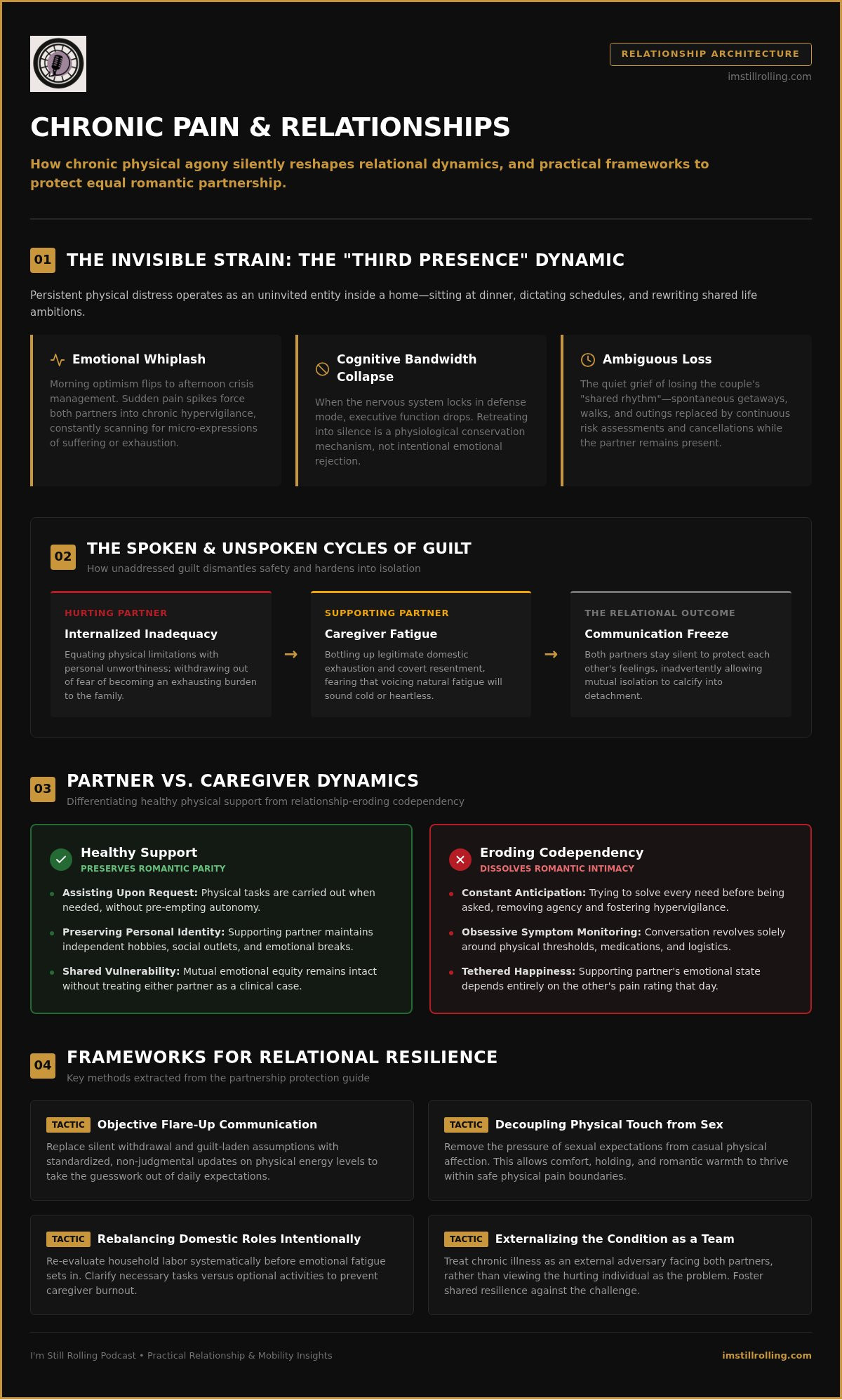
Persistent physical distress rarely stays confined to an individual body. It operates as an uninvited third presence inside a home, sitting between two people at dinner, dictating weekend schedules, and rewriting shared ambitions. Managing the interplay between chronic pain and relationships requires confronting this dynamic directly. When a partner experiences ongoing bodily trauma, unpredictable flare-ups trigger emotional whiplash. One morning brings optimism; by afternoon, a sudden spike in agony forces the household back into crisis management. Over time, both partners adopt a state of chronic hypervigilance, constantly scanning for micro-expressions of suffering or exhaustion.
Physical agony severely depletes executive functioning. When the nervous system stays locked in defense mode, basic cognitive bandwidth collapses. The partner in pain may retreat into silence simply to conserve physical energy, but this protective withdrawal easily looks like emotional detachment or fading love. The well partner, left on the outside of that silent fortress, begins walking on eggshells. Gaining a clinical and social baseline through understanding chronic pain helps demystify these physical reactions, clarifying that withdrawal is an involuntary physiological coping mechanism rather than emotional rejection.
The Ambiguous Loss Couples Rarely Name
Long before medical paperwork piles up, couples mourn an invisible casualty: the death of their shared rhythm. Spontaneous weekend getaways, routine evening walks, and effortless social outings vanish, replaced by risk calculations and cancellations. This ambiguous loss creates a distinct emotional ache because the partner is physically present, yet the shared life you built together is continually interrupted. Acknowledging this sorrow honestly, without laying blame on the partner whose body hurts, allows both people to process disappointment as a unified front instead of turning inward with quiet grief.
The Spoken and Unspoken Cycles of Guilt
Guilt quietly dismantles relational safety through unspoken assumptions. The partner living with the condition often internalizes profound shame, feeling like a burden who continually drains the family's vitality and domestic stability. Meanwhile, the supporting partner battles a covert form of guilt: feeling deeply ashamed for harboring occasional resentment, fatigue, or a fleeting desire to escape the endless logistical grind.
Internalized inadequacy: The hurting partner equates physical limitations with personal unworthiness, pulling away out of fear of being resented.
Caregiver fatigue: The supporting partner bottles up legitimate exhaustion, fearing that vocalizing stress will sound heartless.
The communication freeze: Both partners stay silent to protect the other, inadvertently allowing isolation to harden into detachment.
Breaking this cycle requires voicing these conflicting emotions without judgment. When couples address the realities of chronic pain and relationships transparently, guilt stops driving household dynamics, leaving space for genuine connection.
Navigating the Shift from Equal Partners to Caregiver and Patient
The slide from romantic equality into a clinical routine happens quietly. It starts with fetching water or picking up prescriptions, but without intentional guardrails, caretaking gradually eclipses partnership. When one person becomes the perpetual nurse and the other the perpetual patient, mutual erotic and emotional desire dissolves. True intimacy requires parity and shared vulnerability; caregiving, by necessity, demands logistical vigilance. Managing chronic pain and relationships requires couples to actively resist letting a medical diagnosis redefine their marital roles.
Caregiver burnout takes root when domestic burdens shift entirely onto one pair of shoulders. Resentment festers in the silence, eroding goodwill. To prevent codependency from consuming your home, draw clear distinctions between supportive care and identity loss:
Healthy support: Assisting with physical tasks upon request while preserving personal hobbies, regular breaks, and independent emotional boundaries.
Relationship-eroding codependency: Anticipating every need before being asked, monitoring symptoms obsessively, and tying personal happiness exclusively to the other person's pain levels.
Protecting the partnership means establishing sacred windows of time where symptoms, doctors, and medications are strictly forbidden topics. Dedicating even thirty minutes an evening to conversational "illness-free zones" reminds both of you that you exist outside the diagnosis.
Decoupling Spousal Love from Nursing Duties
Love shouldn't mean shouldering every practical burden alone. Strategic couples outsource administrative friction by automating prescriptions, hiring occasional cleaning help, or using meal kits. Keeping medication bottles and medical devices out of the bedroom preserves it as a romantic haven rather than an auxiliary clinic. Navigating heavy relational reversals requires emotional strategy; you can explore similar dynamics in caregiving for a spouse with alzheimers to see how couples preserve dignity amidst physical decline.
Re-establishing Agency for the Partner in Pain
Well-intentioned partners often smother each other through toxic solicitousness, treating their spouse like fragile glass. This hovering behavior breeds learned helplessness. Even when physical limitations prevent manual tasks, intellectual and emotional contributions must remain equal. Shared finances, parenting decisions, and household planning belong to both of you equally. For an unvarnished look at how couples build enduring strength through long-term hardship, explore honest stories on I'm Still Rolling podcast episodes.
Rebuilding Honest Communication Without Guilt or Resentment
Mind reading is a lethal habit for couples coping with long-term illness. The person in agony assumes their partner can clearly see how much they are hurting, while the well partner assumes silence means things are stable. When expectations clash, conversations quickly devolve into defensive arguments over neglected chores. This persistent tension takes a physiological toll; chronic marital resentment elevates systemic stress hormones, which amplifies central nervous system pain signaling and worsens physical flares. Transforming chronic pain and relationships requires ditching vague emotional outbursts in favor of direct, objective status reports.
Preventing conversational exhaustion starts with practical, shared protocols:
Establish silent exit signals: Create a discreet physical cue, like a double tap on the wrist, during social events to signal that physical reserves are gone and an exit is needed immediately without explanation.
Run a daily emotional connection check-in: Spend ten minutes each evening checking in on each other's emotional weather without cataloging physical symptoms or doctor appointments.
Separate chore capacity from emotional intent: State clearly what you cannot physically do today so your partner isn't left guessing or carrying unexpected surprises.
Using Objective Pain and Energy Scale Scripts
Ditch the ambiguous "I'm fine" or "I feel terrible." Shift to an objective rating system, such as using a 1-to-10 pain scale or energy spoon counts. Saying "I'm at a level seven pain and down to one spoon, so I cannot help with dinner tonight" offers practical information without defensive undertones. This clear boundary protects the hurting partner from overextending and gives the healthy partner an unambiguous number that prevents them from misinterpreting physical retreat as personal rejection.
Validating the Well Partner’s Emotional Reality
Empathy cannot be a one-way street. The non-pain partner carries secondary emotional exhaustion from watching someone they love suffer, and this fatigue is a legitimate neurological response rather than a moral failure. Giving that partner safe space to say "I am running on empty today" without being met with defensiveness preserves long-term commitment. Absorbing shared perspectives from stories of recovery and hope helps couples normalize these difficult emotional balancing acts, providing a reminder that fatigue and enduring love can coexist under the same roof.
Redefining Physical and Emotional Intimacy Beyond the Pain Threshold
Touch changes when illness moves into a home. Over months of managing symptoms, physical contact often becomes strictly clinical: adjusting ice packs, checking temperatures, or bracing limbs during difficult movement. When casual touch begins to feel like a prelude to agonizing physical contact or an obligation to perform sexually, bodies instinctively flinch. Understanding how chronic pain and relationships intersect physically means breaking that defensive reflex. Sensory pacing allows couples to rediscover gentle closeness, choosing touch that avoids hypersensitive trigger points while keeping physical warmth alive.
Decoupling affectionate contact from erotic expectations removes a heavy layer of anxiety. A simple framework helps rebuild this bridge:
Clarify touch intent upfront: Announce that a cuddle or back stroke is purely comforting, without any expectation of sexual escalation.
Practice sensory pacing: Explore resting side by side, holding feet, or placing a hand on an unaffected area like a shoulder or forearm.
Leverage co-regulation: Breathing together in quiet contact acts as an authentic nervous system calmative, signaling safety to an overtaxed body.
De-escalating the Pressure of Traditional Sex
Erotic connection does not require adhering to narrow, pre-pain scripts. Waiting until late evening, when physical pain and fatigue peak, usually sets couples up for disappointment. Instead, schedule romantic moments during peak daytime energy windows or shortly after pain medications reach optimal efficacy. Before getting into bed, establish explicit ground rules about physical comfort parameters. Knowing that boundaries will be honored instantly eliminates performance anxiety and makes tenderness possible again.
Sustaining Romantic Novelty within Physical Constraints
Desire thrives on novelty, yet chronic conditions easily trap couples in repetitive indoor routines. Rekindling the spark requires inventive adjustments. A candlelit dinner on the floor with supportive cushions, listening to an audio drama together, or debating an intriguing essay preserves intellectual passion when traveling isn't an option. Shared emotional curiosity often softens physical discomfort far better than forced cheer.
Couples confronting severe life shifts don't need shallow romantic clichés; they need real, tested wisdom. Tune in to the I’m Still Rolling Podcast to hear raw, intimate conversations on rebuilding physical connection and resilience when life takes an unexpected detour.
Cultivating Shared Resilience: Finding Meaning and Community Together
Adversity tends to act as an emotional centrifuge, hurling couples apart unless they deliberately anchor themselves to a shared purpose. When managing chronic pain and relationships, the couples who endure don't possess superhuman patience or easier symptoms. Instead, they make an intentional cognitive shift: they externalize the condition. Rather than thinking "your limitations are ruining our lives," they adopt the posture that "we are facing this health challenge as a team." Moving pain out of the personal realm and treating it as a third party keeps spouses standing side by side against a mutual adversary instead of standing face-to-face in constant conflict.
No couple can survive that struggle inside an echo chamber. When a household cuts itself off from the world to manage symptoms, the well partner burns out, and the partner in pain feels increasingly burdensome. Thriving requires building a wider community web:
Enlist secondary circles: Lean on trusted friends, family, or local community members for practical errands rather than letting the well partner carry every domestic chore.
Connect with veteran peers: Seek out relationships with couples who have navigated decades of physical adversity and retained their warmth and humor.
Protect your marital identity: Maintain shared interests that have nothing to do with medicine, physical therapy, or illness management.
Reframing Adversity into Deepened Attachment
Enduring long periods of difficulty together can build rare interpersonal trust. When you have seen each other at your most physically and emotionally vulnerable, superficial pretenses fall away. Couples who survive this crucible learn to celebrate micro-victories that others overlook: a quiet morning without a spike in discomfort, an entire dinner finished together, or an honest laugh on a rough afternoon. You can explore how partners navigate these complex emotional terrains by listening to candid, real-world discussions across I’m Still Rolling Podcast Episodes.
Connecting with Real Stories of Perseverance
Isolation dissolves when you realize your private struggles are shared by millions of homes worldwide. Moving forward doesn't require toxic positivity or unrealistic promises of a sudden cure; it requires practical, grounded endurance. Hearing how other families maintain romance, negotiate domestic division, and overcome persistent barriers provides a stabilizing roadmap. To receive weekly insights, thoughtful interviews, and unvarnished conversations directly in your inbox, subscribe to our I’m Still Rolling Newsletter.
Reclaiming Love and Partnership Beyond the Pain
Living with physical agony reshapes daily reality, but it doesn't have to dictate emotional depth. Navigating chronic pain and relationships successfully hinges on intentional, courageous shifts: depersonalizing the condition so you fight the symptoms as a united team, guarding your private sanctuary against clinical routines, and replacing silent guesswork with transparent status checks. Tenderness and mutual respect survive when you refuse to let a diagnosis become the sole architect of your connection.
You don't have to walk this demanding road in silence or isolation. Join award-winning broadcast journalists Mike Sugerman and Janice Wright as they host candid, unfiltered conversations with couples and individuals adapting to life-altering physical adversity. Listen to Real Stories of Resilience on the I’m Still Rolling Podcast to discover practical wisdom, honest validation, and realistic optimism that will help your partnership endure.
Frequently Asked Questions
How does chronic pain affect romantic relationships over time?
Over time, persistent physical suffering tends to erode spontaneous connection and warp relationship parity. The daily dynamic between chronic pain and relationships often shifts into a lopsided patient-caregiver routine. Spouses frequently experience ambiguous grief over lost shared activities, while constant medical logistics replace casual affection. Without intentional interventions, this invisible strain can breed silent emotional withdrawal, reciprocal hypervigilance, and deep loneliness despite living in the same home.
How can I support my partner with chronic pain without burning out?
You avoid caregiver burnout by setting firm, loving boundaries and refusing to carry the domestic burden entirely alone. Protect your emotional reserves by scheduling guilt-free time for personal hobbies and friendships outside the home. Automate or outsource practical tasks like grocery deliveries and cleaning whenever possible. Most importantly, resist the urge to anticipate every physical need, which preserves your partner's autonomy and keeps your bond romantic rather than purely clinical.
Why does chronic illness cause so much resentment between couples?
Resentment usually stems from unspoken imbalances in physical labor, emotional isolation, and suppressed grief. The healthy partner often feels overwhelmed by relentless domestic responsibilities, while the partner in agony struggles with shame and feelings of inadequacy. When partners hide these hard feelings out of mutual guilt or fear of conflict, emotional avoidance hardens into bitter frustration. Openly acknowledging these difficult feelings without assigning blame stops silent resentment from sabotaging the connection.
How do you talk to your spouse when pain makes you irritable?
Name your physiological distress immediately before frustration gets misinterpreted as personal anger. Use concise, neutral scripts like, "My nervous system is overwhelmed and my pain is at an eight, so I need quiet right now." This approach separates your physical state from relational conflict. Agreeing on objective shorthand in advance allows you to retreat into restorative silence without leaving your spouse feeling rejected, confused, or personally attacked.
Can a marriage survive severe chronic pain and disability?
Yes, marriages can not only survive but cultivate profound resilience in the face of severe illness. Couples who thrive treat the health condition as an external opponent they confront together rather than a flaw in either person. Managing chronic pain and relationships successfully involves depersonalizing physical limitations, celebrating small daily victories, and establishing transparent communication habits. Overcoming these long-term challenges often builds rare emotional intimacy and durable mutual trust.
How do couples maintain physical intimacy during chronic pain flare-ups?
Sustaining physical closeness during severe flares requires decoupling affectionate touch from sexual expectations. Shift focus to sensory comfort that avoids sensitive trigger points, such as resting forehead to forehead, gentle hand-holding, or quietly breathing together side by side. Plan intimate moments around peak daytime energy windows or medication schedules rather than late nights. Communicating explicit boundaries beforehand eliminates performance pressure and allows soothing, restorative touch to comfort both bodies safely.
What is the best way to handle canceled plans without partner guilt?
Handle canceled outings by creating built-in backup plans that prioritize low-energy comfort at home. When a sudden flare forces an event cancellation, treat the shift as an illness-dictated logistical change rather than a personal failure. The healthy spouse should be encouraged to attend social gatherings independently without guilt. Meanwhile, the couple can pivot to restful home alternatives, like streaming a film together, without assigning fault.


Comments