Aging with a Disability: Navigating the Unique Challenges and Finding Resilience in 2026
What if the greatest hurdle of growing older isn't the physical decline itself, but the way it forces you to renegotiate your hard-won identity? For those who have lived decades with a disability, the onset of "secondary aging" can feel like a betrayal by a body you already spent a lifetime mastering. You're likely noticing that the healthcare system still struggles to address the specific intersection of aging with a disability challenges, leaving you to manage accelerated symptoms and thinning social circles on your own.
We understand that this journey requires more than just clinical advice; it demands a blend of tactical strategy and raw, honest reflection. In this guide, you'll discover how to navigate the physical and systemic complexities of this stage while cultivating the resilience needed to thrive. We will explore practical ways to manage secondary conditions, provide emotional frameworks for maintaining your sense of self, and connect you with a community that truly gets it. It's time to move past the binary of tragedy or inspiration and find a grounded, realistic path forward. You aren't just surviving these changes; you're learning how to roll with them in a whole new way.
Table of Contents
What Does It Mean to Age with a Disability? Defining the Intersection
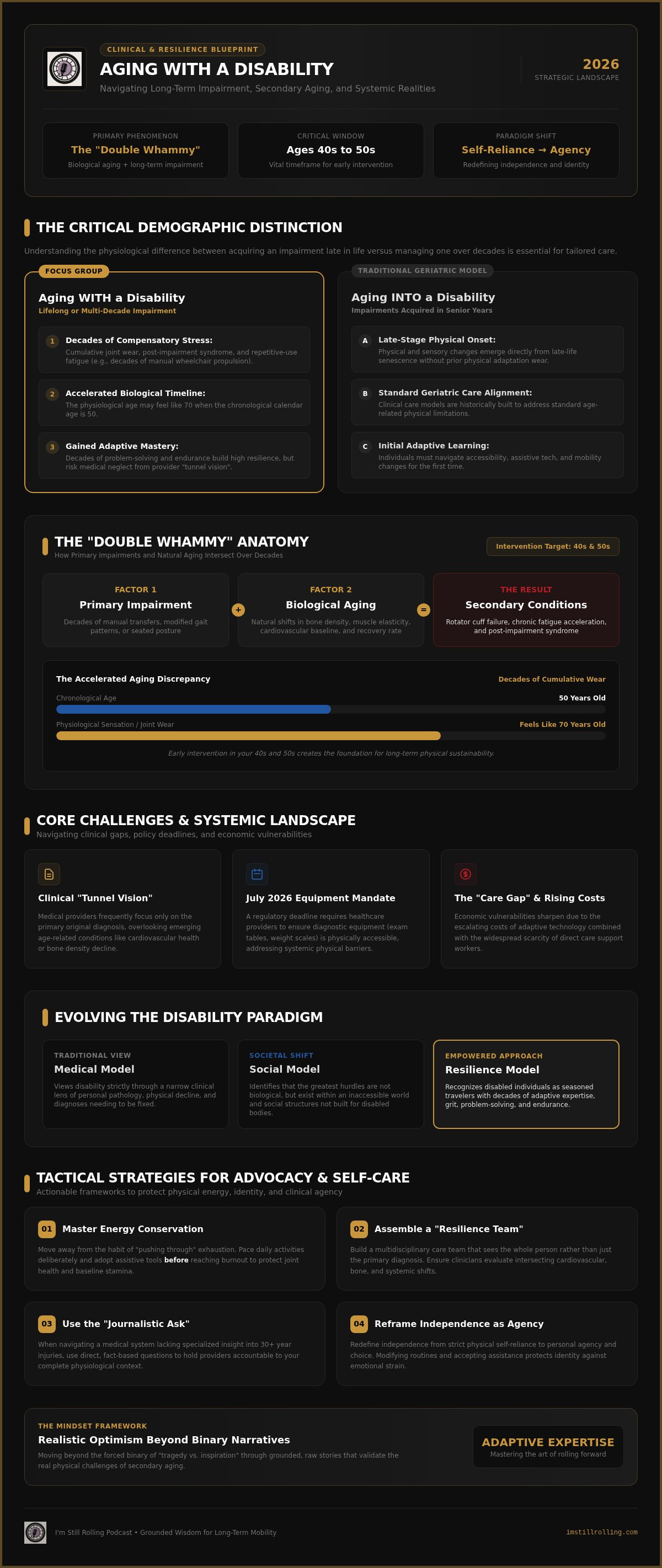
In 2026, a profound demographic shift is forcing a deeper look at the intersection of long-term impairment and the passage of time. There is a fundamental difference between aging into a disability, where limitations appear in your golden years, and aging with a disability, where you've navigated the world with a specific condition for decades. The latter group often faces what researchers call the "double whammy" effect. This occurs when the natural physiological changes of getting older collide with an existing impairment, creating a unique set of aging with a disability challenges that traditional geriatric care frequently overlooks. Because many clinical models are designed for those acquiring new impairments late in life, they often fail to account for the decades of compensatory movements and systemic stress that long-term survivors have already endured.
This intersectional challenge represents a unique physiological and social state where the cumulative wear of a lifelong impairment meets the universal biological transitions of seniority, requiring a specialized framework for care and identity.
The Distinction Between Primary and Secondary Conditions
For many, the primary disability is a known quantity, but the emergence of secondary conditions can feel like a new, uninvited guest. Decades of manual wheelchair use might lead to severe rotator cuff issues; others might experience post-impairment syndrome or chronic fatigue that seems to accelerate without warning. This "accelerated aging" means the body may feel 70 when the calendar says 50. It makes early intervention in your 40s and 50s vital. Catching these shifts early creates the foundation for later resilience, ensuring you aren't just reacting to pain but actively managing your energy and joint health.
The Social Construct of Aging with a Disability
Society often views disability through a narrow clinical lens, but we choose to look through the social model of disability. This perspective suggests that our greatest hurdles aren't just biological; they're found in a world that wasn't built for us. Moving from a medical model to a resilience model allows us to value the grit and wisdom gained from years of problem-solving. You're not just a patient with a diagnosis. You're a seasoned traveler who has already mastered the art of endurance, possessing a level of adaptive expertise that those aging into disability are only just beginning to learn.
The Core Physical and Systemic Challenges in 2026
Living with a long-term impairment means you've already developed a high tolerance for adaptation, but the physical reality of 2026 brings new complexities. Many people find that their primary condition begins to interact with age-related changes in ways that doctors don't always predict. Joint pain from decades of compensatory movements, shifting mobility needs, and a sudden drop in baseline energy are common aging with a disability challenges that require a tactical shift in how you move through your day. It's not just about "pushing through" anymore. It's about preserving what you have while acknowledging that the world can start to feel smaller when your usual routes or routines become physically taxing.
The systemic landscape in 2026 offers some hope, such as the July deadline for healthcare providers to ensure medical diagnostic equipment is accessible, but gaps remain. While new regulations mandate accessible exam tables and scales, finding a clinician who understands the nuance of a 30-year-old injury is still a hurdle. Economic vulnerabilities also sharpen as we age. The rising cost of adaptive technology and the scarcity of direct care workers create a "care gap" that can leave even the most prepared individuals feeling exposed.
Managing Health Beyond the Primary Diagnosis
It's easy for medical professionals to get "tunnel vision," focusing only on your original diagnosis while ignoring new, age-related chronic illnesses. You need a team that sees the whole person, addressing how something like heart health or bone density intersects with your existing disability. Energy conservation becomes a critical skill here. By pacing your activities and using assistive tools before you reach the point of exhaustion, you can prevent the burnout that often accompanies these shifting physical demands. Hearing spinal cord injury recovery stories from others who have navigated these later-life transitions can offer both emotional validation and practical shortcuts.
Financial and Structural Hurdles
The desire to "age in place" is nearly universal, yet the structural reality of our homes and neighborhoods doesn't always cooperate. Navigating the maze of government programs requires a journalistic level of persistence. In 2026, the ABLE Age Adjustment Act has finally expanded eligibility, allowing more people to save for disability-related expenses without losing benefits. To find local support, many turn to the Administration for Community Living's Aging and Disability Networks, which provide a roadmap for long-term care and community-based services. If you're feeling overwhelmed by these logistical mazes, you might find clarity in the I'm Still Rolling Podcast, where we break down these messy truths with unvarnished honesty.
The Psychological Shift: Redefining Identity and Independence
The psychological landscape of aging with a disability challenges is often more complex than the physical one. While we've spent years or decades mastering our bodies and navigating an inaccessible world, the addition of age-related limitations can feel like a heavy, unexpected layer of grief. It isn't just about a new ache or a slower pace; it's about the fear that the hard-won autonomy we fought for is slipping away. This emotional weight can lead to a profound sense of isolation if we don't address it head-on. We must recognize that our identity is not tied to what our bodies can do, but to the resilience we've cultivated through every previous transition.
True resilience in 2026 requires us to dismantle the myth that independence equals total self-reliance. Instead, we must view independence as the power of choice and agency. Asking for help isn't a sign of defeat; it's a tactical decision to preserve energy when navigating aging with a disability challenges. This is where realistic optimism comes in. It doesn't ask us to ignore the messy, difficult parts of our reality, but it does encourage us to find meaning within the struggle. By shifting our perspective, we can maintain mental health even as our physical requirements change.
Grieving the "Former Self" While Embracing the Present
Processing the emotional shift of a new physical reality requires more than just staying positive. It involves an honest accounting of what has changed and a willingness to grieve the version of ourselves that could do more. Storytelling becomes a vital tool for psychological endurance here. By narrating our experiences, we reclaim our history and integrate our new limitations into a cohesive, updated identity. For a deeper look at this process, you can explore Beyond the Chair: How to Navigate the Emotional Shift, which offers a journalistic guide to these internal transformations.
The Caregiver Dynamic: Resilience for Two
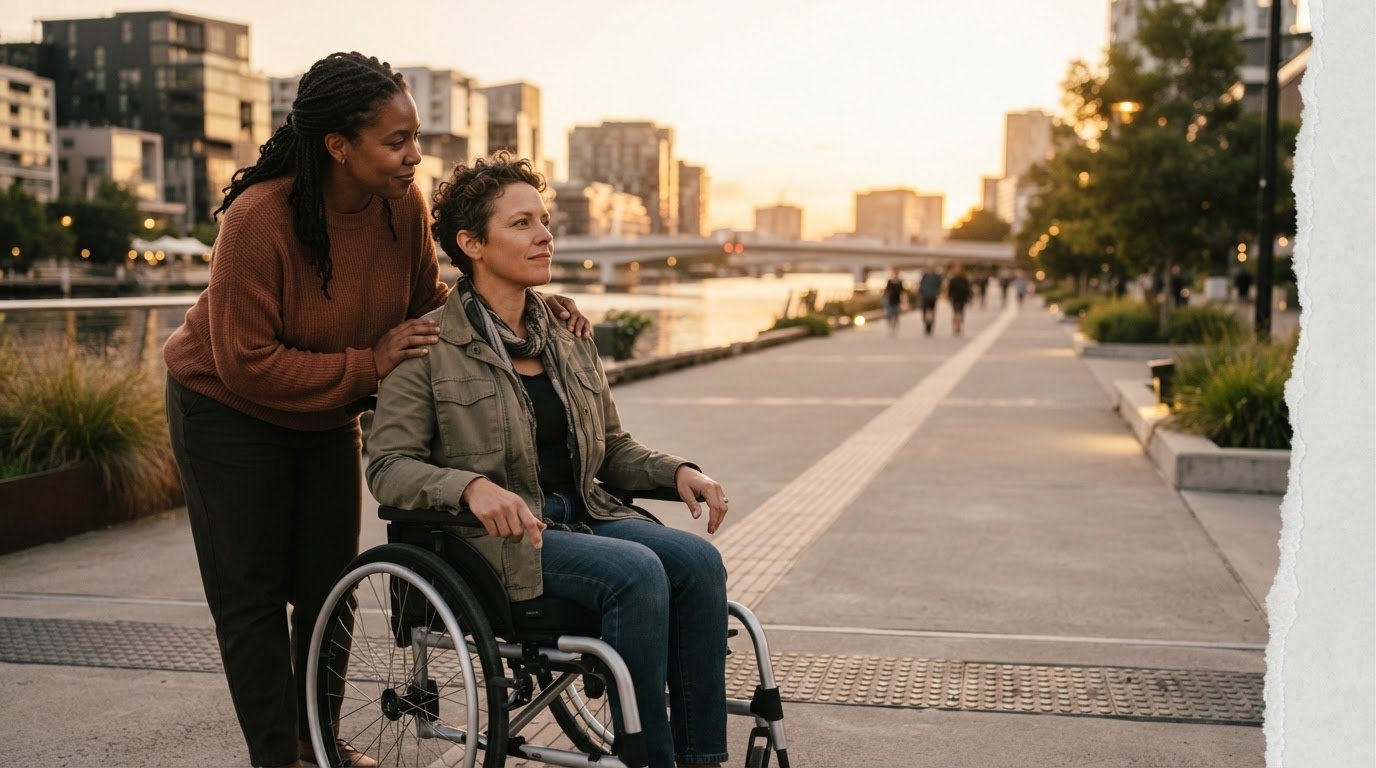
As we age, the dynamic with those closest to us inevitably shifts, particularly within spousal relationships. Partners often find themselves navigating a delicate balance between being a companion and a caregiver, a role that can strain even the most solid foundations if not managed with transparency. Building a mutual resilience framework is essential to prevent burnout for both parties. Whether you're managing physical disabilities or navigating caregiving for spouse with alzheimer’s, the goal is to maintain the core of the relationship. It's about ensuring the personhood of both the caregiver and the recipient remains the central focus, even when the logistics of daily life become heavy.
Practical Strategies for Advocacy and Self-Care
Building a tactical roadmap is essential for managing the specific aging with a disability challenges that arise in mid-to-late life. This isn't about vague self-care; it's about a disciplined, journalistic approach to your own well-being. By treating your health and environment as a beat to be covered, you can move from reactive crisis management to proactive endurance. Follow these five steps to establish your framework for 2026:
Step 1: Build a multidisciplinary "Resilience Team." Don't rely solely on a primary care physician. Assemble a circle that includes physical therapists who understand long-term disability, mental health professionals, and peers who have walked this path before you.
Step 2: Master the "Journalistic Ask." Treat medical appointments like an interview. Come with a list of direct, unvarnished questions and don't leave until you've received clear, actionable answers.
Step 3: Audit your environment. Conduct a thorough check of your living space. In 2026, adaptive technology is more integrated than ever; ensure your home supports your current mobility, not just your past capabilities.
Step 4: Establish a "Resilience Routine." Prioritize mental and physical rest as non-negotiable appointments. Pacing is your most effective tool against the accelerated fatigue that often accompanies aging with a disability.
Step 5: Document your story. Whether through journaling or audio recordings, find meaning in your journey. Leaving a legacy of your lived experience provides psychological grounding and helps others who follow.
Mastering Self-Advocacy in the Healthcare System
The July 8, 2026, deadline for medical facilities to meet new accessibility standards for diagnostic equipment is a major win, but you still have to be your own loudest advocate. When scheduling, ask specifically if the clinic has height-adjustable exam tables or wheelchair-accessible scales. Prepare for appointments by reviewing your own history; using podcast transcripts or personal medical notes helps you track longitudinal changes that a busy doctor might miss. If you feel your disability is being ignored in favor of "standard" geriatric advice, remind your provider that your baseline is different and requires a tailored approach.
Leveraging Technology for Continued Independence
In 2026, the convergence of AI-enabled ambient sensors and smart-home automation has transformed the "ROI" of adaptive equipment. Voice-activated climate control, robotic transfer aids, and app-connected wheelchair telemetry aren't just luxuries; they're essential tools for maintaining tenure in your own home. However, high-tech solutions should never replace low-tech community support. Balance your smart-home upgrades with a reliable network of neighbors and local advocacy groups. When evaluating new gear, focus on how it reduces daily friction and preserves your energy for the things that actually bring you joy.
Finding Strength in Stories: The I’m Still Rolling Approach
At the heart of the I'm Still Rolling Podcast is a commitment to journalistic rigor applied to the most intimate parts of the human experience. We don't just talk about the logistics of accessibility; we explore the messy, unvarnished truths that accompany aging with a disability challenges. By utilizing long-form interviews, we provide a roadmap for those who are currently navigating the complexities of a body and a world that are both changing. This approach, led by veteran broadcasters Mike Sugerman and Janice Wright, rejects the idea of resilience as a simple act of "bouncing back." That cliché implies returning to a previous state that no longer exists. Instead, we focus on "rolling forward," a movement that acknowledges our history while actively engaging with the present.
We've found that there is immense power in hearing from "vulnerable peers," individuals who have walked this path and are willing to share their setbacks alongside their successes. These are not the sanitized, inspirational tropes often found in mainstream media. They are raw accounts of endurance and transformation. By listening to these stories, you're not just consuming content; you're joining a community that understands the nuances of your journey without needing a glossary of terms. These narratives act as a steady, reliable pulse that keeps you engaged through the complex and often heavy subject matter of later-life transitions.
A Safe Space for Unflinching Honesty
We deliberately avoid superficial cheerfulness because it does a disservice to the gravity of what you're experiencing. The I'm Still Rolling Podcast episodes are designed as a safe space for deep reflection, where the "realistic optimism" we champion is grounded in truth rather than platitudes. There is profound therapeutic value in hearing "real stories of resilience" from others who have faced similar systemic and physical hurdles. These conversations validate your own grit and offer a sense of warmth and empathy that clinical reports simply cannot provide. We encourage you to join this ongoing dialogue, as sharing your own story of endurance is a powerful way to find meaning within the struggle.
Your Next Steps for a Resilient Future
Finding a community that "gets it" is the first step toward a more resilient future. If you're looking for more than just medical data, we invite you to explore our latest episodes on stories of recovery and hope. These narratives serve as a guide for those who feel adrift in the 2026 healthcare landscape. To stay connected with this evolving culture of endurance, you can Subscribe to the I'm Still Rolling Podcast and never miss a story of resilience. We also offer a newsletter and full transcripts for those who want to dive deeper into the intersections of disability, aging, and the discovery of purpose. Your journey is unique, but you don't have to navigate these aging with a disability challenges alone.
Rolling Forward into a Resilient Future
The path of aging with a disability challenges is rarely linear, yet it offers a profound opportunity to redefine what it means to live well. We've explored how shifting your perspective from physical self-reliance to personal agency can protect your hard-won identity. You now have the tactical tools to build a specialized resilience team and use the "Journalistic Ask" to navigate a complex healthcare system. Most importantly, you've seen that you don't have to carry the weight of these transitions alone. True endurance is built on a foundation of realistic optimism and the courage to adapt your environment to your current needs.
Resilience isn't found in a clinical manual; it's forged in the honest, unvarnished stories we share with one another. These messy truths are the roadmap for finding purpose within the struggle. Through award-winning disability journalism hosted by veteran journalists Mike Sugerman and Janice Wright, the I'm Still Rolling Podcast provides a safe space for deep reflection and raw honesty. This community is here to validate your grit and offer a steady pulse of support through every life-altering shift.
Listen to the latest episodes of the I'm Still Rolling Podcast on resilience and aging to connect with fellow travelers and discover new frameworks for thriving. Your story is still being written, and every mile you roll forward is a testament to your enduring strength.
Frequently Asked Questions
What are the most common secondary conditions when aging with a disability?
Secondary conditions often include chronic fatigue, overuse injuries like rotator cuff tears in wheelchair users, and post-impairment syndrome. These issues result from decades of compensatory movements and systemic stress. In 2026, we recognize that aging with a disability challenges frequently involve these conditions appearing earlier than in the general population. Managing them requires a proactive approach that prioritizes energy conservation and joint preservation before pain becomes a primary barrier to your daily independence.
How can I distinguish between normal aging and disability-related decline?
Distinguishing between the two requires a disciplined tracking of your specific baseline over time. Normal aging typically follows a predictable, gradual trajectory; however, disability-related decline often manifests as an acceleration of existing symptoms or the sudden failure of a previously reliable physical strategy. It's helpful to use written transcripts or journals to document these shifts. This data allows you to provide your healthcare team with a clear picture of what is a new development versus your established norm.
What resources are available for older adults with long-term disabilities?
In 2026, financial resources have expanded, including the Medicare Part D out-of-pocket prescription drug cap of $2,100. This provides significant relief for those managing multiple chronic conditions. Additionally, the ABLE Age Adjustment Act now allows individuals who acquired a disability before age 46 to open tax-advantaged savings accounts. Local Aging and Disability Resource Centers also offer a roadmap for community-based services, helping you find the specific support systems needed to maintain your independence as your requirements shift.
How do I talk to my doctor about aging-related changes in my disability?
Start by bringing your own data, such as podcast transcripts or a detailed health journal, to your appointment. This journalistic approach helps you track longitudinal changes that a physician might otherwise miss. Clearly state that your baseline is different from the general population and requires a tailored clinical framework. It's vital to ensure your provider doesn't dismiss aging with a disability challenges as merely "getting older," but instead treats them as a unique physiological state requiring specialized, unvarnished insight.
Can resilience be learned, or is it something you’re born with?
Resilience is a skill cultivated through experience and intentional practice rather than a trait you're born with. It involves shifting your perspective from "bouncing back" to "rolling forward" by integrating new limitations into a cohesive identity. This process is often supported by hearing stories from vulnerable peers who have navigated similar hardships. By observing how others find meaning within struggle, you can develop the emotional frameworks necessary to endure and thrive through life's most difficult transitions.
What role does adaptive technology play in aging with a disability in 2026?
In 2026, adaptive technology has evolved into a convergence of AI-enabled smart-home sensors and app-connected mobility tools. Voice-activated systems for climate and lighting, along with robotic transfer aids, allow for a longer tenure in private residences. These high-tech solutions provide a critical return on investment by reducing daily friction and preserving physical energy. However, the most effective technology strategies always balance these digital tools with low-tech community support and reliable human networks for a holistic approach.
How can I find a community of others who are aging with a disability?
Finding a community often starts with seeking out narrative-driven platforms that avoid superficial cheerfulness. Engaging with the I’m Still Rolling Podcast allows you to hear honest conversations with others who are navigating similar paths. You can also connect with local advocacy groups or online forums dedicated to specific impairments. These spaces provide validation and practical shortcuts, ensuring you don't have to navigate the emotional or systemic hurdles of this journey in isolation or without a roadmap.
Is it possible to find joy and purpose after a new age-related medical trauma?
Finding joy after a new medical trauma is entirely possible through the lens of realistic optimism. It requires a willingness to grieve your former self while remaining open to discovering new forms of purpose. Meaning often emerges from the act of storytelling and connecting with others who have transformed their own struggles into wisdom. While the trauma is real and heavy, it doesn't define the entirety of your future; purpose is often found in the very act of rolling forward with grace.

Comments