The Best Caregiver Mental Health Podcasts: Finding Resilience in the Airwaves
What if the most profound conversation you have today isn't with a friend or a therapist, but with a voice in your earbuds that finally says out loud what you've been afraid to whisper? For many, the quiet of a house at midnight feels less like peace and more like a heavy shroud of isolation. You might be searching for a caregiver mental health podcast because the weight of anticipatory grief and the sharp edge of burnout have become too much to carry alone. It's a specific kind of exhaustion that isn't cured by sleep, but by the realization that your messy, complicated feelings are actually shared by others.
You likely feel a nagging sense of guilt for even acknowledging the resentment that bubbles up during the long hours of care. We understand that this journey isn't about finding a quick fix or a superficial checklist for "self-care." Instead, this article promises to help you discover how the right caregiver mental health podcast can transform your isolation into a meaningful community through journalistic truth and raw, lived experience. We'll explore the shows that offer validation for your complex emotions and provide practical strategies for endurance. From deeply personal stories to expert insights, you're about to find the vulnerable peers who will walk beside you through the airwaves.
Table of Contents
The Invisible Weight: Why Caregiver Mental Health Needs a Dedicated Space
The Therapeutic Power of Audio: Why Podcasts are a Lifeline for Caregivers
Evaluating Caregiver Podcasts: Finding Your 'Vulnerable Peer' in the Airwaves
Turning Listening into Healing: Practical Strategies for Overwhelmed Caregivers
I’m Still Rolling Podcast: Where Journalistic Insight Meets the Caregiving Journey
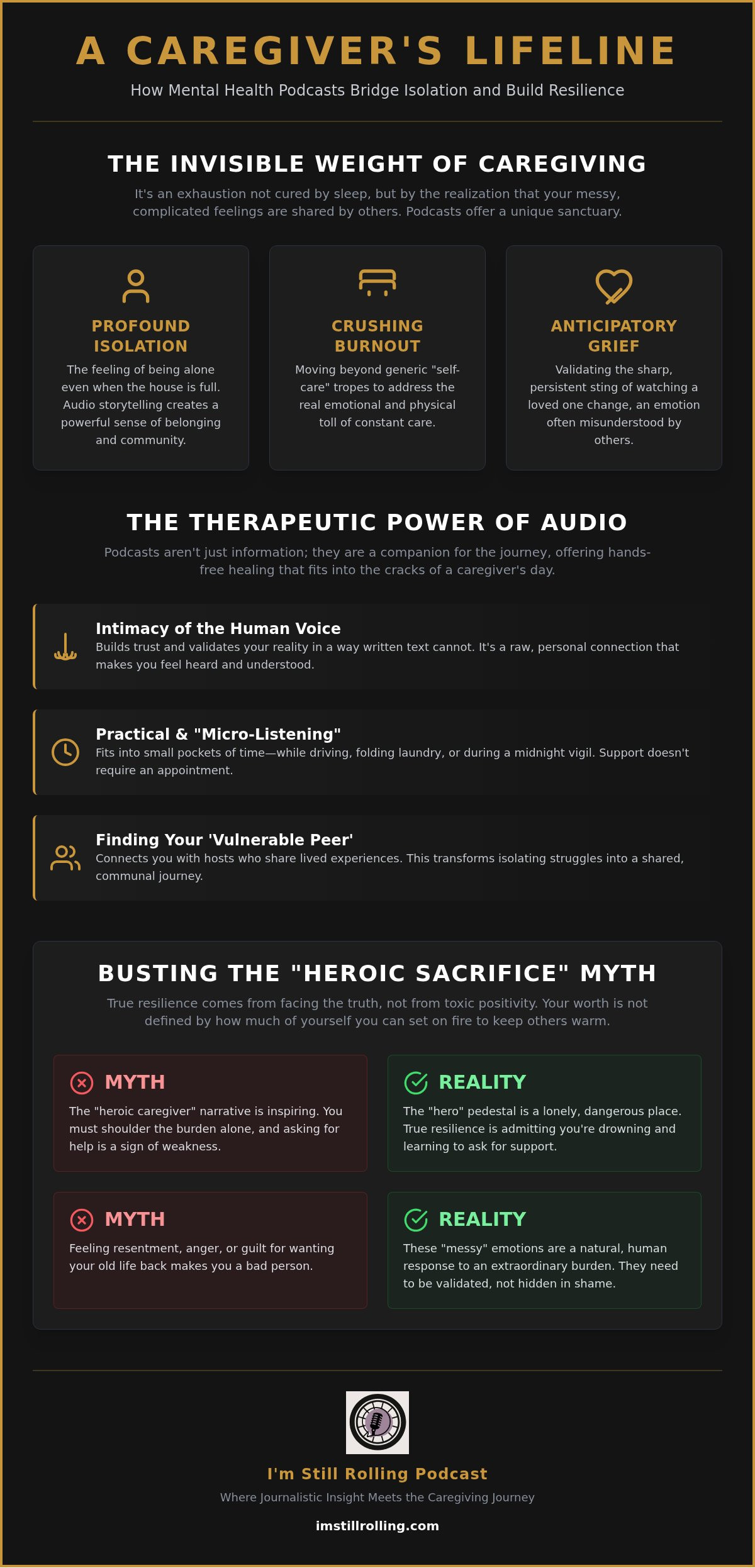
The Invisible Weight: Why Caregiver Mental Health Needs a Dedicated Space
The weight of caregiving is often silent, carried in the muscles of the back and the quiet corners of the mind. Unlike a professional role that you can leave at the end of a shift, family caregiving is an immersive reality that fundamentally reshapes your identity and your daily existence. Many find that general therapy or clinical pamphlets don't touch the specific, jagged ache of watching a loved one change. This is why a caregiver mental health podcast provides a unique sanctuary. It offers a space where the nuances of Caregiver stress are explored with the depth and journalistic rigor they deserve, moving beyond simple checklists into the heart of the human experience.
Traditional mental health resources often treat burnout as a logistical problem to be solved with better scheduling or "self-care" tropes. But for those in the thick of it, the real challenge is the Resilience Gap. This is the distance between merely surviving the next hour and finding a sense of meaning within the struggle. Bridging this gap requires acknowledging the "messy" emotions that society often expects us to hide. You aren't a bad person for feeling resentment or the sharp, persistent sting of anticipatory grief. These feelings are the natural response to an extraordinary burden, and validating them is the first step toward genuine endurance.
Navigating the Emotional Shift of Spousal Caregiving
When a spouse becomes a caregiver, the very foundation of the relationship shifts in ways that are difficult to articulate to friends. The person who was once your confidant and equal partner becomes someone who relies on you for basic survival. This transition can lead to a profound loss of self as your role as a lover is eclipsed by your role as a nurse. Maintaining your own identity requires conscious effort and a community that understands the specific pain of caregiving for a spouse with Alzheimer's or other life-altering conditions. It's about learning to hold the memory of who you were while accepting the reality of who you've become.
Busting the Myth of the 'Heroic Sacrifice'
Society loves the narrative of the "heroic caregiver," but this pedestal is a lonely and dangerous place to stand. Labeling your daily struggle as a sacrifice makes it significantly harder to ask for help or admit when you're drowning. We believe in realistic optimism rather than the toxic positivity that tells you to just "stay positive" through the trauma. True resilience comes from facing the truth of caregiver burnout stories and realizing that your worth isn't tied to how much of yourself you set on fire to keep others warm. A dedicated caregiver mental health podcast allows for this unflinching honesty, replacing the hero myth with a grounded, soulful connection to others on the same path.
The Therapeutic Power of Audio: Why Podcasts are a Lifeline for Caregivers
There is a specific kind of intimacy found in the human voice that written text simply cannot replicate. When you listen to a caregiver mental health podcast, you aren't just consuming data or reading a list of tips. You're inviting a companion into your most private, often stressful spaces. Audio builds trust through the nuances of tone, the pauses for breath, and the shared laughter that signals true understanding. For a caregiver, this connection acts as a bridge across the "Isolation Index," that profound sense of being alone even when the house is full. Hearing a raw, lived experience through your earbuds validates your reality in a way that feels both authoritative and deeply personal.
The practical nature of audio also solves a major hurdle: the lack of time. Caregiving is a physically demanding role that rarely leaves room for sitting down with a book. Podcasts offer hands-free healing. They fit into the cracks of your day, whether you're folding laundry, driving to a medical appointment, or sitting through a midnight vigil. While clinical resources like the Caregiver Mental Health Toolkit from the University of Illinois Chicago provide essential structural support, audio adds the human layer that clinical tools sometimes lack. It turns a solitary task into a shared moment of reflection.
The Science of Connection Through Sound
Listening to stories isn't just a pastime; it's a neurological event. Research suggests that narrative storytelling can lower cortisol levels and stimulate the release of oxytocin, the hormone associated with bonding and empathy. This creates what psychologists call a "parasocial relationship," where you find a reliable friend in a podcast host. When you hear the slight tremor in a host's voice as they recount a difficult night, your brain registers that vulnerability as a sign of safety. These unedited, honest conversations feel more authentic because they mirror the "messy" reality of your own life. If you're looking for that kind of grounded connection, exploring the I'm Still Rolling episodes can be a transformative first step.
Accessibility and the Power of the Transcript
Inclusive media is vital in the caregiving space, where sensory needs and learning styles vary wildly. Some caregivers may have hearing impairments, while others might simply need to "find the gold" in an episode without re-listening to the entire hour. Providing podcast transcripts ensures that the wisdom shared in these conversations remains accessible to everyone. It allows you to quickly reference a specific coping strategy or a piece of journalistic insight when you're in the middle of a crisis. This commitment to accessibility reflects a deeper respect for the caregiver's time and energy, ensuring that support is always within reach, regardless of how you choose to consume it.
Evaluating Caregiver Podcasts: Finding Your 'Vulnerable Peer' in the Airwaves
Choosing a caregiver mental health podcast is a deeply personal decision that goes beyond scanning a top-ten list or checking download numbers. It's about finding a voice that resonates with your specific exhaustion and provides a mirror for your own experience. To find the right fit, it helps to categorize shows into three distinct styles: clinical, anecdotal, and journalistic. Clinical podcasts offer essential medical and psychological frameworks, while anecdotal shows provide the raw, unpolished comfort of peer-to-peer sharing. However, the journalistic approach often provides the most sustainable support. It combines the empathy of a fellow traveler with the disciplined inquiry of a professional reporter, ensuring the conversation moves toward meaningful discovery rather than just circling the struggle.
Before you commit your limited emotional energy to a new show, apply the "Vulnerability Test." Ask yourself: Is the host willing to share their own messy truths? A host who stays behind a clinical wall might offer advice, but they won't offer true connection. Credible organizations like the Anxiety and Depression Association of America emphasize the importance of community and shared resources in managing the psychological toll of care. By vetting the experts and ensuring the host has "skin in the game," you protect yourself from superficial advice that doesn't account for the actual weight of your daily reality.
Journalistic Rigor vs. Casual Conversation
While casual chats have their place, professional interviewing techniques often lead to deeper emotional truths. In shows like I'm Still Rolling, Mike Sugerman and Janice Wright bring decades of newsroom discipline to the microphone. This isn't about being cold or detached. Instead, it's about being unflinching. They know how to ask the hard questions that uncover the core of human resilience. This structured approach ensures that the narrative remains focused and purposeful, helping you find clarity in the middle of a chaotic life. It's the difference between a simple venting session and a masterclass in endurance.
Niche Focus: Finding the Right Show for Your Situation
Not all caregiving journeys are identical, and finding a show that matches your specific situation is crucial for feeling truly seen. A podcast focusing on aging parents might not address the unique physical and psychological demands of a sudden, life-altering disability. If you're moving through the aftermath of a traumatic event, look for content that highlights spinal cord injury recovery stories. These niche-focused episodes provide more than just general empathy. They offer a specific roadmap for the hurdles you face every day, from managing complex medical charts to reclaiming a sense of joy in a changed body.
Turning Listening into Healing: Practical Strategies for Overwhelmed Caregivers
The advice to "take a break" often feels like a cruel joke to someone managing a loved one's medication, appointments, and daily hygiene. In the world of high-stakes care, "spare time" is a luxury that simply doesn't exist. This is why a caregiver mental health podcast shouldn't be another item on your to-do list, but rather a companion that fits into the existing rhythm of your day. Healing happens in the margins. It occurs when you find ways to integrate supportive narratives into the tasks you're already performing, transforming mindless labor into a period of psychological restoration.
One of the most effective ways to do this is through micro-listening. You don't need a quiet hour to benefit from professional insight. Breaking an episode into 10-minute segments allows you to absorb wisdom during a commute or while waiting for a prescription. This ritualizing of the habit turns repetitive caregiving tasks, like folding laundry or prepping meals, into a dedicated space for your own mental health. It's also important to recognize when you need active versus passive listening. On some days, you might want to take notes on a specific coping strategy. On others, you might just need to let the host's voice wash over you while you breathe, allowing their resilience to bolster your own.
The 15-Minute Resilience Reset
Finding a "window of silence" in a chaotic home can feel impossible, but even a quarter-hour can be transformative. Try pairing your podcast listening with sensory grounding to deepen the effect. Whether it's the warmth of a cup of tea or the rhythmic movement of a short walk, these physical sensations help anchor the emotional truths you're hearing. This short burst of connection acts as a neurological reset, lowering stress levels by reminding your nervous system that you aren't carrying this weight alone. It's a small, manageable investment in your endurance that pays dividends in your ability to stay present.
Building Community Beyond the Earbuds
The journey doesn't have to end when the episode concludes. You can use specific themes from a caregiver mental health podcast as conversation starters with your family or in support groups. It's often easier to say, "I heard a host talk about resentment today," than to bring up your own feelings out of thin air. To deepen this connection and receive more targeted support, consider engaging directly with the creators. Signing up for the I'm Still Rolling Newsletter is an excellent way to move from being a passive listener to an active member of a community that values journalistic truth and realistic optimism.
I’m Still Rolling Podcast: Where Journalistic Insight Meets the Caregiving Journey
The story of the I'm Still Rolling Podcast didn't begin in a recording studio. It started in the sterile, high-stakes environment of a hospital room, born from a life-altering medical crisis that reshaped everything. When seasoned journalist Mike Sugerman faced a profound medical trauma, the narrative of his life and the life of his partner, Janice Wright, shifted instantly. They didn't just find themselves in the roles of patient and caregiver; they found themselves in a new world where traditional resources felt either too clinical or too superficial. This show was created to fill that void. It's a caregiver mental health podcast that refuses to settle for easy answers, opting instead for the "realistic optimism" that comes from facing hardship head-on.
What sets this journey apart is the 360-degree view of resilience provided by Mike and Janice's unique dynamic. They don't just talk about the struggle; they report on it with the same rigor they applied to decades of newsroom assignments. This isn't a show that offers pity. Instead, it offers a soulful connection grounded in the truth that life after adversity can still be rich, meaningful, and even funny. You can expect honest conversations that explore the messy parts of caregiving while maintaining a professional standard of storytelling that keeps the focus on discovery and endurance. This approach ensures that every episode moves past the surface level of "self-care" to address the core of the human spirit.
A Trusted Guide and a Vulnerable Peer
Mike Sugerman's journey through medical trauma and physical disability allows him to speak as a fellow traveler who knows the weight of the chair and the frustration of a changed body. Beside him, Janice Wright offers the perspective of a professional journalist who is also a primary partner in care. Together, they bridge the gap between the person receiving care and the one providing it, creating a dialogue that is both authoritative and deeply personal. To hear how they navigate these complex waters, you can explore the I'm Still Rolling Podcast Episodes, where journalistic discipline meets the heart of the caregiving experience.
Join the Conversation: Your Next Steps
Your mental health is the foundation upon which all your caregiving efforts are built. If that foundation is crumbling, everything else becomes unsustainable. Joining this movement of realistic optimism is a step toward reclaiming your own sense of self. You can find the I'm Still Rolling Podcast on all major platforms, including Spotify, Apple, and YouTube, where we bring these vital conversations to life through audio and video. For those who want to dive deeper into resilience resources and receive regular insights directly in their inbox, signing up for our newsletter is the next logical step. We invite you to listen, reflect, and remember that even on the hardest days, you aren't rolling alone.
Reclaiming Your Narrative Through Connection
The path of caregiving is often a solitary trek through terrain that feels impossible to explain to those who haven't walked it. We've explored how a dedicated caregiver mental health podcast can bridge that gap by offering more than just clinical advice; it offers a mirror for your own endurance. By validating your most complex emotions and integrating micro-listening into your daily rhythm, you transform a role of isolation into one of shared journalistic truth. You aren't just surviving the day. You're finding meaning within the struggle. It's a shift from the heavy silence of burnout to the resonance of a community that truly hears you.
Hosted by award-winning journalists who have lived through the realities of SCI and Alzheimer's, our community of thousands of family caregivers is here to walk beside you. It's time to stop carrying the weight of isolation and start listening to voices that understand the gravity of your journey without descending into pity. Listen to the latest episodes of the I'm Still Rolling Podcast and start your journey toward realistic optimism. Your mental health is the foundation of everything you do. Protect it with the same fierce dedication you give to those you love.
Frequently Asked Questions
What is a caregiver mental health podcast and how can it help me?
A caregiver mental health podcast is a specialized audio program that addresses the unique psychological landscape of family caregiving. It helps by offering a "vulnerable peer" in your earbuds, which reduces the profound sense of isolation many feel within their own homes. By hearing honest accounts of resentment or anticipatory grief, you find the validation that traditional clinical resources often lack. This audio connection transforms a solitary struggle into a shared narrative of endurance.
Can listening to a podcast really reduce caregiver burnout?
While a podcast isn't a medical cure, it's a powerful tool for mitigating the soul-level exhaustion of burnout. Hearing shared stories can lower cortisol levels and provide the realistic optimism needed to move from surviving to finding meaning. It helps you dismantle the damaging "heroic sacrifice" myth, replacing it with a grounded understanding that your own mental well-being is the foundation of the care you provide to others.
How do I find time to listen to a podcast while caregiving?
You don't need a large block of free time to benefit from these resources. Most caregivers integrate listening into repetitive tasks like prepping meals, folding laundry, or driving to medical appointments. We recommend "micro-listening," where you consume a 10-minute segment during a brief window of silence. This turns a routine chore into a dedicated space for your own mental recovery without adding another heavy burden to your daily schedule.
Are there specific podcasts for spouses of people with disabilities?
Yes, niche shows focus on the nuanced shift that occurs when a romantic partner becomes a primary caregiver. The I'm Still Rolling Podcast is a prime example, hosted by seasoned journalists who navigate life after a spinal cord injury and medical trauma. These episodes explore how to maintain your identity while relationship dynamics shift. They offer a 360-degree view of resilience that is particularly relevant for spousal caregivers facing life-altering challenges.
Is it better to listen to clinical advice or personal stories?
A combination is often most effective, but a journalistic caregiver mental health podcast provides a unique middle ground. While clinical advice offers structural tools, personal stories provide the emotional intimacy that builds trust. High-quality programs use professional interviewing techniques to extract deeper truths from lived experiences. This ensures you get both the "how-to" of mental health coping strategies and the "me too" of shared humanity.
What should I look for in a high-quality caregiving podcast?
Look for the "vulnerability test," which is the host's willingness to share their own messy, unflinching truths. High-quality shows also maintain journalistic rigor by vetting guests and focusing on purposeful discovery rather than just venting. You want a guide who feels like a peer but brings a level of professional authority to the conversation. This ensures the content is both emotionally safe and practically useful for your specific journey.
How can I use podcast transcripts if I prefer reading over listening?
Podcast transcripts are essential for caregivers who need to "find the gold" without re-listening to an entire episode. They allow you to quickly scan for specific mental health strategies or quotes that resonate with your current situation. Transcripts also ensure accessibility for those with hearing impairments or different learning styles. It's a way to keep the wisdom of the conversation available at your own pace and convenience whenever you need it.
Can I suggest a topic or guest to the I'm Still Rolling Podcast team?
We welcome your input as we explore the complexities of life after adversity. You can suggest topics or potential guests by engaging with our newsletter or contacting the I'm Still Rolling Podcast team through our website. Joining our community of thousands of family caregivers means your voice helps shape the stories we tell. We're dedicated to a "deep-dive" approach that reflects the real-world challenges you face every day in your difficult caregiving role.

Comments