Journalistic Podcasts About Disability: A 2026 Guide to Reported Stories
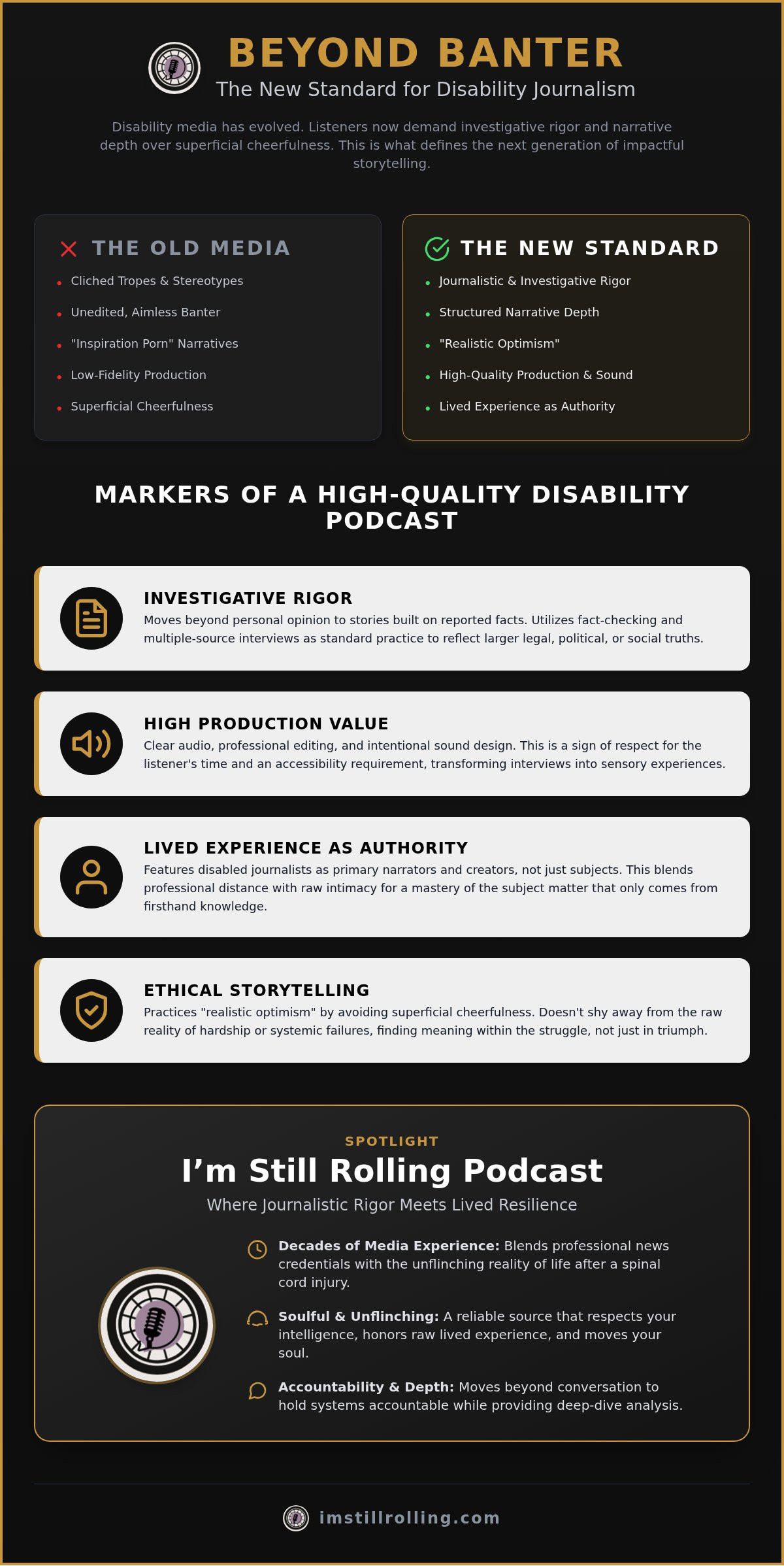
Most media portrayals of disability in 2026 still lean on clichéd tropes, yet a new wave of creators is finally demanding professional respect. You're likely tired of unedited banter and the "inspiration porn" that avoids the messy reality of hardship in favor of superficial cheerfulness. You want more than a pat on the back; you seek intellectual depth and the kind of reporting that holds systems accountable while honoring the raw, lived experience. Finding journalistic podcasts about disability that meet these standards can feel like searching for a signal through significant noise.
This guide reveals how investigative rigor and narrative storytelling are transforming disability media, and you'll discover the podcasts that offer more than just conversation. We will explore the premier shows of 2026, from the high-stakes reporting of Disability Visibility to the deep-dive legal analysis of the Disability Connection Podcast. We'll also examine how the I'm Still Rolling Podcast sets a new standard by blending professional media experience with the unflinching reality of life after a spinal cord injury. It's time to find a reliable source of news that respects your intelligence and moves your soul.
Table of Contents
What Defines Journalistic Podcasts About Disability?
Journalistic podcasts about disability are defined by a commitment to the craft of reporting that goes far beyond the casual "chat-cast" format. In 2026, listeners have moved past the era of unedited banter and low-fidelity recordings. They're seeking stories built on a foundation of reported facts rather than personal opinions alone. These programs utilize complex narrative structures similar to long-form investigative print journalism, weaving together interviews, ambient sound, and archival research to build a comprehensive picture of the human condition. It's a disciplined approach that respects the audience's time and intelligence.
One of the most vital distinctions in professional reporting is the concept of "realistic optimism." While mainstream outlets often fall into the trap of "inspiration porn," these journalistic endeavors avoid superficial cheerfulness. They don't shy away from the raw, messy parts of life after a spinal cord injury or the systemic failures of the healthcare system. Instead, they find meaning within the struggle. This shift toward ethical storytelling and higher production standards reflects a community that demands to be seen with nuance, gravity, and professional respect.
The Shift from Conversation to Investigation
The early years of disability media focused heavily on visibility and community building through casual dialogue. These shows were essential for breaking isolation, but they often lacked the structural depth required to influence broader societal change. Today, we've seen the emergence of the "Disability Deep Dive" model. This style of investigative reporting prioritizes fact-checking and multiple-source interviewing as industry standards. It's not just about one person's story; it's about how that story reflects larger legal, political, or social truths. Producers now spend months on single story arcs, ensuring every claim is verified and every perspective is weighed with care.
The Role of Lived Experience in Professional Media
A significant evolution in the field is the movement of disabled journalists from being the "subjects" of stories to being the primary narrators and creators. Historically, Disability in the media was a landscape where non-disabled producers interpreted the experiences of others, often missing the internal resilience and subtle nuances of the journey. In modern journalistic podcasts about disability, professional distance meets raw intimacy. This creates a steady, reliable pulse where the reporter's authority is tempered by their own history as a fellow traveler. It's a mastery of the subject matter that only comes from knowing the weight of the story firsthand.
Disability journalism is the intersection where rigorous investigative inquiry meets the authentic, unflinching perspective of lived experience.
What to Look for in a High-Quality Disability Podcast
Identifying the most impactful journalistic podcasts about disability requires a discerning ear. It's about looking past the sheer volume of content to find the weight of professional quality. High-quality reporting begins with production value. Clear audio isn't just a technical preference; it's an accessibility requirement and a sign of respect for the listener's time. Professional editing ensures the narrative doesn't wander through aimless chat. Instead, it follows a deliberate arc that respects the gravity of the subject matter. When a show invests in intentional sound design, it transforms a simple interview into a sensory experience that lingers long after the episode ends.
The pedigree of the host often dictates the depth of the inquiry. Seek out creators with a background in media, professional journalism, or deep-rooted advocacy. These hosts understand how to ask difficult, probing questions while maintaining ethical standards that preserve the dignity of their guests. They prioritize transparent sourcing, ensuring every claim is backed by more than just anecdotal evidence. While established lists like 8 Disability Podcasts That Are Well Worth A Listen offer helpful starting points, the best shows in 2026 are those that treat every episode as a piece of investigative art. They move beyond the surface to explore the complex structures of our world.
Evaluating the 'Realistic Optimism' Quotient
Professional reporting must navigate the narrow path between tragedy and triumph. We look for shows that are unflinchingly honest about the hardships of life, yet remain fundamentally resilient. This involves disability representation in media that moves beyond tropes, refusing to cast disabled individuals as either victims or superheroes. A high-quality podcast offers actionable insights alongside emotional resonance. It provides a roadmap for transformation without resorting to superficial cheerfulness or the hollow comfort of "inspiration porn." If you value this blend of professional rigor and raw honesty, you might find a home with the stories we share at I'm Still Rolling.
The Importance of Accessibility in Media
In 2026, accessibility is the hallmark of a serious production. Transcripts are a non-negotiable standard. They allow those who are deaf or hard-of-hearing to engage fully with the reported stories. We've also seen a rise in video-first podcasting, which provides essential visual cues and sign language integration for a broader audience. Beyond the audio itself, evaluate the quality of the show notes. Do they provide resource links? Is there a logical framework for further learning? A professional production ensures the journey doesn't end when the audio stops, providing the audience with the tools to understand the broader societal context of disability.
The Best Journalistic Disability Podcasts of 2026 Compared
The landscape of 2026 offers two distinct, yet complementary, paths for listeners: investigative reporting that dissects failing systems and narrative masterpieces that explore the human soul. Choosing between journalistic podcasts about disability often comes down to your current need. Do you want to understand the legal structures governing your life, or do you want to feel understood? Both styles are essential for a complete understanding of the broader societal context of disability. These shows don't just offer conversation; they provide a roadmap for endurance and transformation.
The frequency of these productions has evolved. While some creators favor bi-weekly deep dives that respond to current events, others invest months into seasonal arcs that function like audio documentaries. This methodical approach allows for a slow build-up of narrative tension and emotional resonance. Long-form interviews, in particular, have become a cornerstone of the medium. They build a level of trust that short-form media can't touch, giving guests the space to explore the messy parts of caregiving, spinal cord injury, and the discovery of meaning within struggle.
Top Investigative Picks: From Rights to Resilience
Investigative shows function as the community's legal and political watchdogs. Programs like Alice Wong’s "Disability Visibility" continue to lead with a 4.9/5 rating on Apple Podcasts, proving that audiences crave intellectual depth over superficial cheerfulness. We also see the continued impact of the "Disability Connection Podcast," which provides essential reporting on discrimination and advocacy. These shows use rigorous inquiry to uncover the hidden stories of systemic neglect. To understand how this field has matured, reviewing the best disability podcasts 2024 provides a necessary retrospective on how resilience became the central theme of modern disability media.
Narrative-Driven Masterpieces: Stories of the Human Condition
While investigative shows provide the facts, narrative-driven podcasts provide the "why." These masterpieces blend personal history with broader philosophical insights, creating an immersive listener experience through sensory storytelling and unpolished, authentic speech. The I'm Still Rolling Podcast stands as a primary example of this style, merging high-level media experience with the raw intimacy of life after a spinal cord injury. These shows are essential for understanding disability pride and history, reclaiming a narrative that was once stolen by clinical observers. By focusing on the nuances of interpersonal relationships and internal resilience, these shows create a safe space for deep reflection, reminding us that there is a profound beauty in the endurance required to travel a difficult road.
How to Choose Your Next Deep-Dive Listen
Selecting from the growing sea of journalistic podcasts about disability requires more than just a quick glance at a catchy title. It demands an intentional assessment of your own needs. Are you seeking the intellectual weight of systemic advocacy, the practical education of new accessibility laws, or the raw emotional connection of a shared journey? Your goal dictates the type of production that will resonate most deeply. A high-quality show shouldn't just fill the silence; it should act as a catalyst for reflection and a roadmap for understanding the broader societal context of our lives.
The most critical step is investigating the credentials of those behind the microphone. You're looking for a "trusted guide" persona, someone who possesses the professional authority of a seasoned reporter but carries the open-hearted vulnerability of a peer. Ask yourself what their "why" is. When a host has spent decades reporting on the world before facing their own life-altering challenges, they bring a mastery of subject matter that an amateur simply cannot replicate. They don't shy away from the "messy" parts of life, such as the exhaustion of caregiving or the quiet endurance required for recovery. If a show feels too polished or avoids difficult truths, it may be leaning into the very tropes you're trying to avoid.
Identifying Your Preferred Narrative Style
Every listener responds differently to the rhythm of a story. Some prefer "fly-on-the-wall" reporting, where the narrator recedes to let the ambient sounds and raw interviews drive the tension. Others seek highly structured, logical frameworks that move methodically from personal history to universal truths. If you're managing a specific condition like a spinal cord injury, look for shows that offer a "deep-dive" approach rather than quick, superficial engagement. Many professional productions also offer newsletters and full transcripts, providing a steady pulse of information that extends well beyond the final minute of audio.
Avoiding the Pitfalls of Amateur Production
In 2026, certain red flags indicate a lack of journalistic rigor. Poor audio quality and the absence of transcripts are more than just technical failures; they're barriers to entry that signal a lack of respect for the audience. Amateur "echo chamber" reporting often lacks the multiple-source interviewing and fact-checking that define professional media. To gauge authenticity, look at how a show handles stories of resilience. Does it descend into pity, or does it maintain a tone of realistic optimism? Use listener reviews to see if others felt intellectually engaged or merely patronized. For those who demand the highest standards of reporting paired with lived intimacy, you can start your journey with I'm Still Rolling today.
I’m Still Rolling: Where Journalistic Rigor Meets Lived Resilience
The true power of journalistic podcasts about disability lies in the intersection of professional authority and raw, lived experience. At I’m Still Rolling, this isn't just a concept; it's the foundation of every story we tell. Hosted by Mike Sugerman and Janice Wright, the show brings together a combined century of elite media experience to explore the nuances of life after a spinal cord injury and the complexities of caregiving. This isn't a hobbyist production. It's a disciplined, unflinching look at the human condition, reported by those who have spent their lives observing the world and are now navigating its most difficult transitions firsthand.
By applying the same investigative standards they used in major newsrooms, Mike and Janice ensure that every episode offers more than just inspiration. They provide a steady, reliable pulse for a community tired of being patronized. Our approach of "realistic optimism" acknowledges the gravity of life-altering challenges without descending into pity, positioning I'm Still Rolling as a cornerstone of modern disability rights podcast trends. We believe that professional reporting should do more than inform; it should offer a roadmap for transformation and endurance.
A Trusted Guide Through Life’s Hardest Transitions
The story behind the show is one of profound transformation. Journalism became a tool for healing when Mike and Janice transitioned from reporting the news to living a story of resilience after Mike’s spinal cord injury. We dive deep into themes of recovery, the discovery of meaning within struggle, and the often-overlooked reality of caregiving for those with Alzheimer's. Rather than treating guests as clinical subjects to be analyzed, the show creates a safe space where they are welcomed as vulnerable peers sharing a collective road toward meaning. This creates a soulful connection that feels both authoritative and deeply personal, allowing for reflections that stay with you long after the audio ends.
Join the Conversation: Beyond the Audio
We understand that accessibility is a prerequisite for any serious disability media in 2026. That’s why I'm Still Rolling provides a multi-sensory experience, offering full video episodes alongside professionally edited audio. You can access comprehensive podcast transcripts to ensure no one is excluded from these vital conversations. For those seeking a deeper dive, our newsletter provides exclusive journalistic insights and community updates that go beyond the broadcast. We invite you to listen to the latest episodes of I'm Still Rolling and join our journey of resilience as we explore the messy, beautiful, and triumphant parts of the human spirit together.
Elevating the Narrative of Resilience
The media landscape is shifting, moving away from clichéd tropes and toward a future where reported facts and lived experience coexist. You've learned how to distinguish between casual conversation and the investigative depth found in journalistic podcasts about disability. By prioritizing production quality, host credentials, and systemic inquiry, you can find stories that respect your intelligence and offer a roadmap for transformation. It's about seeking the "realistic optimism" that acknowledges life's messy parts while celebrating the endurance required to navigate them.
If you're ready for stories that offer professional rigor without sacrificing raw intimacy, we invite you to join us. Hosted by award-winning journalists Mike Sugerman and Janice Wright, our production offers a unique blend of media mastery and personal history. We ensure full accessibility through video episodes and detailed transcripts, providing a sensory experience that feels both authoritative and deeply personal. Subscribe to I'm Still Rolling for authentic stories of resilience and discover a community that truly understands the weight of the journey. There is profound beauty in the discovery of meaning within struggle, and you don't have to travel this road alone.
Frequently Asked Questions
What makes a podcast 'journalistic' rather than just a talk show?
Journalistic rigor involves investigative standards like fact-checking and multiple-source interviewing. Unlike conversational shows that rely on unedited banter, journalistic podcasts about disability follow a structured narrative arc. They prioritize reported facts over personal opinions alone, ensuring that the stories shared are verified and contextually accurate. This methodical approach respects the audience's intelligence by offering a deep-dive into complex societal issues rather than staying on the surface of personal anecdotes.
Are there disability podcasts specifically for family caregivers?
Yes, several professional productions focus on the nuanced realities of caregiving, particularly for those managing Alzheimer's or life after a spinal cord injury. The I'm Still Rolling Podcast explores the internal resilience and discovery of meaning within these difficult transitions. These programs treat caregivers as vulnerable peers rather than clinical observers, providing a safe space for deep reflection on the nuances of interpersonal relationships and the weight of long-term support during life's hardest transitions.
How do I find disability podcasts that don't use 'inspiration porn' tropes?
Look for journalistic podcasts about disability that embrace a tone of realistic optimism and raw honesty. These shows avoid superficial cheerfulness and the tragedy trope, focusing instead on structural barriers and authentic human endurance. You can gauge a show's quality by checking if the host has professional media experience or if they prioritize unpolished, authentic speech over scripted, overly emotional narratives that seek pity rather than understanding the broader human condition.
Where can I find podcasts with full transcripts for accessibility?
In 2026, accessibility is a non-negotiable standard for high-quality media. The I'm Still Rolling Podcast provides full transcripts and video episodes for every broadcast to ensure no one is excluded from the conversation. You can typically find these resources on the show's official website or within the show notes on major platforms. This commitment to accessibility reflects a respect for the deaf and hard-of-hearing communities and ensures the reported stories reach every listener.
What are the best podcasts for learning about disability history and rights?
Alice Wong’s "Disability Visibility" is a premier resource for understanding the intersection of politics, media, and culture. Another vital program is the "Disability Connection Podcast," which focuses on current issues like discrimination and accessibility laws. These shows are essential for reclaiming the narrative of resilience and understanding the legal structures that govern the community. They move beyond simple awareness to provide genuine analysis of the disability rights movement and its historical evolution.
Can I listen to these podcasts for free, or is there a subscription?
Most reported disability stories are available for free on major platforms like Apple Podcasts and Spotify. While the audio episodes are typically free, some creators offer premium newsletters or exclusive transcripts through a subscription model to support their investigative work. Supporting these shows through small contributions often helps fund the deep-dive reporting and high production standards that ensure complex stories are told with the gravity and professional respect they deserve.
How do I know if a disability podcast is hosted by someone with lived experience?
Check the host's biography on the show's official website to research their personal history and professional pedigree. Authentic shows often feature hosts who identify as disabled or as primary caregivers, such as veteran journalists Mike Sugerman and Janice Wright. This lived intimacy ensures the reporting is grounded in reality, allowing the host to act as both a trusted guide and a vulnerable peer who understands the weight of the story firsthand.
What are the top-rated disability podcasts for 2026?
Alice Wong’s "Disability Visibility" remains a top-rated production in 2026, maintaining a 4.9/5 rating on Apple Podcasts with nearly 200 reviews. Other high-performing shows include the "Disability Connection Podcast," which has released consistent investigative episodes throughout the year. Listeners also highly value the I'm Still Rolling Podcast for its unique blend of professional journalistic rigor and raw, lived intimacy, making it a trusted source for those seeking intellectual depth and emotional resonance.
Comments