Dealing With Medical Burnout as a Patient: A Practical Guide
What if feeling worn down by your care isn’t a sign you’re failing, but a signal that the support around you needs to change? Dealing with medical burnout as a patient can mean more than feeling tired: appointments, paperwork, treatment decisions, and uncertainty can gradually take up space you once had for work, relationships, and ordinary routines.
If keeping up feels harder than it used to, you’re not alone in finding the patient role exhausting. Wanting a pause, or struggling to manage one more task, doesn’t make you ungrateful or irresponsible. The demands of care can be real, and your limits deserve to be taken seriously.
This guide can help you identify what’s draining you without turning it into self-blame, find manageable ways to lighten the load, and prepare to tell your care team what isn’t working. We’ll look at practical ways to reduce day-to-day demands, explain your needs, and ask for more support when coping alone no longer feels sustainable.
Table of Contents
What Does Dealing With Medical Burnout as a Patient Feel Like?
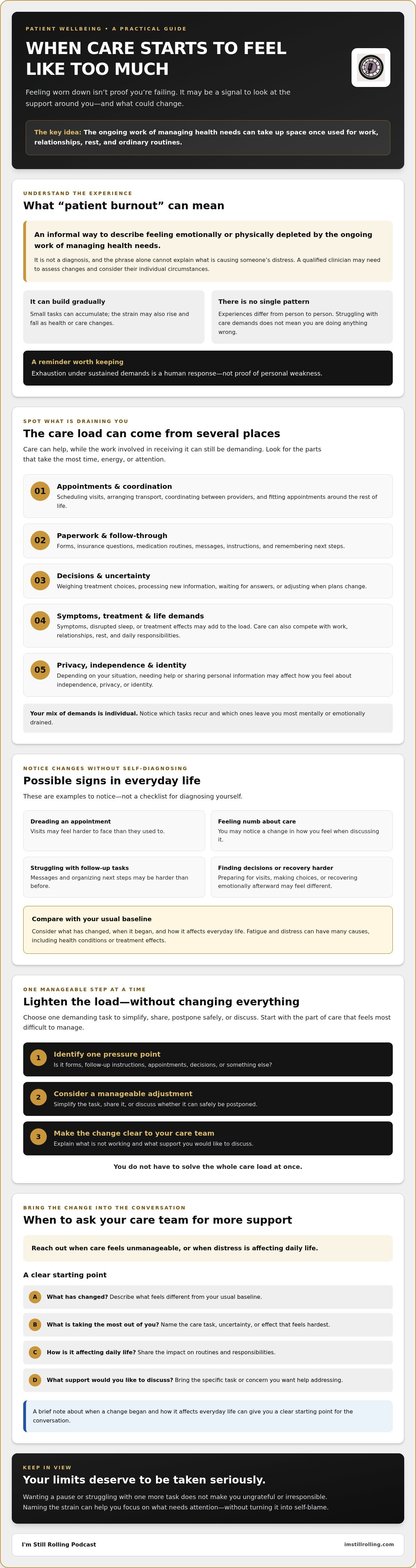
Care can become a second job, made up of appointments, forms, symptoms to track, choices to weigh, and questions that don’t always have quick answers. For some people, the strain builds gradually; for others, it rises and falls as health or care changes. There’s no single way it has to feel, and struggling with the demands doesn’t mean you’re doing anything wrong.
“Patient medical burnout” is an informal phrase for feeling emotionally or physically depleted by the ongoing work of managing health needs. It isn’t a diagnosis, and the phrase alone can’t explain what’s causing someone’s distress. Burnout is broadly described as a state of emotional, mental, and often physical exhaustion, but applying that idea to the patient experience doesn’t replace an assessment by a qualified clinician.
Exhaustion under sustained demands is a human response, not proof of personal weakness. Naming the strain can help you identify what needs attention without deciding for yourself what it means medically.
How can ongoing care become emotionally exhausting?
Each task may seem manageable on its own: booking an appointment, repeating your history, sorting paperwork, or considering treatment choices. The accumulation can be heavy. Planning doesn’t necessarily stop when an appointment ends. You might be remembering instructions, anticipating the next decision, or fitting care around work, relationships, and daily responsibilities. That mental load can persist even during stretches without a visit.
What might patient burnout look like in everyday life?
You might find yourself dreading an appointment, feeling numb when discussing care, or struggling to organize messages and follow-up tasks that you once handled more easily. These are examples to notice, not a checklist for diagnosing yourself. Fatigue and distress can have many causes, including health conditions or treatment effects, so a clinician may need to help assess what’s behind a change.
Rather than asking whether you “qualify” as burned out, consider what feels different from your usual baseline. Is it harder to prepare for visits, make decisions, or recover emotionally afterward? A brief note about when the change began and how it affects everyday life can give you a clear starting point for a conversation with your care team. Dealing with medical burnout as a patient isn’t about finding the perfect label; it’s about recognizing when the work of care is taking more from you than you can comfortably manage.
Why Medical Appointments and Treatment Lead to Burnout?
Care can help, but the work involved in receiving it can be demanding in its own right. You may need to coordinate between providers, explain the same history more than once, fit appointments into a busy week, and make decisions while processing new information. Those practical pressures can collide with worry, frustration, or uncertainty. Separating the tasks from the feelings around them can help you pinpoint which part weighs most heavily.
Which parts of managing care can drain a patient's energy?
The workload may include scheduling, arranging transport, asking insurance questions, completing forms, following medication routines, and keeping track of next steps. Not everyone faces the same tasks or has the same resources to manage them. Even when care is useful, coordinating it can take time and concentration that would otherwise go to work, rest, or everyday life.
A care routine can become a substantial daily burden one small task at a time. Notice which demands are concrete and recurring. Perhaps forms take the most time, or remembering follow-up instructions leaves you mentally drained. This isn’t about judging how well you cope. It’s a way to identify what might be simplified or raised with your care team.
How can uncertainty and loss of control add to the strain?
Waiting for answers, coping with a changed plan, or not knowing what happens next can keep your mind occupied long after an appointment ends. Symptoms, disrupted sleep, and treatment effects may add to that load, though their causes vary. If you notice changes in energy, sleep, mood, or daily functioning, discuss them with a clinician who can consider your individual circumstances.
Care can also touch private parts of life. Depending on your situation, needing help with tasks or sharing personal information may affect your sense of independence, privacy, or identity. You can name those feelings without having to resolve them immediately. Lived-experience accounts, such as stories of recovery and hope, may offer perspective and companionship, though they aren’t medical advice.
As you consider dealing with medical burnout as a patient, ask yourself two separate questions: “Which care task is hardest to manage?” and “What feelings come up around it?” The answers may point to different kinds of support. For more perspective, explore lived-experience stories from the I'm Still Rolling Podcast.
Is Patient Burnout the Same as Depression or Giving Up on Treatment?
Feeling overwhelmed by care can bring a second worry: “Does this mean I’m weak, ungrateful, or not trying hard enough?” No. Exhaustion is not a character flaw, and asking questions or needing rest doesn’t mean you reject care. You can value treatment and still find its demands difficult. When dealing with medical burnout as a patient, it’s reasonable to ask whether the current plan feels manageable.
How is patient burnout different from depression or treatment fatigue?
“Patient burnout” is an informal description of feeling depleted by health-related demands. Depression refers to a mental health condition, while treatment fatigue is often used to describe feeling worn down by the ongoing effort of treatment. These experiences can overlap, and the words alone can’t tell you what’s happening. An article can’t reliably distinguish them or diagnose you.
If distress persists, worsens, or disrupts daily functioning, bring it to a qualified clinician. You might say, “I’ve been feeling more overwhelmed, and it’s affecting my usual routines. Can we talk about what could be contributing?” A clinician can consider your circumstances and help determine what support or assessment may be appropriate. You don’t need to settle on a label before raising the concern.
Does feeling burned out mean I should stop treatment?
No. Don’t stop or change a treatment based solely on this article. Instead, tell your care team which parts feel unsustainable, such as a routine that’s hard to maintain or uncertainty about the next step, and ask what options you can discuss. Resting, reconsidering priorities, or asking questions isn’t automatically non-compliance. It can be part of an honest conversation about your needs.
If you feel unsafe or face an immediate crisis, contact local emergency services or a crisis support resource in your area. If the situation isn’t immediate, you can still raise your concerns with your care team and ask how to get help. You deserve to be heard without having to prove that your struggle is serious enough. The aim isn’t to force yourself through care in silence; it’s to discuss decisions about your health with qualified professionals who understand your situation.
How Can You Cope With Medical Burnout One Manageable Step at a Time?
You don’t have to reorganize your whole life to make care feel less demanding. Start by identifying one task that’s taking more energy than it seems to deserve. Then consider whether it can be simplified, shared, postponed, or discussed. Postpone only tasks that can safely wait, and check with your care team before delaying treatment or changing a care routine.
Today, choose one care task that feels heavy and ask what would make it easier. That might mean requesting clearer instructions, asking someone to help with a call, or telling a clinician that the schedule is difficult to manage. Dealing with medical burnout as a patient can begin with one adjustment, not a perfect plan.
How can you make appointments and health tasks more manageable?
Before an appointment, write down your main priorities and questions so you don’t have to hold them all in memory. Group related questions together, and ask whether instructions can be provided in writing. If you’re unsure what to do between visits, ask whom to contact and what kinds of concerns they can help address. You can also tell your clinician if the appointment schedule or instructions are hard to keep up with.
If you want support, ask someone you trust to take notes, help coordinate tasks, or attend with you. You decide what information to share and what role feels comfortable. Even small practical help can leave you with more attention for the conversation itself.
How can you protect time and ask other people for help?
Care can crowd out ordinary parts of life that help you feel like yourself. Choose one activity or boundary you’d like to preserve, such as keeping a regular meal with someone you care about or reserving a quiet period after an appointment. It may need to be flexible, but naming it gives you something specific to plan around.
Make requests concrete and suited to your circumstances: “Could you help me write down questions before my appointment?” or “Would you be able to handle this call with me?” If asking feels uncomfortable, start with one task and see how it goes. Support doesn’t have to mean handing over control.
For perspective and companionship, you can listen to lived-experience stories from the I'm Still Rolling Podcast. These stories aren’t medical advice or a substitute for your care team, but they can offer a human perspective alongside the practical steps you choose.
When Should You Ask Your Care Team for More Support?
Reach out when managing care feels unmanageable, distress continues or worsens, or health responsibilities are interfering with daily life. You don’t need to wait until you’ve reached a breaking point, and you don’t need a perfect explanation. Asking for help makes your needs visible; it doesn’t mean you’ve failed to cope.
What can you say to your doctor or care team?
You can begin plainly: “I feel overwhelmed by managing my care, and I’d like help making the plan manageable.” To make the conversation specific, bring one or two examples of what has changed, such as difficulty keeping up with instructions or feeling unable to manage the current schedule. Then ask, “Which concern should we address first?”
It’s also reasonable to ask what clinical, social, or practical support may be available in your setting. Options depend on your circumstances and care system, so your team can explain what may fit. If it’s hard to speak up in the moment, write down your main concern beforehand or ask someone you trust to join you, if you’d like.
How can stories help without replacing professional care?
First-person stories can offer companionship and a different perspective, especially when it feels as if no one else understands the strain. They aren’t universal instructions or promises of recovery, and a podcast can’t assess symptoms or recommend treatment. Keep those questions with a qualified clinician who knows your situation.
The I'm Still Rolling Podcast shares journalist-hosted conversations with people who have faced challenging circumstances. Episodes are available in audio, video, and transcript formats, so you can choose how to engage and take them at your own pace. Explore resilience stories from the I'm Still Rolling Podcast for lived-experience perspectives alongside, not instead of, appropriate professional support.
Dealing with medical burnout as a patient doesn’t require having every answer before you ask for help. Support may begin with one honest conversation and one manageable next step. You deserve to have both your care needs and the strain of managing them taken seriously.
Take One Manageable Step Toward More Support
Care can ask a great deal of you, and feeling depleted doesn’t mean you’re weak or ungrateful. Dealing with medical burnout as a patient starts with noticing what feels hardest, then choosing one task to simplify, share, or raise with your care team. If distress persists or daily life is affected, you deserve a conversation with a qualified professional who can help assess what’s going on and discuss support suited to your circumstances.
You don’t have to solve everything before asking for help. One honest sentence about what has changed can open the door to a more manageable plan. Stories can’t assess symptoms or replace professional care, but hearing how others have lived through difficult circumstances may offer perspective and connection.
I'm Still Rolling Podcast shares journalist-hosted conversations with people who have faced challenging circumstances, available in audio, video, and transcript formats. Explore honest stories of resilience from I'm Still Rolling Podcast, and remember: a small next step still counts. You deserve support as you find your way forward.
Frequently Asked Questions
Is medical burnout as a patient a real diagnosis?
“Patient burnout” is an informal phrase, not a standalone medical diagnosis. People use it to describe feeling emotionally or physically depleted by the ongoing demands of managing health needs. The phrase can help you explain your experience, but it can’t identify its cause or replace an assessment. If you’re concerned about fatigue, distress, or changes in daily functioning, discuss them with a qualified clinician.
How do I know if I am experiencing patient burnout?
There’s no checklist that can confirm patient burnout, but noticing changes can help you decide whether to seek support. You might dread appointments, feel numb when discussing care, or struggle to organize health tasks that once felt manageable. Dealing with medical burnout as a patient can feel different for each person, and fatigue or distress may have other causes. A clinician can help assess what’s happening.
Can medical burnout make me want to stop treatment?
Feeling worn down can make treatment seem harder to continue, but that feeling doesn’t automatically mean you’re rejecting care. Don’t stop or change treatment based only on an article. Tell your care team which parts feel difficult to sustain, and ask what options you can discuss. Questions, requests for rest, or a desire to revisit priorities can be part of an open care conversation.
What can I do when managing my health feels overwhelming?
Choose one task that feels especially draining and consider whether it can be simplified, shared, postponed safely, or discussed with your care team. For an upcoming visit, write down your main questions and ask for instructions in writing if that would help. You don’t have to complete every possible coping step. One practical adjustment can give you a clearer starting point for easing the load.
How do I tell my doctor that I feel burned out?
Be direct: “I feel overwhelmed by managing my care, and I’d like help making the plan manageable.” Bring one or two examples, such as difficulty following the schedule or keeping track of next steps, and ask which concern to address first. You can also ask what clinical, social, or practical support may be available in your setting. You don’t need a diagnosis or perfect wording to start.
Is patient burnout the same as depression?
No. Patient burnout is an informal description of feeling depleted by health-related demands, while depression is a mental health condition. The experiences may overlap, and an article can’t reliably distinguish them or determine what you’re experiencing. If distress persists, worsens, or interferes with daily life, speak with a qualified clinician. They can ask about your circumstances and help assess what support or further care may be appropriate.
When should I seek urgent help for emotional distress?
Seek urgent help if you feel unsafe, may harm yourself or someone else, or face an immediate crisis. Contact local emergency services or a crisis support resource in your area. If the distress isn’t immediately dangerous but is persisting or disrupting daily life, reach out to your care team or another qualified clinician promptly. You don’t have to wait until you can explain everything clearly before asking for help.



Comments