Adapting to Disability: Resilience and the New Normal
Real adaptation isn't a medical recovery that ends when the hospital doors close; it's a journalistic reporting of your own life to find a new, resilient truth. When you're first adapting to life with a disability, the loss of your previous "normal" can feel like a heavy, suffocating weight that leaves your identity fractured. You're suddenly forced to move through a world that wasn't built for your current needs, and the emotional exhaustion of that constant friction is both real and valid.
It's okay to admit that this journey is difficult and that the "messy" parts of survival don't always have a silver lining. We've created a heart-centered roadmap for managing these complexities, offering you both emotional validation and practical steps for daily living. This guide explores how to handle caregiver burnout, reclaim your sense of self, and discover a grounded sense of hope that proves resilience is possible even when the path looks entirely different than you once imagined.
Table of Contents
Understanding the Initial Shift: What it Means to Acquire a Disability
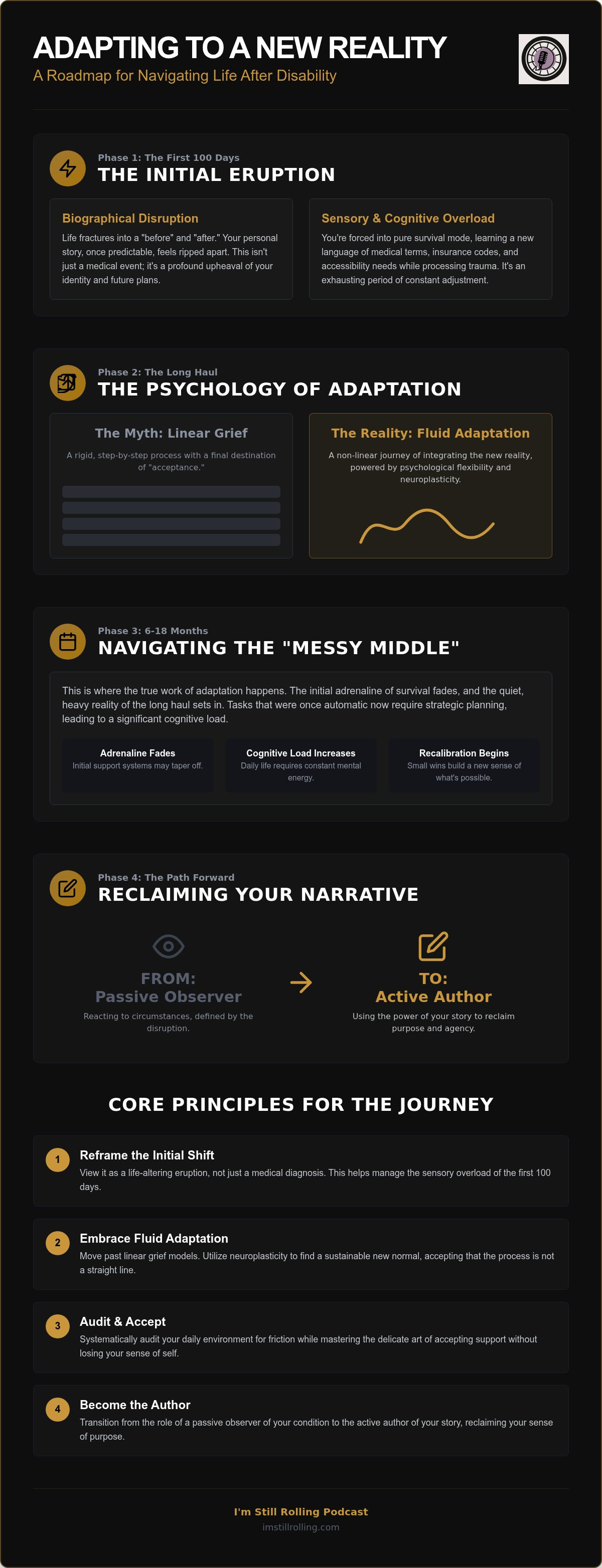
Acquiring a disability is rarely a quiet transition. It is an eruption that fractures the timeline of your existence, splitting your history into a "before" and an "after." While medical professionals often focus on the clinical diagnosis or the mechanics of a physical injury, the lived experience is one of profound upheaval. This is what sociologists call biographical disruption. Your life story, once a predictable narrative of career, hobbies, and future plans, suddenly feels like the pages have been ripped from the binding. You're left holding the remnants of a plot that no longer applies.
The first 100 days are usually a period of pure survival and intense sensory overload. You are forced to learn a new language of medical acronyms, insurance codes, and accessibility requirements while your brain is still trying to process the trauma. During this time, Understanding Disability through both medical and social lenses is vital. It helps you realize that the barriers you face aren't just personal failings or bodily limitations; they are often the result of a society that hasn't yet caught up to your needs. Adapting to life with a disability requires a specific brand of realistic optimism. This isn't about superficial cheerfulness or "staying positive" in a way that ignores your pain. It is about acknowledging the heavy, unflinching gravity of your situation while stubbornly looking for the next viable step forward.
The Emotional Impact of Life-Changing News
The grief that follows a life-altering diagnosis is unique because you are mourning a person who is still alive: your former self. You might feel a searing rage at the able-bodied world or a deep sense of alienation from friends who suddenly don't know how to speak to you. It's vital to recognize that this is a natural mourning process. While clinical depression is a serious condition that may require intervention, the initial waves of anxiety and sorrow are honest responses to a massive loss of identity. You aren't "broken" for feeling these things; you are simply human.
Navigating the First Six Months
The transition from a sterile, highly supported hospital environment back to your own home is often the most jarring phase of adapting to life with a disability. Doors that were once invisible are now physical barriers. Kitchen counters might seem miles high. In these first six months, the focus should shift to "small wins." Whether it's navigating a single room independently or successfully organizing a single benefit claim, these moments of agency are the building blocks of your new normal. You're not just adjusting your physical space; you're recalibrating your sense of what is possible in a world that feels suddenly unfamiliar.
The Psychology of Adaptation: Building Resilience for the Long Haul
The traditional model of the five stages of grief suggests a ladder that one climbs toward a final destination of peace. In reality, the psychological impact of disability is far more fluid and non-linear. You don't simply "get over" the loss of your previous physical state; you learn to integrate it into a new, expanding narrative. This process relies heavily on psychological flexibility and neuroplasticity. Your brain is capable of forging new pathways, both physically and emotionally, but this requires moving away from the expectation of a quick return to your old self. Resilience isn't a fixed personality trait you're born with. It's a practiced skill, much like a muscle that grows stronger through the repeated, often painful work of showing up for a life you didn't plan.
Acceptance is often misunderstood as a form of giving up or liking your new circumstances. In a journalistic sense, acceptance is simply reporting the facts of your life without the distortion of "what if" or "if only." It's an unflinching look at the current landscape. When you stop fighting the reality of your situation, you free up the immense cognitive energy required for adapting to life with a disability. You begin to see the difference between the pain of the condition and the suffering caused by resisting that pain.
The "Messy Middle" of Disability Adjustment
There is a specific, often overlooked period between six and eighteen months where the initial adrenaline of survival fades. The flowers have stopped arriving, the hospital visits have tapered off, and the quiet, heavy reality of the long haul sets in. This "messy middle" is where the true work of adaptation happens. The cognitive load of navigating daily life can be exhausting, as tasks that were once automatic now require strategic planning. Building a resilience toolkit is essential here. This might include specialized therapy, connecting with peer support groups who understand the nuances of your experience, or using journaling to track your internal shifts. If you're looking for stories from those who have navigated these specific waters, the I'm Still Rolling podcast offers a space where these truths are spoken aloud by those who live them.
Journalistic Truth vs. Toxic Positivity
Superficial cheerfulness can be a barrier to genuine healing. Toxic positivity demands that you find a silver lining before you've even processed the storm, which only serves to isolate you further. True adaptation requires the eye of a reporter: a commitment to the truth, however messy it may be. Acknowledging that a day is difficult doesn't mean you've lost your resilience. It means you're an honest observer of your own life. By naming the hardship, you take away its power to surprise you, allowing you to search for what is still "rolling" in your world with a grounded sense of hope.
Practical Steps for Adapting Your Daily Life
When the abstract concepts of resilience meet the hard corners of your kitchen counter, the real work of adapting to life with a disability begins. It starts with an unflinching audit of your physical environment. You aren't just looking for obstacles; you're identifying friction points that drain your limited daily energy. By mapping out where your routine stutters, whether it's a heavy door or a cluttered hallway, you can strategically remove barriers that make independence feel like an uphill battle. Assistive technology and adaptive tools should be viewed as sophisticated extensions of your own capability rather than symbols of loss. High-tech wheelchairs, voice-activated home systems, and specialized utensils are the hardware of your new chapter, allowing you to focus your mental energy on living rather than just surviving.
Success in this stage requires a delicate balance between physical rehabilitation and psychological preservation. It's easy to fall into the trap of viewing your body as a project that needs constant fixing, but true adaptation requires rest and mental health care. Overworking yourself in physical therapy while ignoring the emotional toll of the journey is a recipe for burnout. You need permission to be tired, and you need the wisdom to know when a day of rest is more productive than an hour of exercise.
Redefining Independence and Interdependence
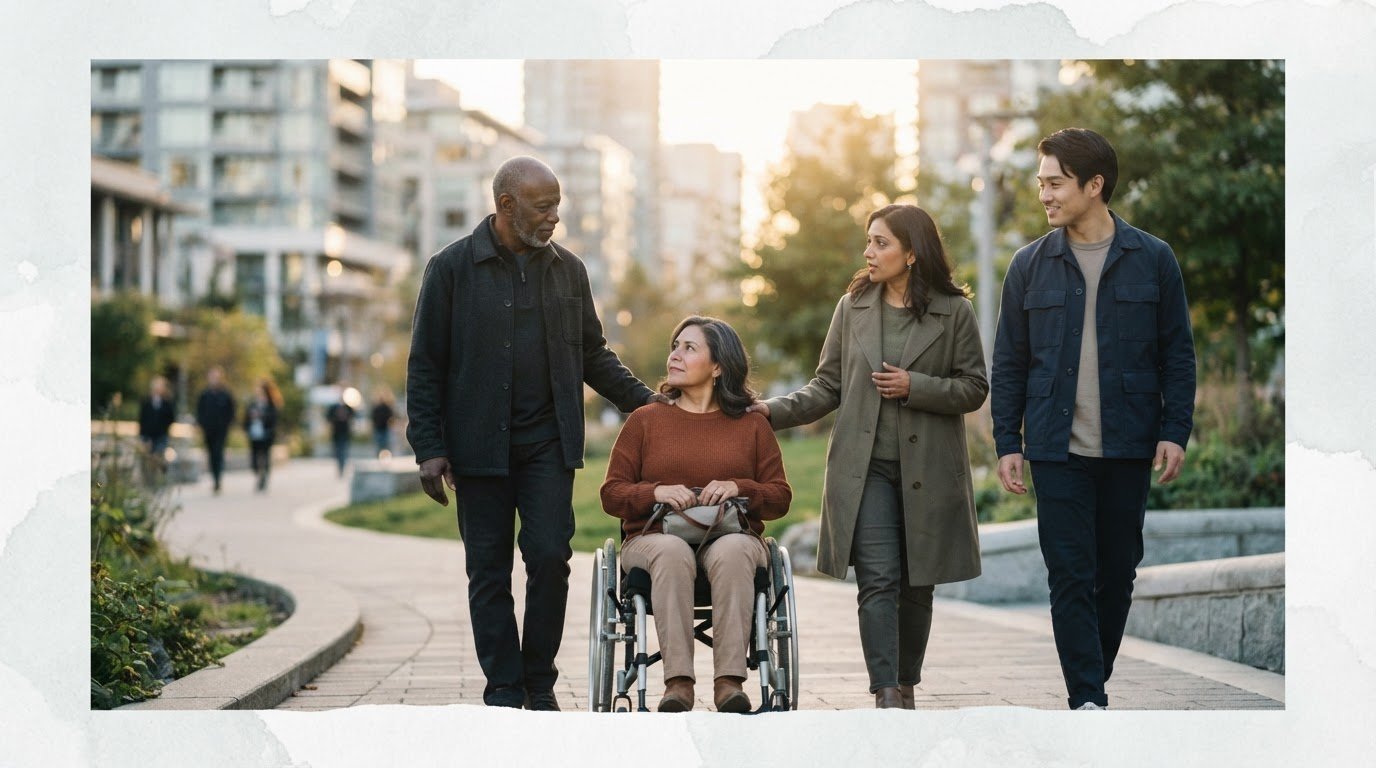
The prevailing cultural narrative suggests that "doing it alone" is the ultimate mark of success. This is a myth that often hinders those adapting to life with a disability. True strength lies in interdependence: the ability to build a support team that empowers your agency instead of infantilizing you. Learning to ask for help with specific, logistical tasks allows you to save your energy for the things that truly define your identity. For those seeking inspiration, these spinal cord injury recovery stories highlight how embracing community can lead to a more expansive life than trying to navigate the path in isolation.
Navigating Social Dynamics and Disability Rights
Moving through the world with a visible disability often invites unsolicited advice or the uncomfortable weight of "the stare." Dealing with these social dynamics requires a blend of grace and firm boundaries. You aren't obligated to be a public educator every time you go to the grocery store. Understanding your rights under the Americans with Disabilities Act (ADA) provides a logical framework for ensuring access. This extends to the digital world; current 2026 regulations have set firm deadlines for state and local governments to ensure their digital platforms meet high accessibility standards by 2027 and 2028. Whether you're speaking with an employer about reasonable accommodations or telling a friend how they can best support you, being the author of your own needs is a radical act of self-advocacy.
Reclaiming Your Narrative: Finding Purpose After Disability
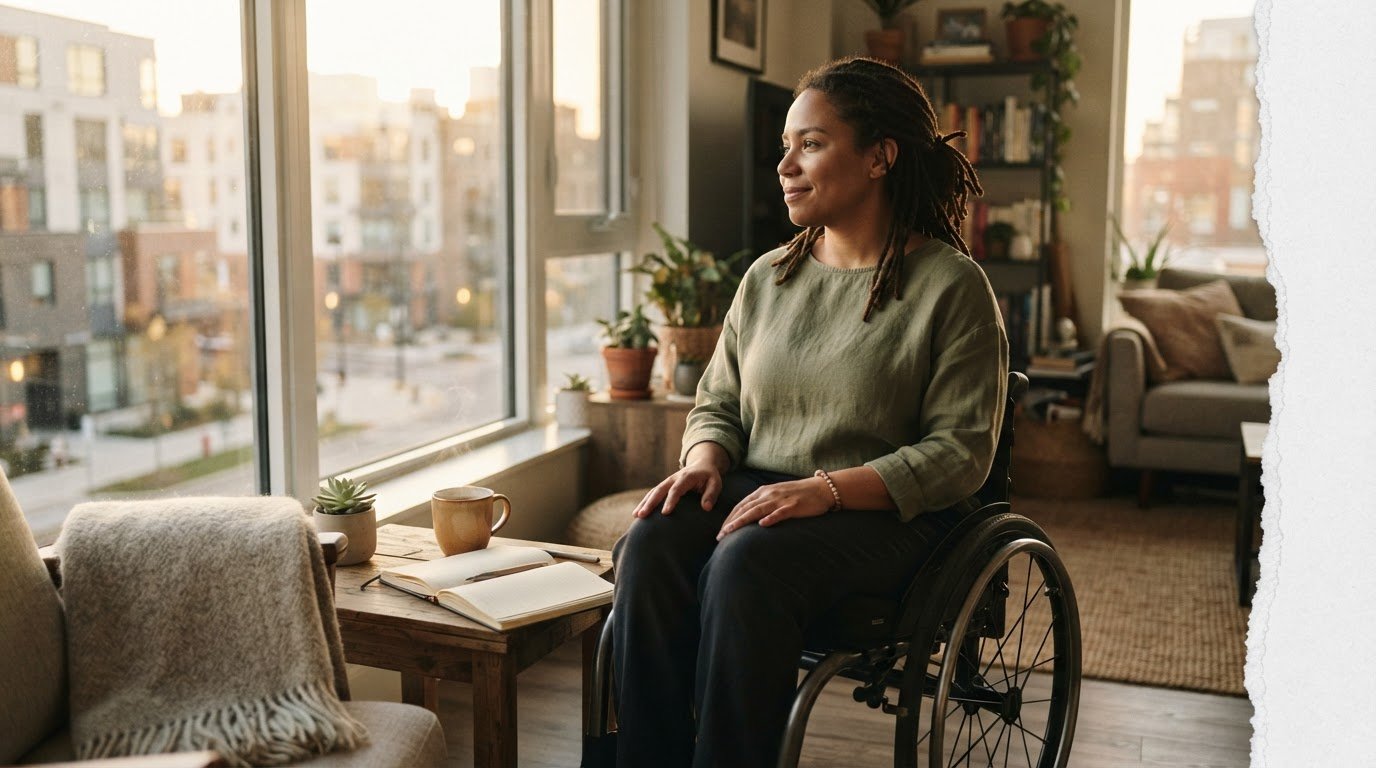
The shift from patient to protagonist begins when you realize that while you didn't choose the plot of your current life, you still hold the pen. Reclaiming your narrative is the final, most transformative stage of adapting to life with a disability. In the wake of biographical disruption, storytelling acts as a bridge between who you were and who you are becoming. By framing your journey not as a series of medical failures but as a complex report on human endurance, you transition from the role of a victim to the author of your next chapter. This isn't just about finding a silver lining; it's about identifying new goals that align with your current reality while honoring the wisdom you've gained through struggle.
When you share your story, you do more than just document the past. You reinforce your own resilience by externalizing your experiences, turning heavy memories into a structured narrative that you can control. This process helps you identify passions that may have been dormant or discover entirely new callings that utilize your unique perspective. Your story becomes a tool for both personal healing and social change, proving that your value isn't tied to your physical output, but to the depth of your experience and the clarity of your voice.
The Role of Lived Experience and Peer Support
A medical diagnosis tells you what your body can't do, but lived experience tells you how to live anyway. Hearing "I’ve been there" from a peer carries more weight than any clinical prognosis because it validates the messy, unscripted parts of your day. Finding community in spaces where "real talk" is the standard allows you to normalize your frustrations and celebrate your wins without the filter of pity. For those seeking these grounded perspectives, listening to I’m Still Rolling Podcast Episodes provides a direct connection to others who are reporting from the front lines of their own recovery. These stories serve as proof that resilience is a collective effort, reinforced every time we share our truths.
Discovering Meaning Within the Struggle
Post-traumatic growth suggests that the very cracks caused by adversity can become the places where deeper empathy and wisdom take root. Your limitations aren't just barriers; they are unique vantage points that the world needs to hear. Reframing your situation requires a journalistic lens, focusing on the facts of your endurance rather than the fiction of your inadequacy. Try this practical exercise: write a single sentence defining your "new normal" as if you were filing a headline for a major news outlet. It might look like: "Local resident masters complex navigation of city transit, proving that mobility is a matter of strategy, not just muscle." This shift in perspective turns a struggle into a story of mastery. To dive deeper into this journey of transformation, you can subscribe to our newsletter at I'm Still Rolling and begin re-authoring your own story today.
Resilience in Action: Next Steps for the Journey
The roadmap for adapting to life with a disability isn't a straight line, but it does have reliable landmarks. We've explored the four pillars of this transition: Grieve, Audit, Adapt, and Reclaim. You must first allow yourself the space to mourn what was lost before you can effectively audit your environment for friction. Once the physical and social barriers are identified, you can begin to adapt through tools and interdependence, eventually reclaiming your narrative as the author of your own story. This is a long-form assignment. It's a marathon that requires you to pace your emotional energy and treat your recovery with the patience of a seasoned investigative reporter waiting for the full story to unfold.
As you move forward, remember that resilience is a practiced skill rather than a static trait. It's built in the quiet moments when you choose to try a new adaptive technique or when you reach out to a peer after a difficult day. Staying updated on your rights and the evolving landscape of accessibility is part of this ongoing work. For instance, as of 2026, new federal regulations have reinforced digital accessibility, with larger government entities required to meet strict WCAG 2.1 AA standards by April 2027. These systemic changes are the result of collective advocacy, proving that your individual journey is part of a much larger movement toward equity.
Building Your Support Network
No one navigates this terrain successfully in total isolation. Your inner circle should be a blend of professionals who respect your agency and peers who offer the "real talk" that only lived experience provides. Consider this checklist for your network in 2026:
Peer Mentors: Fellow travelers who have already navigated the first 100 days and the "messy middle."
Specialized Clinicians: Occupational and physical therapists who focus on functional wins rather than just clinical markers.
Mental Health Support: Therapists who understand the specific nuances of biographical disruption and disability-related grief.
Advocacy Resources: Organizations that keep you informed on ADA updates and financial shifts, such as the 2.8% COLA applied to SSDI benefits in January 2026.
Subscribing to a "resilience-first" newsletter is another practical way to keep your toolkit sharp. It ensures that your inbox contains stories of endurance rather than just medical checklists, keeping you connected to a global community of people who are also finding their way through the new normal.
Closing Thoughts from Mike and Janice
The mission of I’m Still Rolling is rooted in a journalistic commitment to the truth. Mike Sugerman and Janice Wright started this conversation because they knew that the medical charts don't tell the whole story. Your life, with all its complexities and hard-won victories, is a narrative that matters. It's a story of survival that provides a roadmap for others who are just beginning their own process of adapting to life with a disability. We invite you to stay part of this community, where we explore the messy parts of life with grace, maturity, and an unflinching eye for what's still possible. Subscribe to the I’m Still Rolling Podcast to join us for more honest conversations and to ensure you never have to roll alone.
Authoring Your Future: The Story Continues
The transition from a medical patient to a resilient author of your own life requires more than just physical adjustments; it demands a fundamental shift in how you report the facts of your existence. By moving through the stages of grieving, auditing, and reclaiming, you transform biographical disruption into a narrative of profound endurance. Adapting to life with a disability is not a sprint toward a finish line, but a slow, methodical deep-dive into a new way of being that honors both your struggle and your strength.
You don't have to navigate this unhurried process in isolation. At I'm Still Rolling, we provide award-winning journalistic insight and honest conversations with SCI survivors and caregivers who understand the weight of your journey. Our community is built on realistic optimism, offering a safe space for reflection and connection. We invite you to listen to real stories of resilience on the I’m Still Rolling Podcast to find the fellow travelers who will walk, or roll, alongside you. Your story isn't over; it's simply entering a complex and deeply meaningful new chapter. Keep rolling forward, one truth at a time.
Frequently Asked Questions
How long does it typically take to adjust to a new disability?
Adjustment is a non-linear process that varies for everyone, but many individuals find that the 18-month to two-year mark is a significant milestone for stabilizing a new routine. The first six months are often dominated by medical logistics and survival. True psychological integration happens slowly as you move through the "messy middle" and begin re-authoring your life story with a sense of realistic optimism.
Is it normal to feel like I’ve lost my identity after a diagnosis?
Feeling a loss of identity is a universal response to what sociologists call biographical disruption. You aren't just adjusting to physical changes; you're mourning the person you were while trying to understand the person you're becoming. This sense of alienation from your former self is a natural part of the mourning process. It isn't a sign of permanent failure or being "broken."
What is the difference between congenital and acquired disability?
A congenital disability is present from birth, whereas an acquired disability occurs later in life due to injury or illness. The journey of adapting to life with a disability is often distinct for those with acquired conditions. They must navigate the specific grief of losing a previously "able-bodied" lifestyle. Both experiences are valid, yet they require different strategies for building internal resilience.
How can I support a spouse who is adapting to a life-changing illness?
Support your spouse by focusing on interdependence rather than over-functioning or infantilizing them. Ask what specific tasks they need help with and where they want to maintain their autonomy. Validation is more powerful than superficial cheerfulness. Sometimes, simply sitting with them in the "messy" parts of the day is the most resilient act of love you can offer as a fellow traveler.
Where can I find stories of other people who have overcome similar challenges?
You can find honest, journalistic accounts of resilience through the I’m Still Rolling Podcast and Newsletter. Listening to others share their experiences with SCI recovery and caregiving helps normalize your own journey. Hearing "I’ve been there" provides a grounded sense of hope. These stories offer a level of raw intimacy that medical charts and clinical checklists simply cannot replicate.
What are some practical ways to make my home more accessible on a budget?
Focus on removing high-friction points first, such as installing offset hinges on doors to add width or using portable ramps for small steps. Simple swaps like lever-style door handles and non-slip adhesive strips in the bathroom can improve daily safety. Many community organizations and local grants also provide assistance for essential home modifications to support your independence without requiring a total renovation.
How do I handle the mental health impact of medical trauma?
Addressing medical trauma requires a specialized approach, often involving therapists who understand the nuances of PTSD and chronic illness. Acknowledge that your body and mind have survived a significant eruption. Building a resilience toolkit that includes peer support and journaling can help you process the sensory overload of the initial shift. This work helps you move toward psychological flexibility and long-term healing.
Can I still have a career after acquiring a physical disability?
Yes, many individuals continue or launch successful careers while adapting to life with a disability. The Americans with Disabilities Act protects your right to reasonable accommodations in the workplace. Additionally, as of 2026, the rise of remote work and new digital accessibility standards for government platforms has created more pathways for professional engagement. Your unique perspective as a survivor is often a professional asset.

Comments